Gas is the default here
Utility gas heats 60.2% of homes in Sutter County, with electricity a distant second at 29.9%. Most furnaces in Yuba City were set up to run on gas.
Takes about a minute. No obligation.
Utility gas heats 60.2% of homes in Sutter County, with electricity a distant second at 29.9%. Most furnaces in Yuba City were set up to run on gas.
Swapping a gas furnace for a heat pump means adding equipment the home didn't have, not just replacing what's there. The contractor doing the install will need to look at the electrical panel and existing ductwork to see what the new system needs.

NOAA nClimDiv, 1991–2020 normals
Wind is what wears on a heat pump here, not heat or cold, and Sutter County saw damaging wind 56 times between 2015 and 2024.
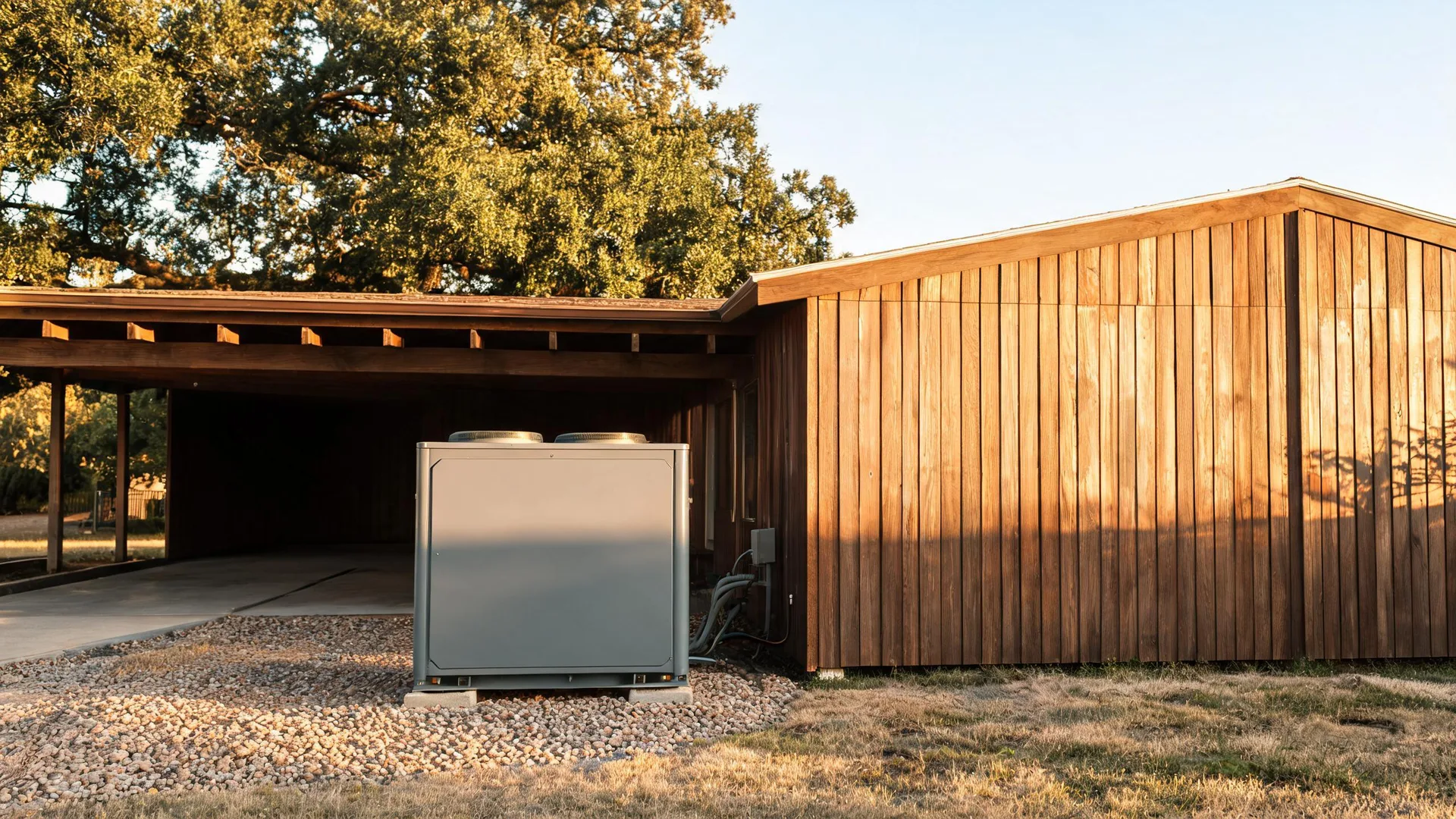
A heat pump installed in Yuba City doesn't have to survive extreme heat or deep cold, just steady work and the occasional storm.



Sutter County is zone 3B, built around long summers rather than cold winters. Any new heat pump installed here has to hit a federal minimum of 14.3 SEER2 for cooling and 7.5 HSPF2 for heating. If the installer puts in a straight air conditioner instead, that same 14.3 SEER2 floor still applies. Nothing below those numbers can legally go in, though a homeowner is free to choose equipment that performs above them.
A heat pump sized to code here covers the job. Electricity in California ran 31.97 cents per kilowatt-hour in 2024, so the efficiency floor already in place matters more than any upgrade beyond it. Get the sizing and the install right and this system runs the way it's supposed to.
Find a contractorThis heat pump isn't working against summer heat or winter cold here, just running and occasionally riding out a storm. That's the case for picking equipment at the efficiency floor and putting the money into a correct install instead. A unit rated above code won't see enough hard running days in Yuba City to earn back the difference. Get the contractor to size it to the house and mount it where wind won't catch it, and standard equipment holds up fine.
A heat pump sized too large cools the air fast and shuts off before it pulls the moisture out of it. The house feels clammy even when the thermostat says it's at the right temperature. An oversized unit also cycles on and off more, and every start puts more wear on the compressor than a long steady run does. Bigger isn't a safety margin here, it's a different kind of wrong.
A contractor works out the right size with a load calculation, weighing square footage against window area, insulation, ceiling height, and how many walls face outside. Houses that look alike from the street can need different equipment once that math is done. A contractor who quotes a size off the old system or a rule of thumb alone skipped the step that actually matters.
If the old equipment is a gas furnace, it doesn't have to come out for the heat pump to go in. Plenty of installs leave the furnace in place and pair it with the heat pump as a dual fuel system, letting the heat pump handle most days and the furnace step in on the coldest ones. An old central air condenser is a different story. Once a heat pump goes in, that condenser's job is gone and it comes out, along with the old refrigerant lines if they're not rated for the new system. Whatever gets removed, a contractor has to recover the refrigerant from it rather than just hauling it off, because releasing it isn't legal. Ductwork usually stays and gets reused, but the contractor should check it against what the heat pump needs to move rather than assume it's fine as is.
Install day starts with the equipment going where the old condenser sat, or close to it, since the line set and electrical already run there. The contractor sets the new unit on a pad or mounting brackets, levels it, and runs the refrigerant lines to the indoor coil. Inside, that coil usually ties into the existing air handler or furnace, so there's some work fitting it to what's already there rather than starting clean. The electrical side often takes as long as the refrigerant work, since a heat pump draws differently than a straight air conditioner and the panel or breaker may need to change to match. Once everything's connected, the contractor pulls a vacuum on the line set to clear out air and moisture before charging it with refrigerant, because either one left behind will cause problems later. Only after it's charged and running does the contractor check airflow at the vents, the temperature split across the coil, and whether the system holds steady instead of short cycling.