







An outdoor HVAC condensing unit on a concrete pad next to a beige single-story house with a dark shingle roof.

Heat Pump Repair in Bakersfield, CA

Tell us about the job

Takes about a minute. No obligation.

RepairHeat PumpKern County, CA
Step 1 of 2

What ZIP code is the job in?

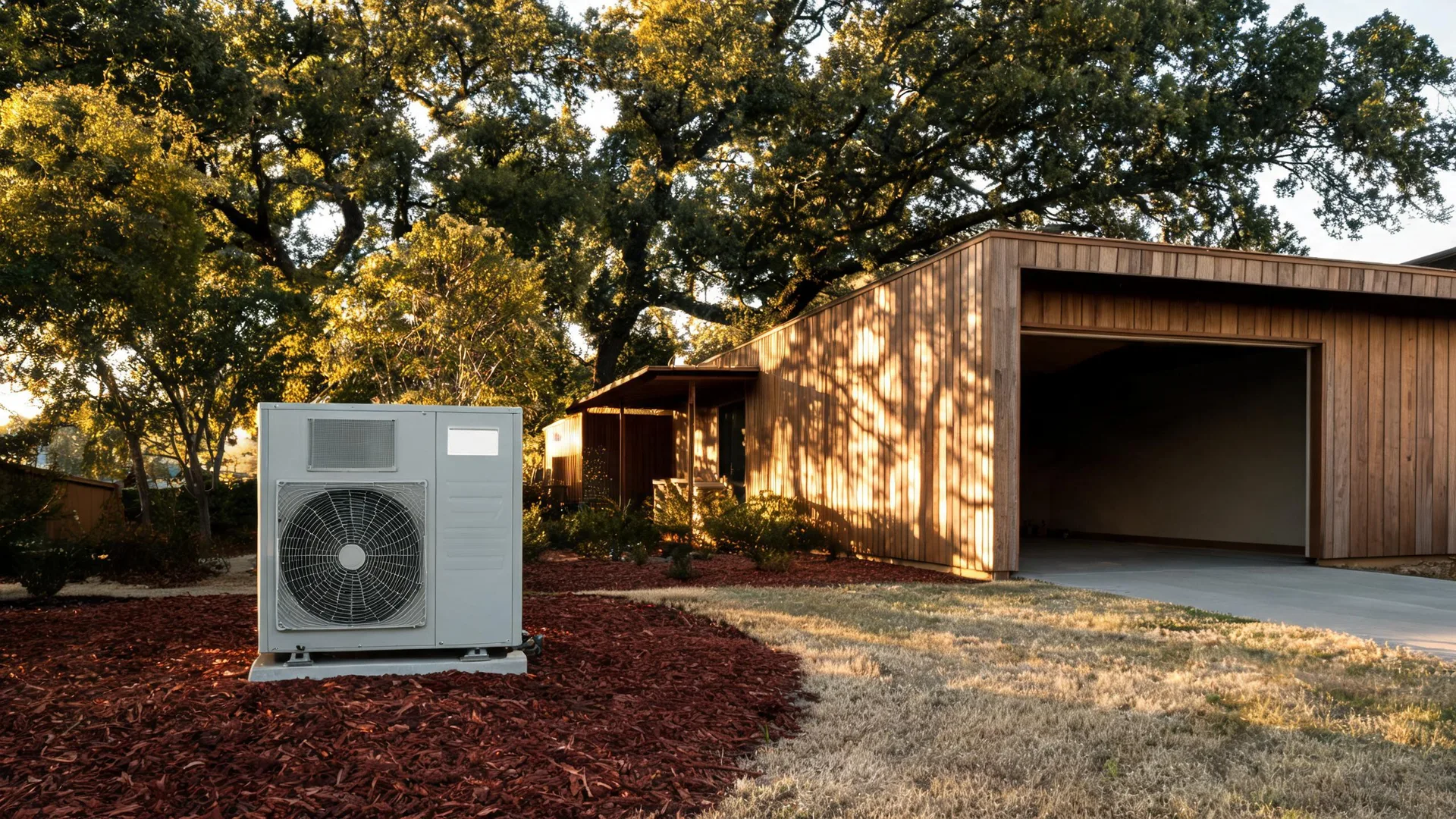
Kern County saw 711 damaging wind events between 2015 and 2024, along with 8 hail events and 3 tornadoes. That outdoor unit sits outside with nothing between it and the weather. Wind-driven debris can bend the fins or crack the fan blade. Hail dents the cabinet and can still reach the coil underneath. A heat pump can keep running after a hit like that and still be worse off for it, drawing more power to do the same job or wearing out a part ahead of schedule.

6 months
November through April, your system heats
5 months
May through September, it cools
37°F
the average winter night it heats against
93°F
the average summer afternoon it cools against
Isometric grey-toned illustration of a cutaway house showing interior rooms, ceiling ductwork and an air handler, connected by lines to an outdoor condenser unit beside the building.
Your system heats November through April and cools May through September.

NOAA nClimDiv, 1991–2020 normals

Half the houses in Kern County were built in 1984 or later.

A heat pump that came with a newer house still has working life left in it, and that makes repair worth a call before replacement.

Kern County weather doesn't let up on a heat pump, and that catches up with the machine

711 damaging wind events from 2015 to 2024
53 winter storms from 2015 to 2024
Climate zone 3B
Every hour it struggles costs you more hereKern County homes paid 36.82 cents per kilowatt-hour in 2025, among the highest rates in the country.

April is when Kern County starts leaning on the heat pump for cooling, and October is when it switches over to keep the house warm. A part that got weak over the summer often doesn't show it until the system has to ramp up again. Heat here runs November through April, and overnight lows average 37°F across December and January, so a heat pump that struggles to keep up isn't just uncomfortable, it's running long hours to chase a temperature it can't quite hit. The same thing happens at the start of cooling season, when May heat lands on a unit that's been sitting since September. If something's acting up right as the season turns, that timing is a clue, not a coincidence.

If your heat pump has been through a storm, get it checked before it tells you itself

If the outdoor unit took a hit from wind or hail this year, that damage doesn't always show up as a breakdown right away. A bent fin or a dented cabinet can mean it's drawing more power to do the same job, or heading toward a part failing early. Worth having it looked at now, before the next storm or the next season change finds the weak spot for you.

Find a contractor
A man in a cap, dark long-sleeved shirt and brown work pants, seen from behind, carries a worn leather tool bag up porch steps toward a blue front door beside a blue planter with a shrub.
A gray heat pump outdoor unit mounted on a concrete pad next to a residential house with lap siding and stone accents.

Figure out how old this system actually is before you decide anything

Half the homes in Kern County were built in 1984 or later, so there's a good chance yours is one of them. That matters for a repair call. If the heat pump came with a newer house, replacement isn't the first thing to reach for when a part fails. Tell the tech the age of the house, or the age of the system if you know it separately, since those aren't always the same thing. A unit with real life left in it is worth fixing properly rather than swapping out over one bad part.

The signs are usually about air, not power

A heat pump that's failing doesn't always go quiet. More often the air coming out of the vents is weaker than it should be, or it's warm when you want cool, or cool when you want warm. You might notice the system running a long time without the house catching up, or short cycling on and off instead of holding a steady run. Ice on the outdoor unit in the middle of a mild day is never normal. Any of these is worth a call before the part behind it gives out completely.
A noise or a smell tells you more than a feeling does

Trust what you can point to. A grinding or screeching from the outdoor unit usually means a motor bearing or fan blade issue, not something that fixes itself. A burning smell at the indoor unit means power to a repair call now, not later. A clicking relay that won't stop, or a unit that hums but never starts, points to a failed capacitor or contactor. These are specific problems with specific parts behind them, and naming what you heard or smelled helps a tech know what to bring on the first visit.

A few things are worth checking before you pick up the phone. Start with the thermostat. Make sure it's set to the mode you want, heat or cool, and that the set temperature is actually past room temperature, not sitting right at it. Check the breaker for both the indoor air handler and the outdoor unit. A heat pump trips breakers on each side, and a flipped one can look like a dead system when it's really just that. Look at the air filter. A filter clogged with dust chokes airflow and can make the system run long and still not keep up, and it's something you can pull and check yourself. Walk outside and look at the unit. Clear away leaves, grass clippings or anything piled against the cabinet, since it needs open space around it to move air. If you see ice on the coil and it isn't the middle of a cold night, that's worth noting for the tech but not something to chip off yourself. None of this fixes a bad capacitor or a failed motor, but it rules out the simple stuff first.

A heat pump that's losing efficiency doesn't idle. It just runs longer to get the same result, and every one of those hours shows up on the bill given what power costs here. That cost doesn't wait for a convenient time to get fixed. A weak capacitor or a dirty coil makes the compressor work harder right now, while the system sits unrepaired. Getting a tech out to look at it this week costs less than another month of it straining to cover for a part that's already failing.