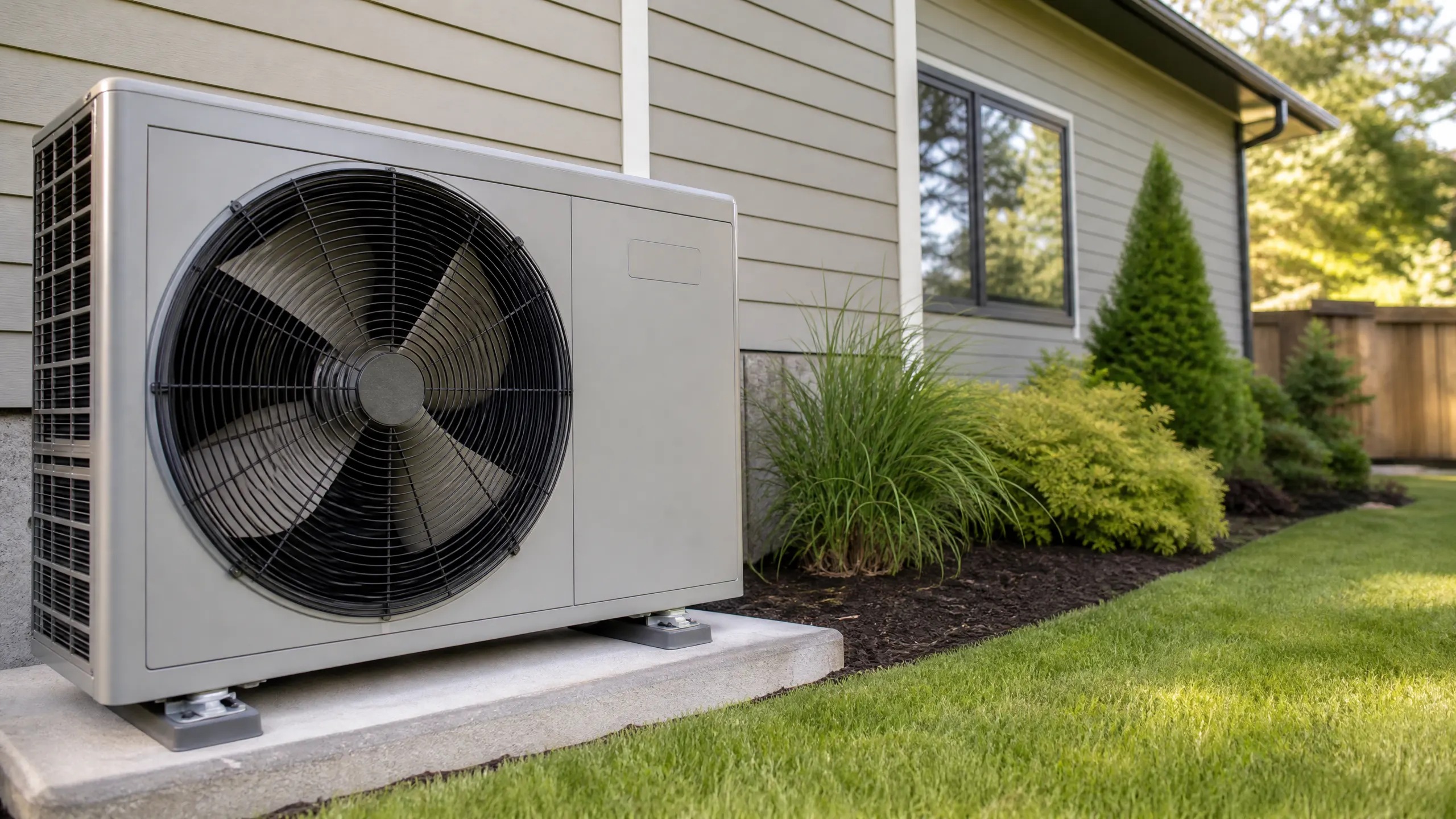





An outdoor heat pump unit mounted on a concrete pad beside a house with beige siding and a landscaped garden bed.

Heat Pump Repair in Chico, CA

Tell us about the job

Takes about a minute. No obligation.

RepairHeat PumpButte County, CA
Step 1 of 2

What ZIP code is the job in?

Half the homes in Butte County were built in 1981 or later. That's a lot of houses with a heat pump still well inside its working life, not one limping toward the end. If yours came with a newer build here, a repair bill now is usually just a repair bill, not the start of a replacement conversation. Mobile homes make up about one in ten houses in the county, and those often have different equipment and different rules for what a repair can fix, so that's worth sorting out with whoever comes to look at it. For most homes here, though, a heat pump acting up is something to fix, not replace.

6 months
November through April, your system heats
4 months
June through September, it cools
37°F
the average winter night it heats against
90°F
the average summer afternoon it cools against
Isometric cutaway illustration of a small house showing interior ductwork and an air handler connected by lines to an outdoor condenser unit on a pad beside the building.
Your system heats November through April and cools June through September.

NOAA nClimDiv, 1991–2020 normals

Summer air in Chico sits around a 45 degree dew point, lower than most of the country.

A heat pump here isn't fighting heavy, humid air to cool your house, so it wears slower than the same unit would somewhere sticky.

Four months of cooling, six of heat, and most problems show up right at the start of each

Cooling runs June through September
Heat runs November through April
38 damaging wind events from 2015 to 2024

That cost per hour is the reason not to let a weak part ride. A heat pump acting up now, a chattering contactor, a low charge, a capacitor on its way out, will eventually get fixed one way or another. The only question is how many hours it runs in the meantime at the highest power rate in the state. Waiting a few weeks to see if it gets worse doesn't save you anything here. It just adds more expensive hours to a repair that was going to happen anyway.

A newer system is a reason to fix it, not replace it

Get a repair diagnosed instead of guessing whether it's worth it. Most heat pumps in this county are still inside a normal working life, so the usual outcome is a fixed part, not a replacement quote.

Find a contractor
A gray air-source heat pump mounted on a concrete pad next to a house with gray vinyl siding, surrounded by gravel and flanked by green shrubs and white hydrangea flowers.

An easier working life than most of this machine's kind

A heat pump doesn't wear out just by sitting there. It wears from cycling on and off, and from running against a hard load, the kind of strain that shows up on the first real cold snap or the first stretch of real heat. Short, easy runs across a mild stretch barely touch it. The compressor is the part that matters most here, and compressors usually fail from years of hard starts and hard stops, not from one bad afternoon. A unit that hasn't been pushed hard for years of its life still has that wear in the bank, saved up rather than spent. That's the case for fixing what's wrong now rather than assuming the whole system is on its way out.

Most failures start with the contactor or capacitor

The contactor is the switch that sends power to the compressor and outdoor fan, and its contacts pit and burn a little every time they close. The capacitor gives the compressor motor the kick it needs to start. Both sit right in the path of every single cycle, so they're usually the first things worn down, not some deeper problem with the compressor itself.

A refrigerant leak is a repair, not a verdict

Heat pumps don't use up refrigerant. If the charge is low, it's low because it's leaking out somewhere, usually at a fitting, a coil, or a joint in the line set. Finding and sealing that leak and recharging the system is routine work. The compressor only ends up damaged if a leak runs unnoticed for a long stretch, which is why it's worth calling at the first sign of weak heating or cooling instead of waiting it out.

A heat pump that's struggling still tries to do its job, and that's the problem. If the charge is low, the compressor pulls harder to make up for it, and it runs hotter than it was built to run. If a contactor is pitted, it can hesitate or chatter before it connects, and every one of those bad starts stresses the motor windings a little more. None of this shows up as a sudden breakdown. It shows up as a part quietly taking damage it can't undo, cycle after cycle, until the original problem, which might have been a simple fix, has turned into a failed compressor. Shutting it down and getting the actual fault fixed stops that slide. Left running, the machine doesn't fix itself or settle into the problem. It just spends itself paying for it.

That cost per hour is the reason not to let a weak part ride. A heat pump acting up now, a chattering contactor, a low charge, a capacitor on its way out, will eventually get fixed one way or another. The only question is how many hours it runs in the meantime at the highest power rate in the state. Waiting a few weeks to see if it gets worse doesn't save you anything here. It just adds more expensive hours to a repair that was going to happen anyway.