






A single-story stucco house with a tile roof sits behind a lawn and drought-tolerant garden of agaves and succulents, framed by overhanging oak branches under an overcast sky.

Heat Pump Repair in Clearlake, CA

Tell us about the job

Takes about a minute. No obligation.

RepairHeat PumpLake County, CA
Step 1 of 2

What ZIP code is the job in?

October is when a heat pump in Clearlake switches over to heat mode, and that first cold stretch is often when a weak part finally gets tested. A reversing valve or defrost control that was fine all summer can fail the moment it's asked to run the other direction. The same thing happens in May, right before cooling starts, when the system is pushed into a role it hasn't used in months. If yours is acting up right at the start of a season, that timing is worth paying attention to. Getting it looked at early, before the weather settles into the new season, is easier than waiting until you're depending on it.

8 months
October through May, your system heats
4 months
June through September, it cools
36°F
the average winter night it heats against
86°F
the average summer afternoon it cools against
Isometric cutaway illustration of a single-story house showing interior rooms with furniture, an attic duct system connected to an indoor air handler, and an outdoor condenser unit linked by lines along the exterior wall.
Your system heats October through May and cools June through September.

NOAA nClimDiv, 1991–2020 normals

Winters in Lake County stay mild, with overnight lows averaging 36°F.

A heat pump here isn't fighting hard freezes, so a breakdown is more likely a part that failed than a system that's worn out.

Nothing about Clearlake's power rates or storms points to why your heat pump is acting up

Power costs 31.97 cents a kWh statewide
18 damaging wind events from 2015 to 2024
6 winter storms from 2015 to 2024
An older house, a usual repairHalf the homes here were built in 1980 or earlier, and mobile homes make up one in five.

That makes a repair call worth placing instead of writing the unit off. When a part fails on a system that hasn't been under constant strain, replacing that part usually solves it, and the rest of the system is still sound. A technician can confirm the reversing valve or defrost control is the actual problem rather than guessing at bigger issues. Lake County does see wind and the occasional winter storm, so it's worth having someone check that outdoor wiring and connections are secure while they're out there. But the core fix is usually smaller than homeowners expect, and that's worth knowing before you assume the whole system is on its way out.

Get it looked at early

Problems tend to show up in the first weeks of the season, when the load hits a part that was already weak.

Find a contractor
A dark gray heat pump unit mounted on a concrete pad next to a house with gray siding and a stone veneer wall.

What you can check yourself first

Before you call, go outside and look at the outdoor unit. Clear off any leaves, dirt or ice built up on it. Restricted airflow there will make the system struggle no matter what else is wrong. Check the air filter inside next. A clogged filter forces the system to work harder and can trigger a lockout that looks like a bigger problem than it is. Look at the thermostat. Make sure it's set to heat, not cooling or fan only, and that the temperature is set above room temperature. If the outdoor unit isn't running at all, check the breaker panel for anything tripped. Frost or ice on the outdoor coil during the day, not just overnight, usually means the defrost cycle isn't working, and that's not something to fix yourself. If the system runs but the air coming out doesn't feel warm, that can be normal for a heat pump on a cold morning. If the house never warms up at all, that points to a problem worth having someone look at. Note anything unusual before the technician arrives, a smell, a sound, ice in an odd spot. It helps them find the problem faster.

A refrigerant leak gets worse, not better

A heat pump low on refrigerant will keep running, but the compressor works harder to move heat with less of it. Run it long enough in that state and the compressor can overheat or take on damage that turns a leak repair into a compressor replacement. The unit won't warn you before that happens.
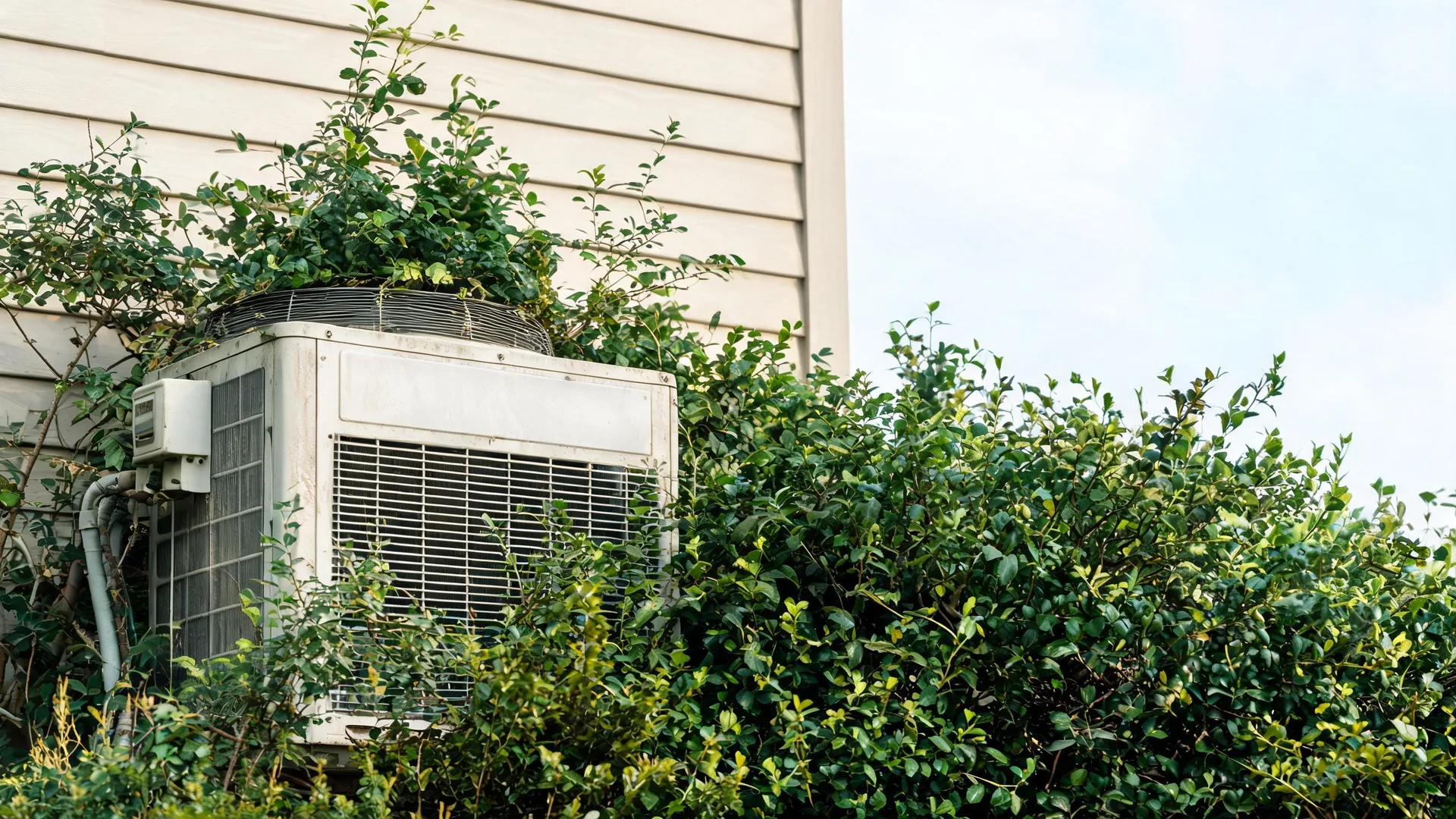
Ice on the coil needs a shutdown, not a wait and see

If the outdoor coil is icing over during the day, the defrost cycle isn't clearing it between runs. Letting the system keep cycling packs more ice on instead of less, and ice restricts the airflow the coil needs to work at all. Shutting it off and calling someone stops that from compounding.

Beyond the reversing valve and defrost control, the parts that wear out most in a heat pump are the ones that start and stop every cycle. A capacitor weakens over years of starting the compressor and fan motor, and when it finally gives out the unit will hum without starting or shut off on its own partway through a cycle. Contactors pit and stick from the arcing every start creates, which can leave the outdoor unit silent even when the thermostat is calling for heat. The compressor itself usually fails because something upstream let it run under the wrong conditions for too long, low refrigerant, a dirty coil, a failed fan motor, rather than failing on its own first. Fan motor bearings wear out the same way any motor's do, with noise before they quit outright. None of these failures happen because the system is being asked to heat instead of cool. They happen because a part finally reaches the end of its working life, and the first hard cycle of a new season is usually what exposes it.

The question isn't the heat pump's age so much as what's actually wrong with it. A failed capacitor, a stuck contactor, a bad fan motor, these are single-part repairs, and fixing one doesn't mean the rest of the system is close behind. The compressor is different. It's the one part that's expensive enough and central enough that its failure changes the math, and it rarely fails on its own, something else usually let it run in a bad state until it gave out. So the part that broke matters more than how long you've had the system. A technician diagnosing the failure should be able to tell you not just what's wrong but whether it's the kind of fix that holds or the kind that's a preview of the next one.