





A warmly lit Craftsman-style house on a wet residential street at night, surrounded by tall evergreen trees under a dark overcast sky.

Heat Pump Repair in Eureka, CA

Tell us about the job

Takes about a minute. No obligation.

RepairHeat PumpHumboldt County, CA
Step 1 of 2

What ZIP code is the job in?

Humboldt County saw 282 severe weather events between 2015 and 2024, and 145 of those were damaging wind. That outdoor unit sits outside taking whatever comes through, branches, grit, hail. The county logged 21 hail events in that same stretch, enough to dent a cabinet or bend a fin without anyone noticing right away. A unit that still turns on after a storm isn't necessarily fine. Bent fins choke airflow over the coil, and a cracked fan blade can run for weeks before it fails outright.

8 months
October through May, your system heats
37°F
the average winter night it heats against
79°F
the average summer afternoon it cools against
Isometric cutaway illustration of a single-story house showing interior ductwork, an indoor air handler and furnace unit, and an outdoor condenser connected by a line, on a white background.

Half the homes in Humboldt County were built in 1973 or earlier.

A heat pump that came with a house that old is already closer to the end of its life than the start.

Eight months of heat means a weak part fails early, not quietly

Heat runs October through May
Climate zone 4C
Power here costs 38.43 cents per kilowatt-hour

Electricity here runs 38.43 cents a kilowatt-hour, well above what most of the country pays. A heat pump that's low on charge or struggling to start draws more power to do the same job, and at that rate it shows up fast. Eureka doesn't even ask much of it compared to other places. Summer dew points here average 53°F, nothing like the heavy air that makes a heat pump labor elsewhere. So a unit running badly here isn't costing you through sheer hours worked. It's costing you because every one of those hours is priced high.

Had a storm come through? Get it checked before it fails on you.

If a storm has come through since this unit last ran right, get it looked at before trusting it again. A cracked fan blade or a bent fin won't always announce itself. It just costs more to run and fails later, on a worse day.

Find a contractor
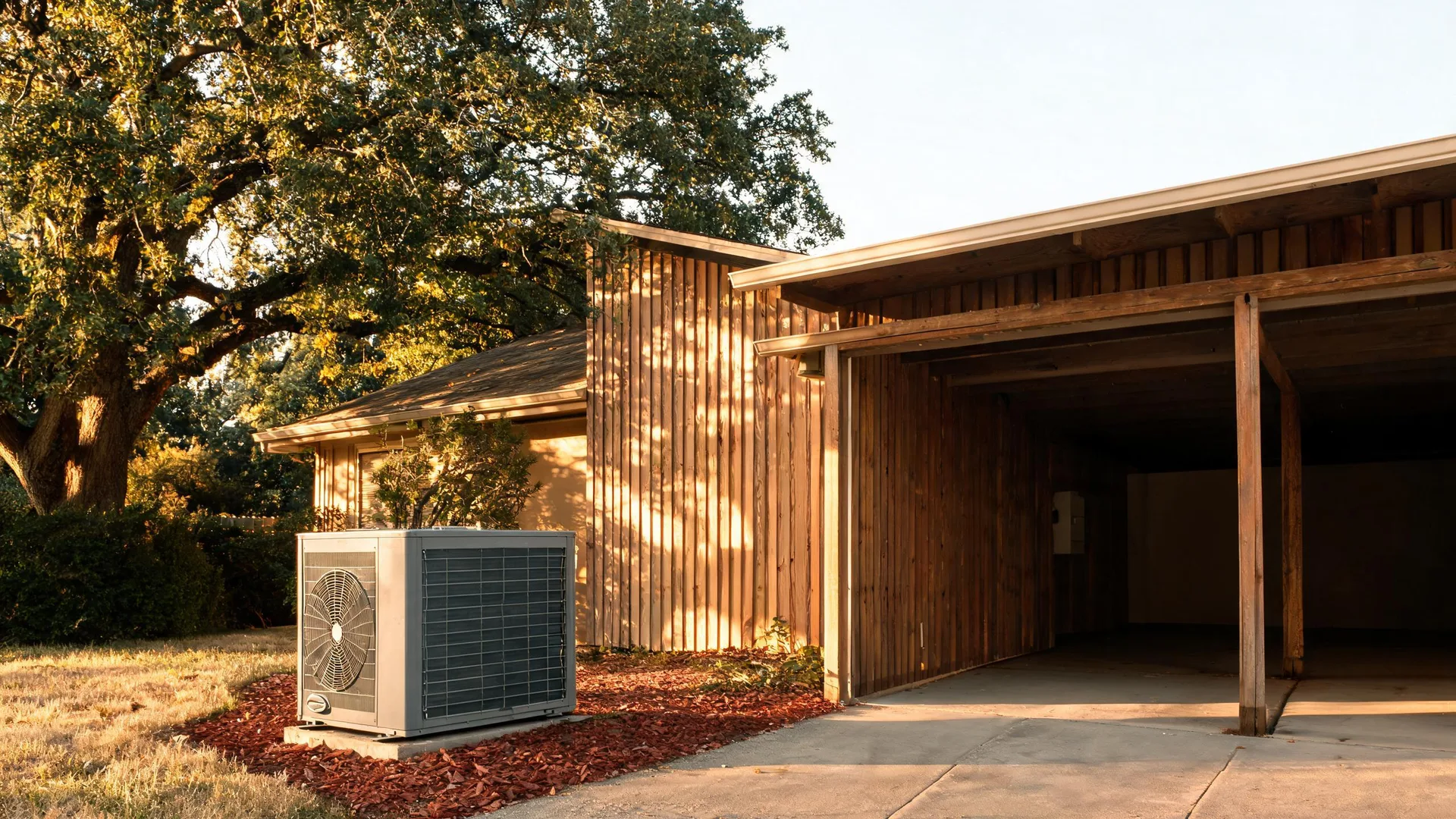
A residential heat pump outdoor unit mounted on a concrete pad next to a house with gray vinyl siding.

How much life is left in this one

If this heat pump came with the house and the house is old enough, repairing it may just be delaying the same decision. Ask whoever comes out how many years are left in it, not just what today's fix costs. A unit near the end of its life can be worth one more repair or not worth it at all, and that's worth knowing before money goes into it.

The reversing valve is usually the first thing to go

A heat pump switches between heating and cooling by reversing refrigerant flow through a valve, and that valve works every single cycle, all year. When it sticks, the unit gets stuck heating when you want cooling or the other way around, or it stops switching at all. That part sees more wear than almost anything else in the system simply because it moves every time the unit changes modes.
A failing part costs you before it quits on you

Low refrigerant charge, a weak capacitor, a dirty outdoor coil, none of these stop a heat pump cold right away. They make it run longer to reach the same temperature, drawing more power the whole time. By the time it won't turn on at all, it's usually been running inefficiently for weeks or months. Catching the warning signs, like longer run times or weaker airflow, means less strain on the parts that are still working fine.

A heat pump that's struggling doesn't know to protect itself. It just keeps running the way it's told, even when something inside is already failing. Low refrigerant charge makes the compressor work harder to move the same heat, and that extra strain builds up every cycle it keeps operating. A failing capacitor can let the compressor start hard over and over instead of failing clean, and each hard start wears the windings a little more. Ice on the outdoor coil blocks airflow, and a unit that keeps running against a frozen coil can push liquid refrigerant back into the compressor, which isn't built to handle liquid. Shutting it down when something's off costs you comfort for a day. Running it through the problem can turn a part replacement into a compressor replacement, and the compressor is the most expensive part there is.

A diagnostic visit starts outside, at the unit itself. A tech checks refrigerant pressure, looks at the coil for ice or bent fins, and listens to how the compressor sounds when it kicks on. Inside, they check the air handler, the filter, and how warm or cool the air coming out actually is compared to what the thermostat is asking for. They'll check the reversing valve by switching the system between heating and cooling to see if it responds right away or hesitates. Electrical readings on the capacitor and compressor windings tell them whether a part is still within range or already breaking down. Most of this takes less time than people expect, because the signs a tech is trained to look for are usually clear once they're checked directly instead of guessed at.