White Mediterranean-style houses with lit windows photographed at dusk beneath golden hills.

Heat Pump Repair in Madera, CA

Tell us about the job

Takes about a minute. No obligation.

RepairHeat PumpMadera County, CA
Step 1 of 2

What ZIP code is the job in?

Winters here don't ask much of a heat pump

Overnight lows average 33°F through December, January and February. That's cold enough to run the system, not cold enough to push it hard. A heat pump earns its keep straining against real cold, and Madera County doesn't see much of that.


So a repair here is usually worth it

A heat pump that hasn't been fighting hard winters year after year has less wear to show for its age. When one in Madera is acting up, the cause is more often a part that failed or was never serviced than a unit worn out from the job it was built to do.

8 months
October through May, your system heats
4 months
June through September, it cools
33°F
the average winter night it heats against
87°F
the average summer afternoon it cools against
Isometric line illustration of a cutaway house showing interior rooms, an air handler with ductwork in the attic space, and an outdoor condenser unit beside the exterior wall.
Your system heats October through May and cools June through September.

NOAA nClimDiv, 1991–2020 normals

Half the homes in Madera County were built in 1988 or later.

A heat pump that came with a newer house still has working life left in it, and that's worth repairing.

Heat sits unused through summer, then October asks for it all at once

Cooling runs June through September
Heat runs October through May
88 damaging wind events from 2015 to 2024
Power here runs 31.97 cents a kilowatthourThat's what California homes paid on average in 2024, so a heat pump running wrong costs you every month it goes unfixed.

Most people notice a heat pump problem before they can name it. The air coming out of the vents feels wrong, not cold when it should be warm, or warm but not warm enough to matter. Some notice the unit cycling on and off more than it used to, never settling into a steady run. Others notice the outdoor fan isn't turning at all while the indoor blower runs fine, which points straight at the fan motor or the capacitor feeding it. A hissing or bubbling sound near the outdoor unit is worth paying attention to, since that's often refrigerant escaping rather than moving through the lines like it should. If the system runs constantly and still can't hold the temperature you set, something is making it work harder to move less heat, and that's rarely a problem that fixes itself.

Get the repair done, not a new system

A newer heat pump still has most of its working life ahead of it. If yours is acting up, get the part fixed rather than the whole system replaced.

Find a contractor
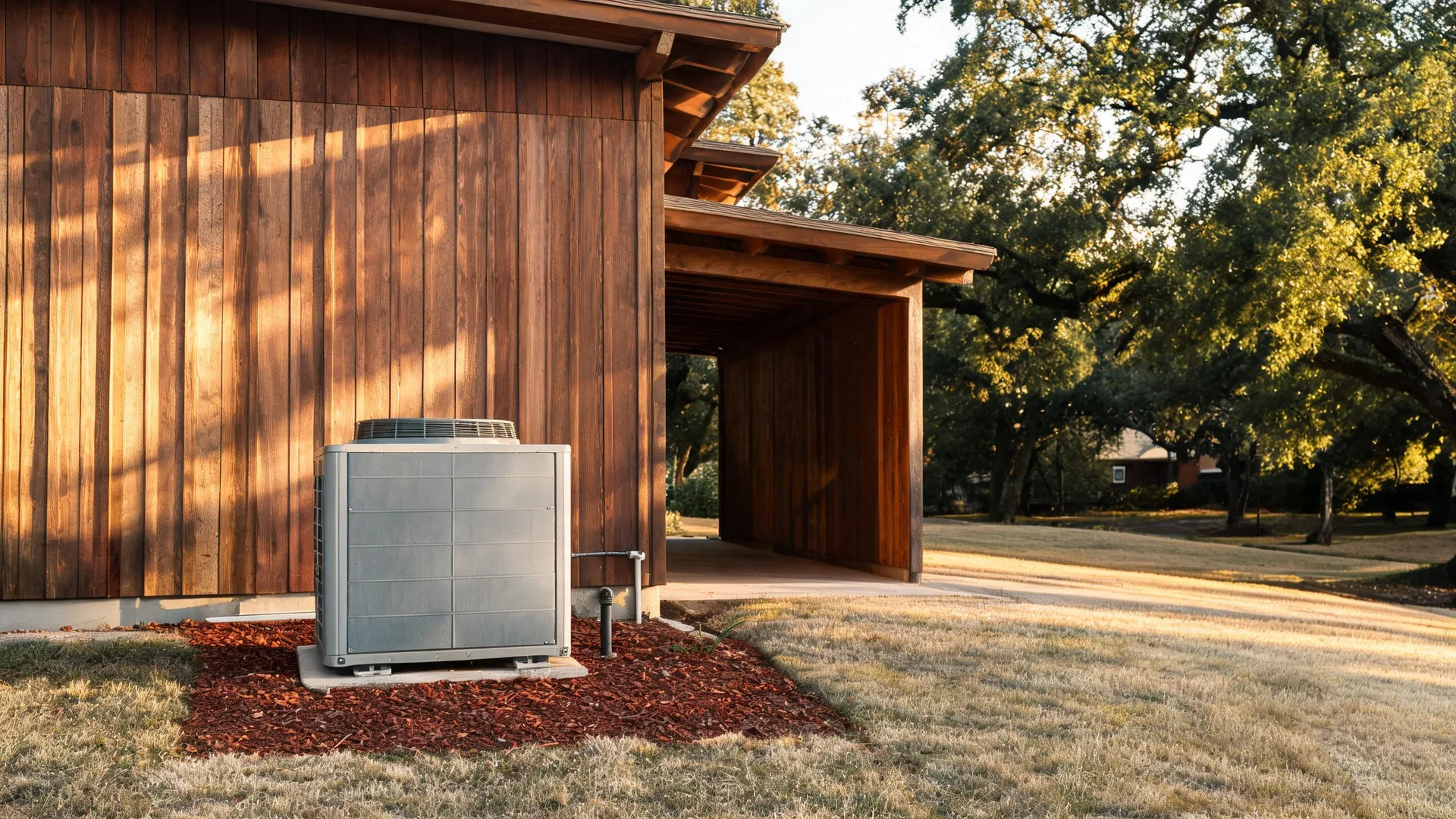
A dark gray heat pump unit mounted on a concrete pad next to a house with gray siding and a stone veneer wall.

Low hours, less wear

That same mild winter shows up in how many hours this heat pump actually runs. It's working through December, January and February, not straining against single digit cold the rest of the year. A system that spends most of its life idle or barely loaded doesn't rack up the hours that wear out a compressor. If yours is acting up after years of this kind of duty, the fix is almost always something that failed, not something that wore out from the work.

A refrigerant leak doesn't hold steady

A heat pump low on charge will still run, but the compressor has to work harder to move heat with less refrigerant doing the job. Left alone, that extra strain on the compressor is what eventually takes it out, and a leak that's small today only gets bigger while the system keeps running on it.

Ice on the outdoor coil doesn't mean leave it alone

If the reversing valve or defrost control isn't switching right, frost builds on the outdoor coil and stays instead of clearing. Ice on that coil blocks airflow the same way a clogged filter blocks it indoors, and the system keeps running harder to move less heat the longer that ice sits there.

Most heat pump failures trace back to a handful of parts. The reversing valve is one. It's what switches the system between heating and cooling, and when it sticks, the unit can blow cold air when it should heat, or get stuck in one mode. The defrost control is another, it tells the system when to clear frost off the outdoor coil, and when the sensor or board behind it fails, ice builds up and airflow drops off. Capacitors wear out too, and when one goes, the compressor or the fan motor struggles to start or won't start at all. None of these are things you can see from inside the house. They show up as warm air that isn't warm enough, a unit that short cycles, or an outdoor fan that won't turn, and they're worth having looked at before the part they're protecting gets dragged down with them.

A diagnostic visit starts outside, not at the thermostat. A tech checks the refrigerant charge, the pressures on both sides of the system, and the temperature split between the air going into the outdoor unit and the air coming out of it. That split tells them whether the system is actually moving heat the way it should. From there they'll check the capacitor, since a weak one is one of the most common reasons a compressor or fan struggles to start. They'll run the system in both modes to see if the reversing valve switches clean or hangs up partway. If the outdoor coil has any frost on it, they'll watch a defrost cycle to see whether it clears or whether the defrost control is missing it. Most of what's wrong with a heat pump doesn't show itself from inside the house, so this is the part that actually finds it.