





White stucco houses with terracotta roofs are built into a tree-covered hillside at dusk, with a dry golden hill rising behind them.

Heat Pump Repair in Marysville, CA

Tell us about the job

Takes about a minute. No obligation.

RepairHeat PumpYuba County, CA
Step 1 of 2

What ZIP code is the job in?

Yuba County saw 295 severe weather events between 2015 and 2024. Most of that was wind and winter storms rather than hail, but a heat pump's outdoor unit sits outside through all of it, taking whatever blows through the yard. A tree limb or a piece of fencing can bend the fins or crack the fan blade without stopping the unit from running. Statewide, 17% of households went at least a full day without power in 2024, and a heat pump that loses power loses both heating and cooling until it comes back. If your outdoor unit took a hit during a storm, or the power cut out for a stretch, it's worth having someone look even if it still seems to be working.

6 months
November through April, your system heats
5 months
May through September, it cools
38°F
the average winter night it heats against
91°F
the average summer afternoon it cools against
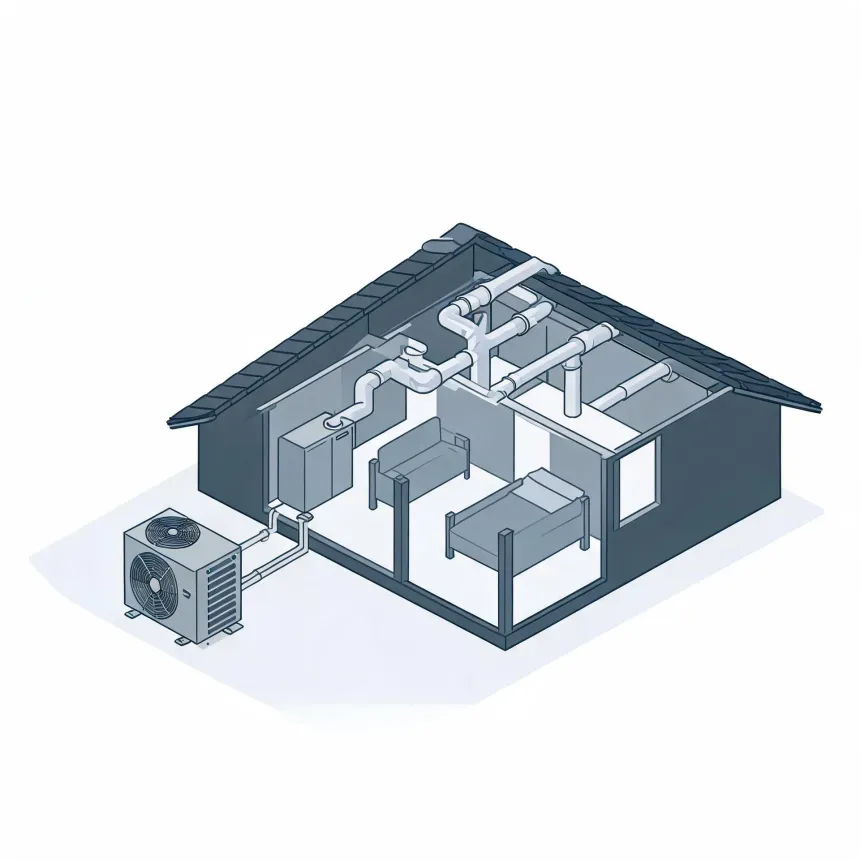
Isometric cutaway illustration of a house showing interior ductwork, an indoor air handler, and beds, with an outdoor condenser unit connected by lines outside the wall.
Your system heats November through April and cools May through September.

NOAA nClimDiv, 1991–2020 normals

Half the homes in Yuba County were built in 1986 or later.

A heat pump that came with a newer house still has working life in it, which makes repair the first thing worth trying.

Your heat pump works nearly year round here, and a weak spot usually shows up the day the load hits it

Cooling runs May through September
Heat runs November through April
54 damaging wind events from 2015 to 2024

Electricity here runs 38.55 cents a kilowatt-hour, well above what most of the country pays. A heat pump that's low on charge or struggling to start draws power the whole time it runs, whether it's heating your house well or not. That cost shows up fast when every kilowatt-hour costs this much. It's not about how many months the unit runs. A unit working harder than it should burns money every hour it's on, and here those hours cost more than almost anywhere else.

If your heat pump has been through a storm or an outage, have it checked

A storm that bends the fins or cracks a fan blade doesn't always stop the unit from running, and a power cut doesn't leave marks at all. If your outdoor unit sat through wind, a fallen limb, or a stretch without power, get it looked at before you assume it came through fine.

Find a contractor
A man in a navy T-shirt, tan work pants, boots and a green cap climbs porch steps toward a blue front door, carrying a canvas tool bag beside a blue planter with a small shrub.
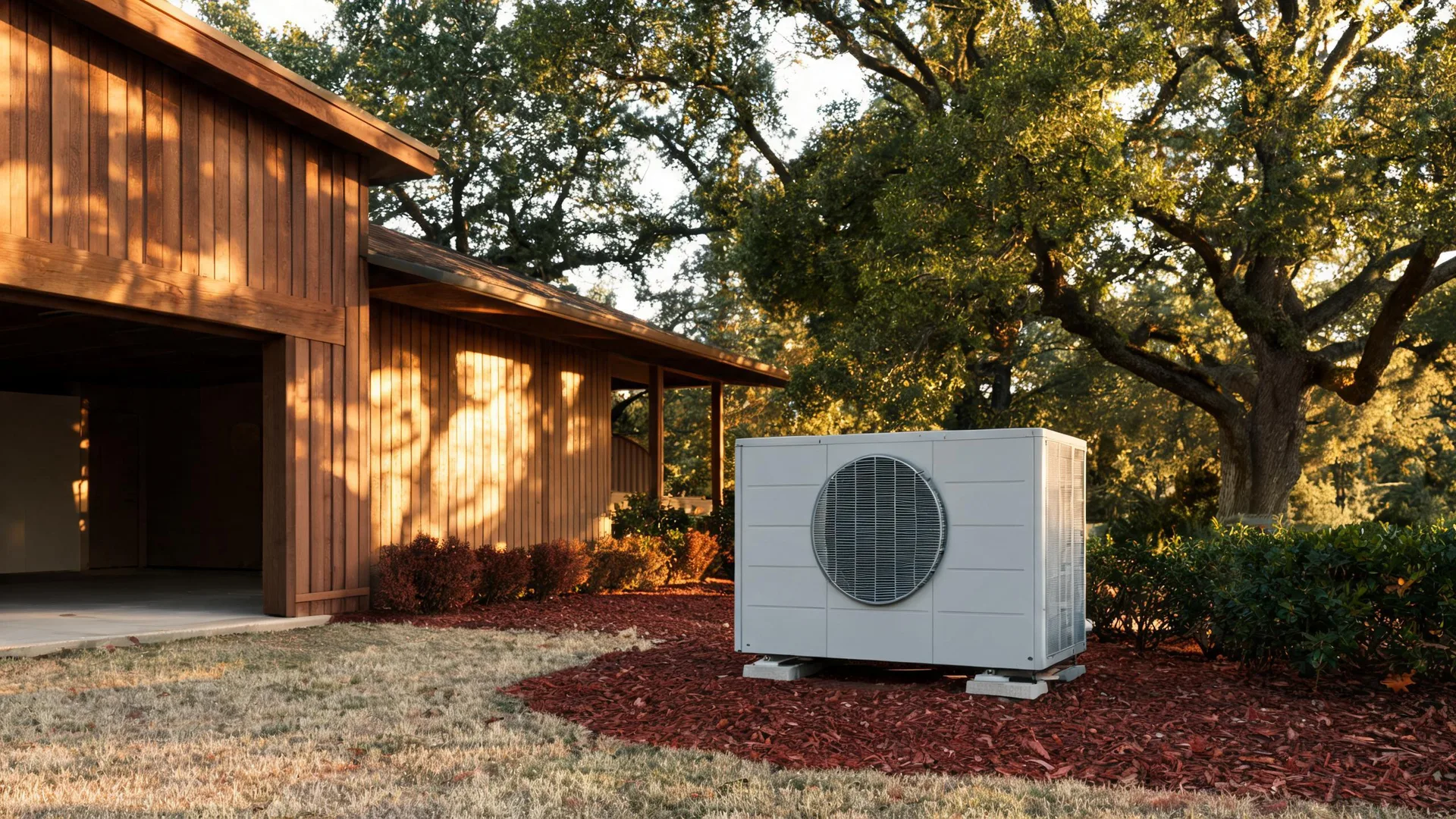
A residential heat pump outdoor unit mounted on a concrete pad next to a house with gray vinyl siding.

A newer system failing young still has a straightforward fix

If your heat pump has been running fine up to now, age probably isn't what's wrong with it. Most homes here were built in 1986 or later, and a system that came with a house that age has no reason to be worn out. Worth checking the age against your own unit if you know when it was put in. A breakdown in a system that young is almost always one part failing, not the whole thing giving out, and that's a repair, not a replacement.

What you can check before you call

Look at the thermostat first. If the screen is blank, check whether it runs on batteries and swap them before anything else. Make sure it's set to the mode you want and the set temperature is actually past the room temperature, not sitting right at it. Walk outside and look at the unit itself. Clear away any leaves, grass clippings or branches stuck against the cabinet, since blocked airflow across the coil will stop it from heating or cooling properly. Check that the outdoor fan is spinning when the system calls for heat or cool. If it's iced over heavily outside of a normal defrost cycle, or not spinning at all, that's worth mentioning when you call.
What to leave alone

Don't take the outdoor cabinet apart or reach inside it. The fan blade, the coil and the compressor are not something to handle without the power locked out, and a heat pump runs on a charge of refrigerant that has to be measured and recovered properly, not topped off by guesswork. Don't keep flipping the breaker if it trips more than once. A breaker that trips again right away is telling you something is actually drawing too much current, and resetting it repeatedly can damage the compressor. Check the filter and change it if it's dirty, since that's the one airflow problem a homeowner can fix directly. Past that, a tech needs to get gauges and a meter on it to know what's actually wrong.

A heat pump fails in a handful of predictable ways. The capacitor that kicks the compressor and fan motors on weakens over time and eventually can't start them at all. The reversing valve, which switches the system between heating and cooling, can stick in one position so the unit blows the wrong temperature air or won't switch over. Refrigerant leaks out slowly at a fitting or a coil joint, and a system low on charge runs long and still can't keep up. The outdoor coil gets coated with dirt or crushed by debris and can't move heat the way it needs to. Defrost controls fail too, and a unit that can't clear ice off the coil in winter loses capacity until it's doing almost nothing. Most of these show up as the system running constantly, blowing air that isn't the right temperature, or short cycling, and all three are worth a service call before the part that's struggling takes something else down with it.

A heat pump that's struggling still has to run to heat or cool the house, and running costs money every hour it's on. A weak capacitor that makes the compressor strain to start, or a low charge that keeps the system running long, both mean it's drawing power the whole time without doing the job right. Waiting doesn't fix that draw, and it doesn't fix the part either. Most of what causes this is a single part failing, a capacitor, a valve, a charge that needs bringing back up, and that's a quick thing for a tech to find with gauges and a meter. Getting it looked at sooner stops the waste instead of paying for it every month until someone does.