White stucco houses with red tile roofs glowing with interior light at dusk, nestled at the foot of a dry oak-covered hill.

Heat Pump Repair in Napa, CA

Tell us about the job

Takes about a minute. No obligation.

RepairHeat PumpNapa County, CA
Step 1 of 2

What ZIP code is the job in?

The reversing valve sticks or fails

The reversing valve switches a heat pump between heating and cooling, and it moves every time the system changes direction, so it takes the brunt of the wear. When it sticks, the unit can get stuck blowing cold air when it should heat, or it won't switch back the other way. A failing valve sometimes makes a hard clunk when it tries to shift.


The outdoor unit takes the worst of it

The outdoor coil and fan sit through weather, debris and ice all year, which wears on them more than anything inside a closet or attic. A dirty coil chokes airflow and makes the compressor work harder until something gives out. A frozen coil that never clears on its own usually points to a failed defrost control or sensor, not just cold weather.

6 months
November through April, your system heats
4 months
June through September, it cools
39°F
the average winter night it heats against
87°F
the average summer afternoon it cools against
Isometric cutaway illustration of a single-story house showing interior rooms, ceiling ductwork connected to an air handler, and an outdoor condenser unit linked by a line set.
Your system heats November through April and cools June through September.

NOAA nClimDiv, 1991–2020 normals

November is when heat kicks back on here after six months of sitting idle.

A heat pump that struggled last April will show the same fault again in its first week of heat.

Napa doesn't run this system hard. When it fails, something in it failed.

Power costs 31.97 cents a kWh statewide
72 damaging wind events from 2015 to 2024
1 hail event from 2015 to 2024

Half the homes in Napa County were built in 1976 or earlier, half in 1976 or later. That split doesn't point to any one cause of heat pump trouble. An older house might still have its original ductwork or an electrical panel that's never been touched. A newer one can have a return that was never sized right or a thermostat that doesn't match the system. Neither age explains a reversing valve that sticks or a coil that ices over. The fix starts with finding which part actually failed, not with guessing based on when the house went up.

This system had an easy year. A repair should hold.

Napa doesn't see much hail, and damaging wind is the exception here, not the rule. Winters stay mild too, with overnight lows averaging 39°F. None of that puts much strain on a heat pump. So when one in your house isn't working right, the cause is usually one failed part, not a system worn down by the climate. That's worth fixing.

Find a contractor
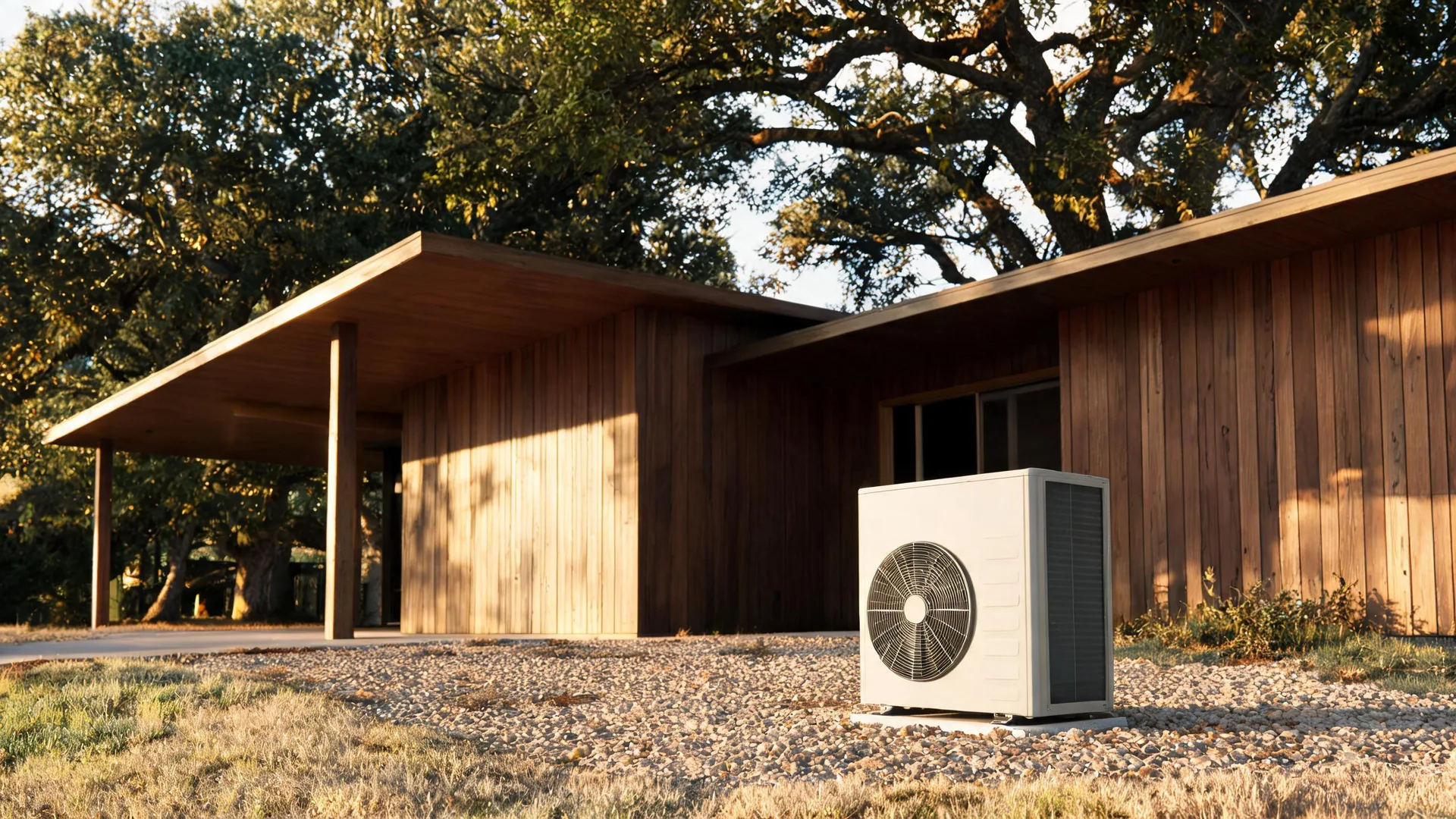
A white mini-split heat pump outdoor unit mounted on a concrete pad beside a gray-sided house, surrounded by gravel and green shrubs.

What to check before you call anyone

A few things are worth checking before anyone comes out. Start with the thermostat. Make sure it's set to heat, not cool, and that the set temperature is actually above room temperature. A thermostat running low on batteries can lose its schedule or just stop calling for heat. Check the breaker panel next. A tripped breaker shuts the whole system down, and a heat pump often has a separate breaker for the indoor air handler and the outdoor unit, so check both. If you can get to the outdoor unit, look at the coil. Leaves, grass clippings and ice all block airflow the same way, and a unit that can't pull air through the coil struggles no matter what else is right with it. Clear away anything piled against it, but don't chip at ice yourself, since that can bend the fins. Last, pull the air filter and hold it up to the light. If you can't see through it, it's starving the system of airflow, and it's the one thing on this list that's entirely yours to fix.

What gets checked first

A tech runs the system in both heating and cooling to see what the reversing valve actually does under power. Static readings on a dead system don't show much. Refrigerant pressures, line temperatures and the signal reaching the valve tell the real story, and most of that only shows up while the system is running.

Why the visit comes before the quote

A sticking valve, a failed defrost board and a weak capacitor can all look like the same complaint. The system won't heat right. They don't share a fix. Opening the cabinet and testing each part in order is what turns a guess into an answer, so the diagnosis has to happen before anyone can say what the repair involves.

A heat pump in trouble doesn't always stop outright. It runs, but something about it is off. Air coming from the vents feels cool when it should feel warm, or the system runs long stretches without the house catching up to the thermostat. Short cycling, where it kicks on and off every few minutes, points to a control fault or a refrigerant problem rather than anything you can fix by adjusting the thermostat. Ice on the outdoor coil that's still there an hour after the system shuts off isn't normal, even in cold weather, and it means the defrost cycle isn't doing its job. A hard clunk when the system switches between heating and cooling is usually the reversing valve, and it won't go away on its own. Any burning smell or a breaker that trips more than once means stop running it and get it looked at.

Whether a repair makes sense comes down to what actually broke, not how the system has been acting. A reversing valve or a defrost control is a contained fix. Swap the part, and the rest of the system, the compressor, the coils, the lines, goes back to doing what it's always done. A compressor is a different question, because it's the part that moves the refrigerant, and a failing one usually means the system has been straining for a while before anyone noticed. If the compressor itself is the problem, a tech will walk you through whether putting money into it makes sense or whether that money is better spent on a new system. That's not a call to make off one symptom. It takes opening the unit up and seeing which part actually gave out.