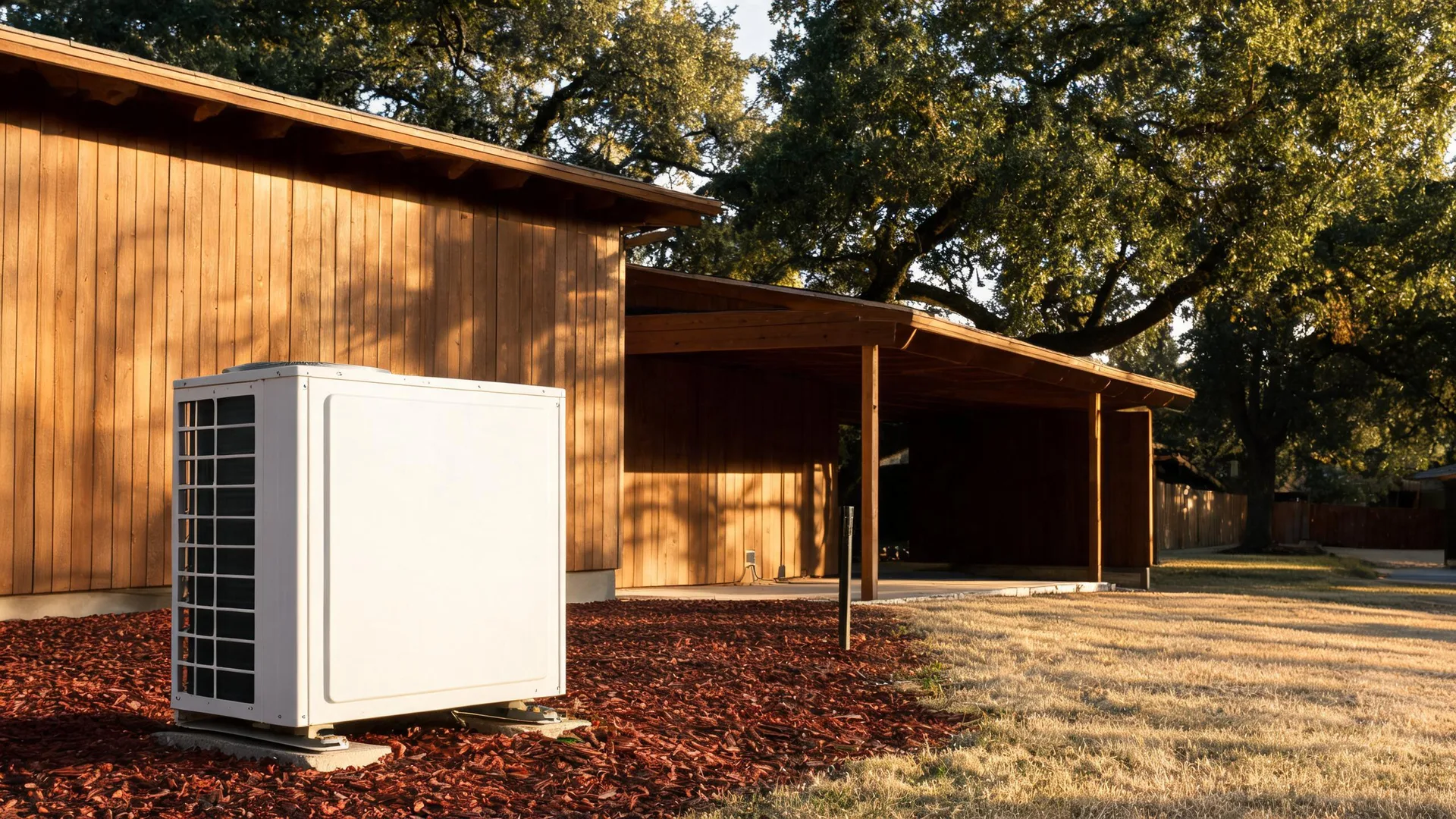
Winters here stay mild
Oakland's overnight low averages 41°F through December, January and February. A heat pump isn't working against single-digit nights, so the compressor and coils don't get pushed as hard as they would somewhere colder.
Takes about a minute. No obligation.
Oakland's overnight low averages 41°F through December, January and February. A heat pump isn't working against single-digit nights, so the compressor and coils don't get pushed as hard as they would somewhere colder.
When the unit hasn't been straining against brutal cold year after year, a repair is more likely to solve the problem for good. If your heat pump is acting up, age or a worn part is a more likely cause than the climate wearing it out.
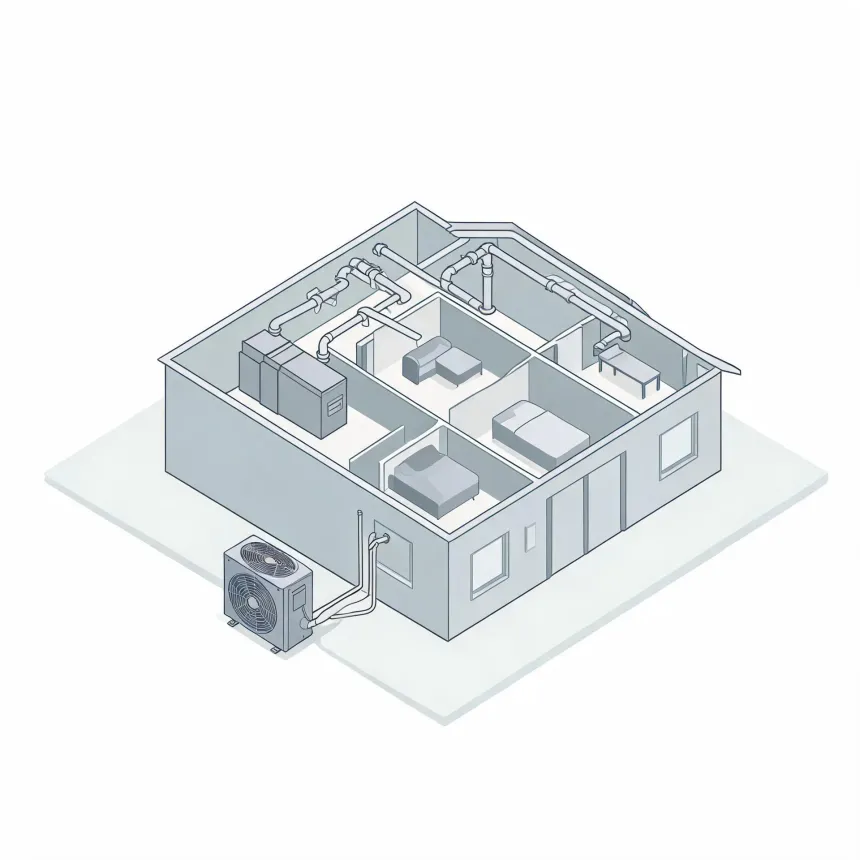
NOAA nClimDiv, 1991–2020 normals
Heat here starts in November, with October the month before it.
A heat pump that struggled last season will show it again in the first cold snap, so a checkup in October catches it before the run of mild days ends.



Half the homes in Alameda County were built in 1969 or earlier. A house that old wasn't built with a heat pump. Whatever is running out there now was put in later, maybe when the last one wore out, maybe more recently than that. So the house's age doesn't tell you the system's age, and that's the number that matters here. Ask whoever comes out to look how old the unit actually is and how much life it has left. That's what decides whether this is worth fixing or worth replacing.
Alameda County sees its share of wind and hail, but neither one is what usually takes down a heat pump here. The cause is almost always a part inside the unit, not the weather outside it. Worth finding out what actually failed before you pay to fix it.
Find a contractorA homeowner usually notices a heat pump problem before a tech ever touches it. The air coming out of the vents isn't warm enough or cool enough to match the thermostat, or the system runs long stretches without ever reaching that setting. Sometimes it switches into the wrong mode, blowing cold air on a cool morning instead of heat. Ice on the outdoor unit is another one people see directly, since a healthy system defrosts itself on a schedule and a failing one doesn't. Short cycling, where it kicks on and off every few minutes instead of running a normal stretch, points to a part struggling to keep the compressor going. A grinding or buzzing sound from the outdoor unit usually means the fan motor or the compressor itself is under strain. None of these fix themselves by waiting, and the system keeps running in that state until someone looks at what's actually wrong.
A capacitor that's starting to go still kicks the compressor on, just slower, and that slow start heats the windings more than a clean start would. A contactor with pitted contacts still closes, but it arcs a little more each time. Nothing shuts the system down, so it keeps running in a state that wears it out faster than before.
A reversing valve that's not sealing right lets the compressor work against itself, heating and cooling at the same time. A coil icing over blocks airflow, so the compressor runs against a system that can't move heat the way it needs to. The part that fails first is rarely the only part damaged by the time someone finally gets a look at it.
A heat pump fails the same few ways, over and over. The reversing valve sticks, so the system gets stuck heating when it should cool, or the other way around. The defrost control misreads the outdoor coil and either skips a defrost cycle it needed or runs one it didn't, and either way ice builds where it shouldn't. The run capacitor weakens, and the compressor starts slower and hotter each time until one day it doesn't start at all. The outdoor fan motor seizes or the compressor overheats and trips its own protection, usually from years of dirt and strain rather than one bad day. Most of what goes wrong traces back to one of these, not to anything sudden.
A repair is worth doing when the failure is a single part and the rest of the system is sound. A capacitor, a contactor, a defrost control board, these get swapped out and the heat pump runs like it did before. Replacement makes more sense when the compressor itself is failing, since that part costs more than the rest of the unit combined and a tech won't want to put it into a system that's already old. The refrigerant type matters too. An older heat pump may run on a refrigerant that's being phased out, and if the coil or compressor fails on one of those, finding parts gets harder and pricier as time goes on. Age matters less than what's actually broken. A unit with a bad capacitor is a quick fix regardless of how long it's been running. The same unit with a failed compressor is a different conversation.