







White stucco Spanish Colonial Revival houses with illuminated windows sit among trees on a hillside at dusk, beneath a deep blue twilight sky.

Heat Pump Repair in Oxnard, CA

Tell us about the job

Takes about a minute. No obligation.

RepairHeat PumpVentura County, CA
Step 1 of 2

What ZIP code is the job in?

Heat pumps in Oxnard run heat from November through May and switch to cooling in July. October is when a system that has barely run since spring suddenly has to work every day. If a capacitor is weak or the charge is a little low, that's when it shows up, not in the mild weeks before. A heat pump acting up right as one of these stretches starts is usually not a new problem. It is an old one that finally got asked to do more.

7 months
November through May, your system heats
3 months
July through September, it cools
38°F
the average winter night it heats against
83°F
the average summer afternoon it cools against
Isometric illustration of a cutaway single-story house showing interior ductwork and an air handler connected by lines to an outdoor condenser unit on a pad beside the building.
Your system heats November through May and cools July through September.

NOAA nClimDiv, 1991–2020 normals

Winter lows in Ventura County average 38°F, nothing close to a hard freeze.

A heat pump here isn't fighting the cold most of the year, so trouble in yours is more likely a part wearing out than the system being overworked.

Nothing about Oxnard is hard on a heat pump. A worn part is.

Power costs 31.97 cents a kWh statewide
38 damaging wind events from 2015 to 2024
4 winter storms from 2015 to 2024
Oxnard, CAHalf the homes in Ventura County were built in 1978 or earlier, half after.

What's actually failing matters more than how old the unit is. A capacitor, a contactor, a fan motor, those are worth fixing almost without exception. They're cheap next to the cost of the whole system, and a failure there doesn't mean anything else is wrong. A compressor is a different story. It's the one repair that can cost close to what a new system runs, so that's worth a second opinion before you commit, not something to fix on reflex. Age plays into it too. A unit that's been reliable for years and suddenly has one part go is usually still worth fixing. One that's needed a repair every season for a while is telling you something, and the next failure might be the one that isn't worth chasing.

Get it looked at early

Problems tend to show up in the first weeks of the season, when the load hits a part that was already weak.

Find a contractor
A man in a cap, dark long-sleeved shirt and brown work pants carries a canvas tool bag up porch steps toward a blue front door, with a shrub in a blue planter beside it.
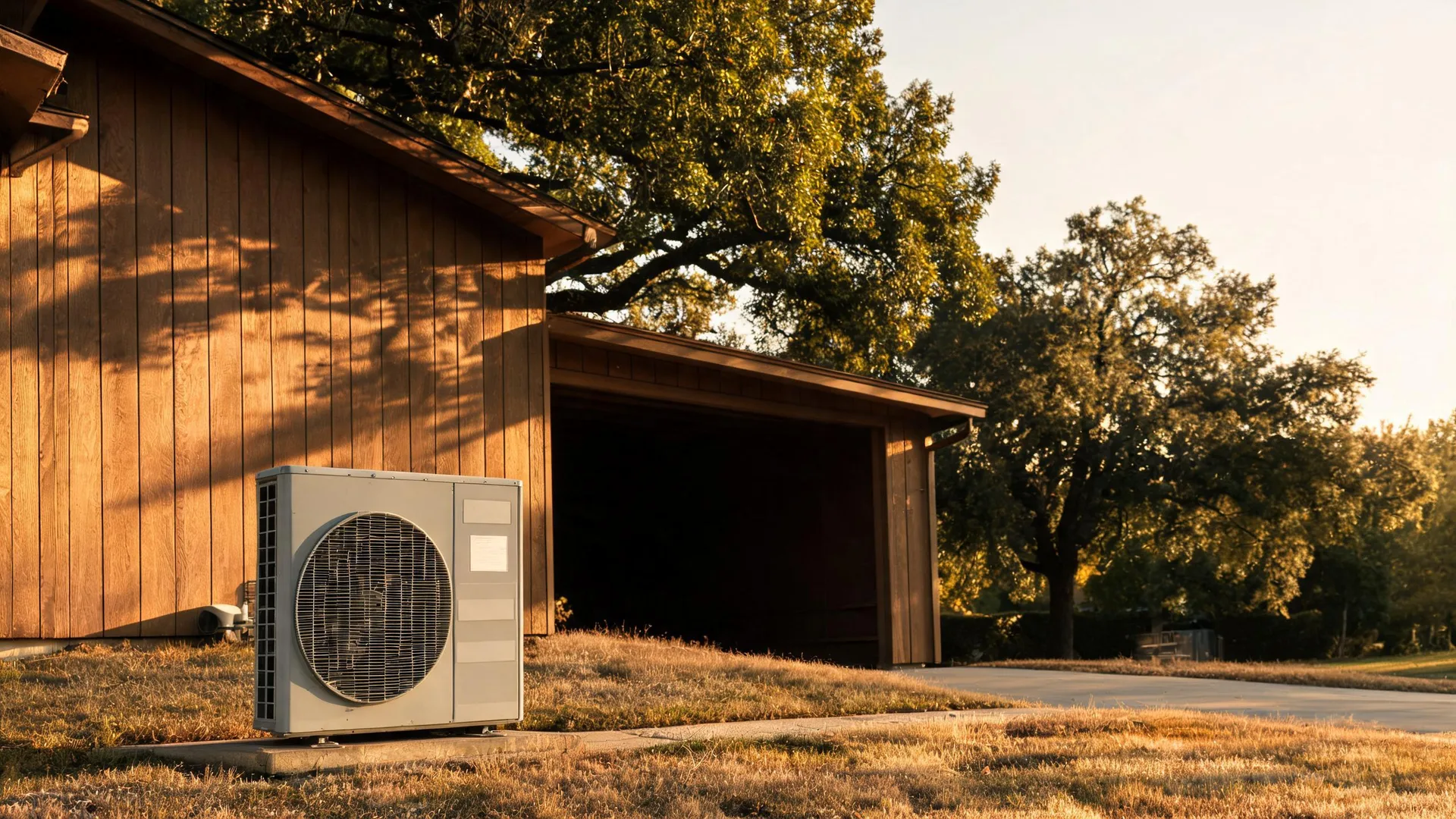
A gray heat pump outdoor unit mounted on a concrete pad next to a residential house with lap siding and stone accents.

What a struggling heat pump sounds and feels like before it fails

A heat pump that's about to need a repair usually tells you before it quits outright. It'll run longer than it used to, cycling on and on without quite satisfying the thermostat. Air coming out of the vents feels lukewarm instead of warm, or you notice it blowing cool during a defrost cycle and staying that way too long after. Outside, the unit might ice over and not clear itself, or you'll hear it humming without the fan or compressor actually starting, which points to a capacitor on its way out. A grinding or screeching sound from the outdoor unit usually means a motor bearing is wearing down. None of these mean the whole system is done. They mean one part is struggling, and the rest of the system is still trying to work around it.

Check the thermostat first

Make sure it's set to heat, not auto or cool, and that the set temperature is actually above room temperature. Replace the batteries if it uses them. A thermostat that's lost power or lost its schedule will make a heat pump look broken when nothing outside is wrong at all.
Look at the outdoor unit

Walk outside and see if the unit is caked in ice, covered in leaves or debris, or sitting too close to a fence or wall that blocks airflow. Clear away anything blocking the sides. A unit that can't breathe will struggle no matter what shape its parts are in, and this is the one thing you can fix yourself before anyone comes out.

Most heat pump failures trace back to a handful of parts, and they're not the compressor. A capacitor weakens over time until it can't give the fan motor or compressor the jolt they need to start, so the unit hums but doesn't run. A contactor's contacts pit and burn from years of opening and closing, and eventually they stick or stop making contact at all. Fan motors wear at the bearing until they drag, then grind, then seize. Outdoors, the reversing valve is what switches the system between heat and cooling, and if it sticks, the unit keeps doing one when you've asked for the other. None of these take the whole system down with them. They fail on their own, one at a time, and a unit can run fine for years in between.

A diagnostic visit starts outside at the unit itself, not with a clipboard. Power gets cut first, then the panel comes off so the contactor, capacitor and wiring can actually be looked at rather than guessed about. A tech will check refrigerant pressures, because a reading that's off tells you whether you're dealing with a leak, a bad valve or just a dirty coil. Electrical parts get tested with a meter rather than eyeballed, since a capacitor can look fine and still be weak. Indoors, airflow gets checked too, because a starved system can mimic a failing part when the real problem is a clogged filter or a blocked return. The point of all this is to find the one part that's actually failing before anything gets replaced, not to swap parts until something works.