


An outdoor HVAC condensing unit on a concrete pad next to a beige single-story house with a dark shingle roof.

Heat Pump Repair in San Bernardino, CA

Tell us about the job

Takes about a minute. No obligation.

RepairHeat PumpSan Bernardino County, CA
Step 1 of 2

What ZIP code is the job in?

San Bernardino County sees damaging wind often, 425 times between 2015 and 2024. A heat pump sits outside through all of that. Wind drives dust and debris into the outdoor unit, and that coil has to stay clean to move heat the way it's supposed to. Hard wind can also rock the unit on its pad or stress the refrigerant lines running to it. When something's off with a heat pump out here, wind exposure is often part of the reason why. Worth having a contractor check the outdoor unit itself, not just the thermostat settings.

5 months
November through March, your system heats
6 months
May through October, it cools
39°F
the average winter night it heats against
99°F
the average summer afternoon it cools against
Isometric grey-toned illustration of a cutaway house showing interior rooms, ceiling ductwork and an air handler, connected by lines to an outdoor condenser unit beside the building.
Your system heats November through March and cools May through October.

NOAA nClimDiv, 1991–2020 normals

Heat pumps here switch over to heat in November, right after running cooling all the way through October.

A unit that was already struggling to cool in October gets no break before it has to heat. Weak parts fail fast in that first cold snap.

Half the homes in San Bernardino County were built in 1983 or later. If yours is one of them, your heat pump likely isn't original to the house, but it's also not competing with decades of wear on the ductwork or electrical behind it. A newer system that's acting up is usually dealing with one bad part, not a cabinet full of them. A failed capacitor, a low refrigerant charge, a bad control board. That's a repair, not a reason to replace the unit. Worth getting a contractor to look at what's actually wrong before assuming the worst.

A struggling heat pump costs more to run here than almost anywhere

Electricity in California ran 31.97 cents per kilowatthour in 2024, among the highest rates in the country. A heat pump that's low on charge or working around a bad part draws more power to do the same job. Every month it runs that way costs more here than it would almost anywhere else.

Find a contractor
A gray heat pump outdoor unit mounted on a concrete pad next to a residential house with lap siding and stone accents.

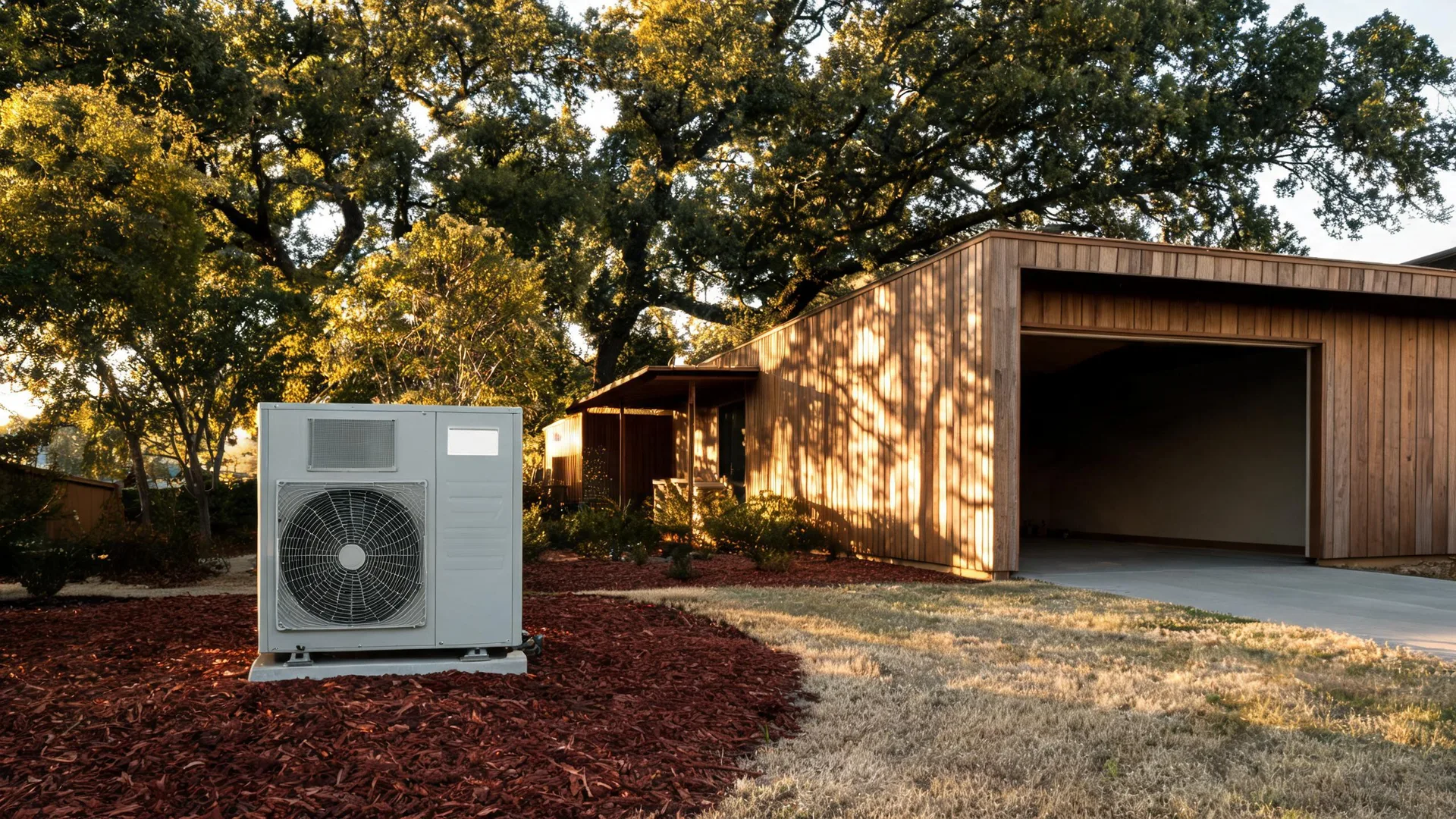
Time outside adds up on that outdoor unit

However long that unit has been out there, it's been exposed to wind the whole time, and that coil needs to be clean to move heat the way it should. A dirty coil makes the compressor work harder for the same result. If it's short-cycling or struggling to keep up, have a contractor check the coil and the pad before anything else.

It's running but not keeping you comfortable

A heat pump short on refrigerant or struggling with a weak compressor will still turn on and blow air. The air just won't be as warm as it should be, and the unit will run longer stretches trying to catch up. If you're bumping the thermostat higher than usual to get the same comfort, that's the system telling you something's wrong, not a sign to just adjust your habits.
Noises and cycling patterns worth listening for

A heat pump that clicks on, runs for a short while, then shuts off and restarts again and again is short-cycling, and that points to a bad capacitor, a dirty sensor, or airflow that's restricted somewhere. A hard clunk at startup or a grinding sound from the outdoor unit usually means a motor or compressor part is wearing out. These sounds don't fix themselves, and running the unit while they continue usually means the part fails completely instead of partially.

A heat pump that's struggling doesn't fail cleanly. It fails one part at a time, and each part that goes puts more load on the one next to it. A compressor working against low refrigerant charge runs hotter than it should, and that heat breaks down the oil that's supposed to protect it. A weak capacitor makes the compressor draw harder to start, and every hard start wears the windings a little more. Keep running it in that state and a problem that was a capacitor swap becomes a compressor replacement, which is a different repair entirely. Shutting it off and getting a contractor to look at it before that happens is what keeps a small fix a small fix.

Age is the thing to weigh before paying for a repair. A heat pump has one compressor, and that part is not cheap to replace on its own. If the compressor is still good and the problem is a capacitor, a contactor, or a control board, fixing it makes sense almost every time. Those parts fail on their own and don't mean anything about the rest of the system. But if the compressor itself is what's failing, or the unit has needed a string of repairs in close succession, putting more money into it is harder to justify. Ask the contractor which part is actually bad before deciding anything, because that answer tells you more than how old the unit is.