







A single-story stucco house with a clay tile roof, framed by large oak trees, with agave and succulent plantings and a lawn in the foreground.

Heat Pump Repair in San Diego, CA

Tell us about the job

Takes about a minute. No obligation.

RepairHeat PumpSan Diego County, CA
Step 1 of 2

What ZIP code is the job in?

San Diego County saw 442 severe weather events between 2015 and 2024. Most of that was wind, with 370 damaging wind events over the same stretch. Eleven hail events too, and a tornado touched down once. The outdoor unit sits outside through all of it, taking whatever blows through the yard. A hard gust can bend the fins on the coil or drive debris into the cabinet, and the unit can keep running for a while after. If yours took a hit in the last storm, even one that seemed minor, it's worth having someone check it before the next one.

6 months
November through April, your system heats
4 months
June through September, it cools
41°F
the average winter night it heats against
89°F
the average summer afternoon it cools against
Isometric illustration of a cutaway single-story house showing interior ductwork, an indoor air handler and simple furniture, connected by lines to an outdoor condenser unit beside the building.
Your system heats November through April and cools June through September.

NOAA nClimDiv, 1991–2020 normals

Half the homes in San Diego County were built in 1980 or later.

A heat pump that came with a newer house still has working life in it, and that's worth repairing.

Power here costs more, so a struggling heat pump costs more

Power here costs 42.22 cents per kilowatt-hour
370 damaging wind events from 2015 to 2024
11 hail events from 2015 to 2024
October is when a weak heat pump gets found outHeat here runs November through April, and the first cold nights put the load on parts that were already failing.

If your heat pump came with the house and the house went up in 1980 or later, get the repair quote before you get a replacement quote. A unit that age still has years in it, and a technician can usually tell you within one visit whether what failed is a one-time part or a sign the whole system is wearing out. Ask what broke and why, not just what it costs to fix. A failed capacitor or a stuck contactor says little about the rest of the unit. A coil that's corroding from the inside says more.

If your heat pump has been through a storm, get it checked before the next one

A heat pump that keeps running after a storm can still be hiding bent fins or debris in the cabinet. If yours took a hit recently, even one that seemed like nothing, get it looked at before the next one comes through.

Find a contractor
A man in a cap, gray T-shirt and tan work pants climbs porch steps toward a blue front door, carrying a canvas tool bag in his right hand, with a potted shrub in a blue planter beside the door.
A dark gray heat pump unit mounted on a concrete pad next to a house with gray siding and a stone veneer wall.

What to check before the technician shows up

Before anyone comes out, walk outside and look at the unit. Check that nothing is blocking the airflow around it, no leaves packed against the cabinet, no branches or stored items pressed up against the sides. Pull the air filter inside and hold it to the light. If you can't see through it, it needs changing, and a clogged filter alone can make a heat pump run weak or short cycle. Look at the outdoor fan through the top grille. If it's not spinning when the system calls for heat or cool, that's worth noting exactly, because it tells the technician something specific. Check your thermostat batteries and settings before anything else. A thermostat set to the wrong mode or a dead battery looks exactly like a failed heat pump from the homeowner's side. Listen for what the system does when you turn it on: a click with nothing after it, a hum that doesn't turn into a running motor, or constant short cycles where it kicks on and off within a minute or two. Write down what you hear and when it happens. None of this tells you what's broken, but it saves the technician a diagnostic step and saves you a second visit.

The reversing valve is the part unique to this machine

A heat pump has one part a straight air conditioner doesn't: the reversing valve that switches it between heating and cooling. When it sticks, the system can get stuck in one mode, or run but blow the wrong temperature air. It's a common failure point simply because it works every heating and cooling cycle, year round, in both directions.
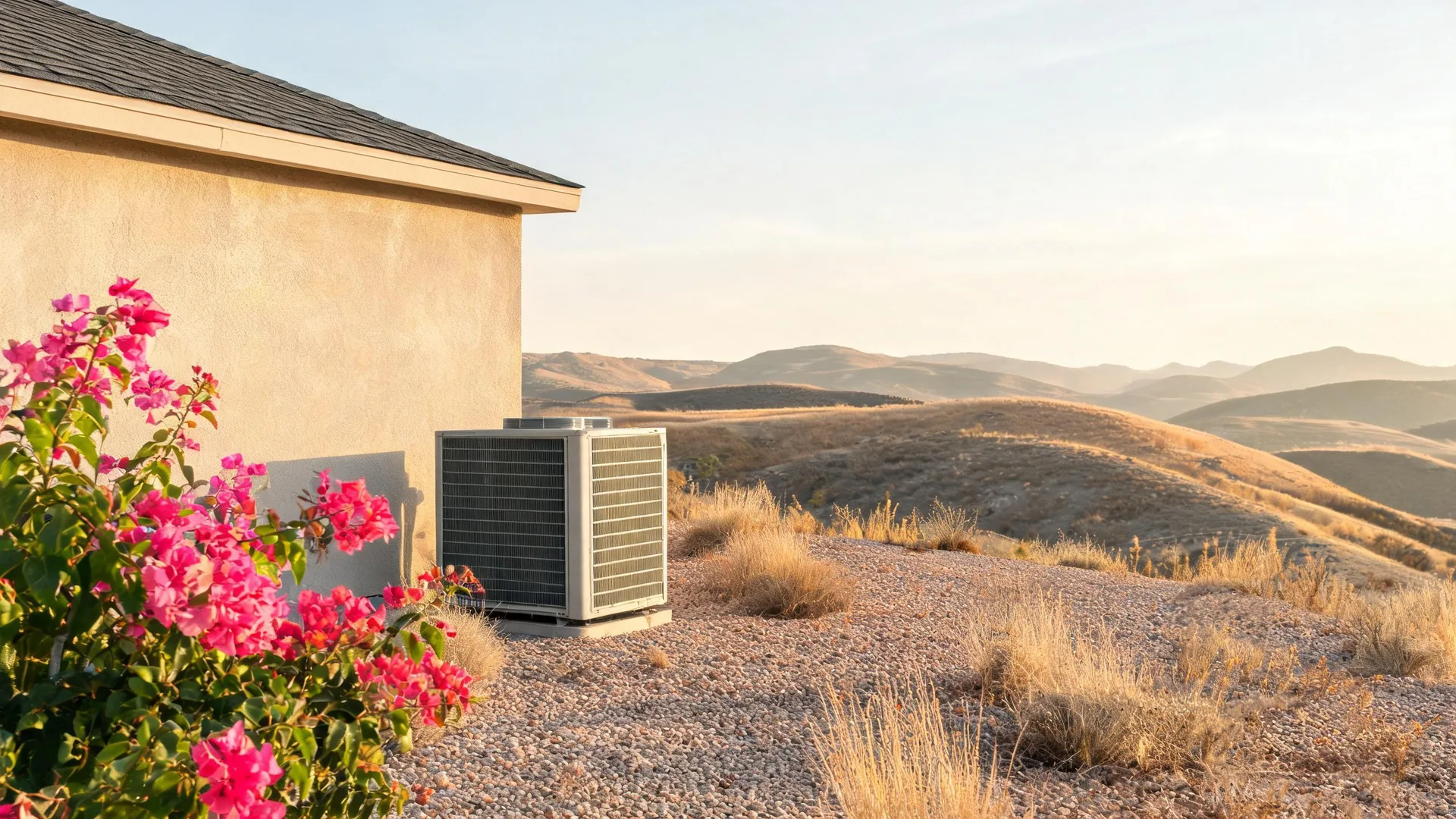
Most failures come from the outdoor unit

The outdoor unit holds the compressor, the coil and the fan, and it sits exposed to weather and debris the indoor half never sees. A coil caked with dirt or leaves can't transfer heat properly, so the system works harder and the compressor takes the strain. Refrigerant leaks, worn contactors and failing capacitors all show up here first, which is why a technician usually starts the diagnosis outside.

A heat pump that's struggling doesn't stop drawing power, it just uses more of it to do less. A weak capacitor makes the compressor work harder to start. A dirty coil makes the whole system run longer to reach the same temperature. None of that shows up as a dramatic failure, it shows up on the bill, month after month, until someone looks at it. Getting it checked now is cheaper than paying to run a bad unit through another summer and winter.

A diagnostic starts outside at the unit itself, before any panel comes off. The technician checks the readings: the pressure in the lines, the temperature split between the air going in and the air coming out, the amps the compressor is pulling. Those numbers point to where the problem lives before anything gets opened up. Next comes the electrical side, the capacitor, the contactor, the wiring to the outdoor unit, since a weak part here can look like a much bigger failure from inside the house. If the system is stuck in one mode or blowing the wrong temperature, the reversing valve gets tested directly rather than guessed at. The visit ends with an explanation of what failed and why, not just a part number and a price.