






Cream stucco single-story buildings with red clay tile roofs behind a tall stucco wall, shaded by large leafy trees and fronted by trimmed shrubs.

Heat Pump Repair in Santa Rosa, CA

Tell us about the job

Takes about a minute. No obligation.

RepairHeat PumpSonoma County, CA
Step 1 of 2

What ZIP code is the job in?

Half the homes in Sonoma County were built in 1979 or later, which puts a lot of local heat pumps well inside their working life. If your house falls on that side of the line, the system inside it probably isn't old enough to be the real problem. A repair makes sense on equipment with years still ahead of it. Worth checking when your system went in, especially if you bought the house rather than built it.

7 months
November through May, your system heats
40°F
the average winter night it heats against
79°F
the average summer afternoon it cools against
Isometric cutaway illustration of a single-story house showing interior ductwork, an indoor air handler and furnace unit, and an outdoor condenser connected by a line, on a white background.

Santa Rosa air carries less moisture than most of the country sees all summer.

A heat pump pushing drier air doesn't work as hard, so parts last longer before something fails.

Seven months of work starts cold, in November

Heat runs November through May
Climate zone 3C
Power here costs 38.06 cents per kilowatt-hour

A system that's already acting up doesn't wait for a convenient time to cost you. Every hour it runs rough between now and the repair is an hour pulling extra current at the highest electric rate in the country. Getting a tech out while the problem is small keeps those hours to a minimum. There's no upside to letting a struggling heat pump run through another week of mornings or afternoons before someone looks at it.

Know the age before you decide its fate

If your system came with the house, find out when it went in before you assume the worst. A heat pump installed with a newer build still has years of work left in it, and that's worth a repair call instead of a replacement quote.

Find a contractor
A man in a beanie, dark jacket and tan work pants climbs porch steps toward a blue front door, carrying a canvas tool bag, with a potted shrub in a blue planter beside him.
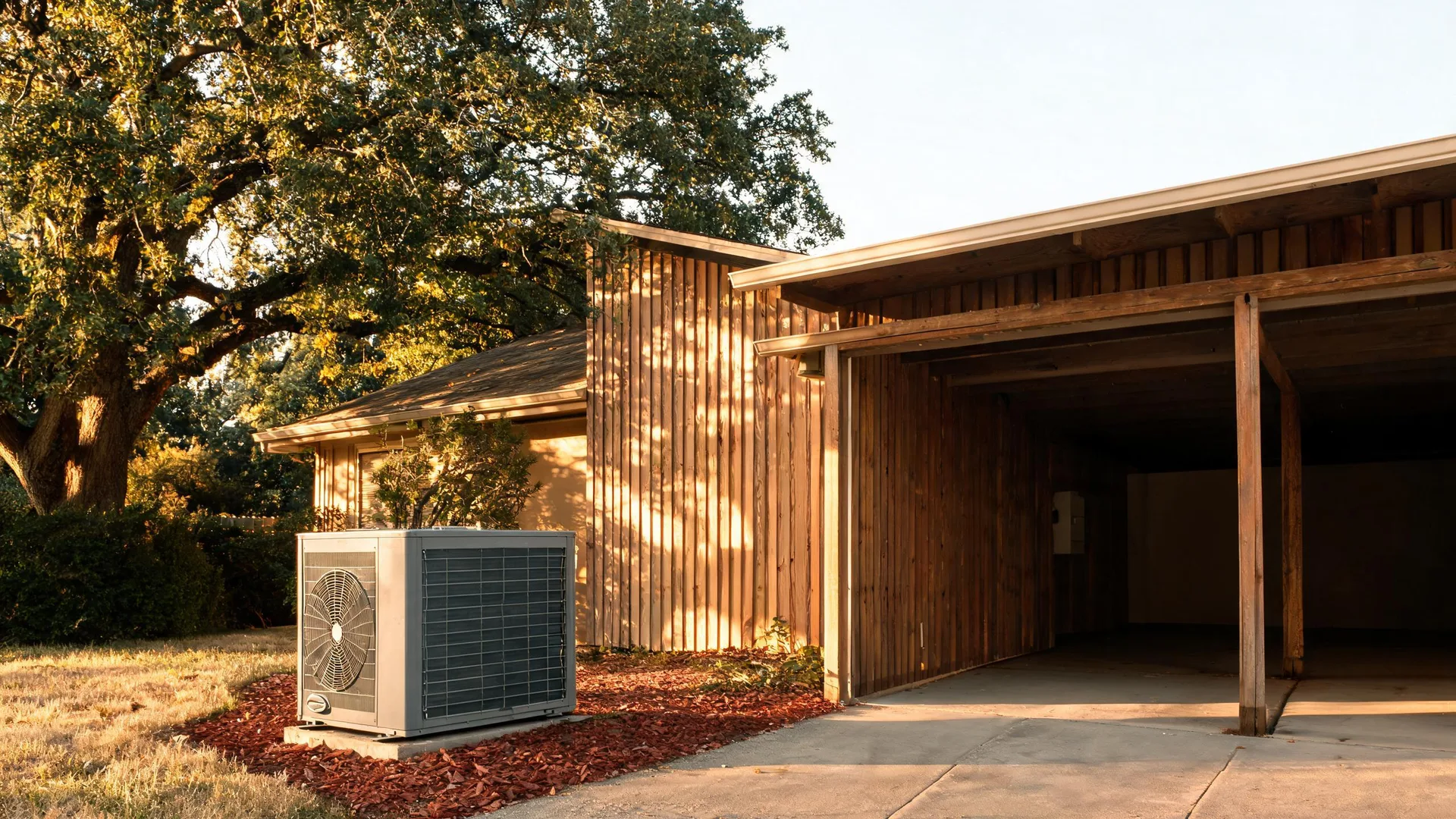
A residential heat pump outdoor unit mounted on a concrete pad next to a house with gray vinyl siding.

Low wear means problems stay small if you catch them

A heat pump that isn't working hard still needs to be looked at when something's off. The parts inside wear slower here, but they don't last forever, and a repair now keeps a light-duty system running the rest of its years. Worth getting a tech out as soon as you notice the problem rather than waiting to see if it clears up on its own, since a small fault on a machine with low wear is usually a quick fix, not a sign the unit is done.

What the system is telling you

A heat pump in trouble doesn't usually just quit. It runs longer than it used to, blows air that isn't quite warm or quite cool enough, or cycles on and off more than it should. Ice forming on the outdoor coil when it shouldn't be there is a sign something's off with refrigerant or airflow. A hissing or clanking sound you haven't heard before means a part is wearing out or refrigerant is escaping somewhere it shouldn't. Any of these is the system asking for a look before the small problem becomes a bigger one.
Why catching it early matters

A heat pump that's struggling doesn't fail all at once. A failing capacitor makes the compressor work harder to start. Low refrigerant makes the whole system run longer to hit the same temperature. Left alone, either one puts strain on the compressor itself, which is the expensive part to replace. Calling someone when you first notice the system acting up, rather than after it stops working altogether, is usually the difference between a simple repair and a much bigger one.

Most heat pump failures start with one of a few parts. The capacitor gives the compressor and fan motors the jolt they need to start turning, and it weakens over years of heat cycles until it can't do that anymore. The reversing valve is what lets the system switch between heating and cooling, and when it sticks, the unit gets stuck blowing the wrong temperature air or stops switching modes at all. Refrigerant doesn't get used up the way fuel does, so if a system is low, it's leaking somewhere, usually at a fitting or a coil that's corroded through. The outdoor coil itself takes a beating just sitting outside year after year, and once it's caked with dirt or damaged, the whole system has to work harder to move heat in or out. Contactors and relays wear out from the simple act of opening and closing thousands of times, and when they fail, the unit may not start at all.

If the system is already acting up, that's the reason not to wait on it. A unit running rough pulls more current to do the same job, and power here costs more than almost anywhere else. Getting a tech out now, while the capacitor or refrigerant problem is still small, means fewer hours of the system straining before it's fixed. Wait until the next hot spell or cold morning and those are the hours it runs worst, pulling the most power at the highest rate. A quick call now costs less than a bigger repair later, and it costs less on the power bill in between.