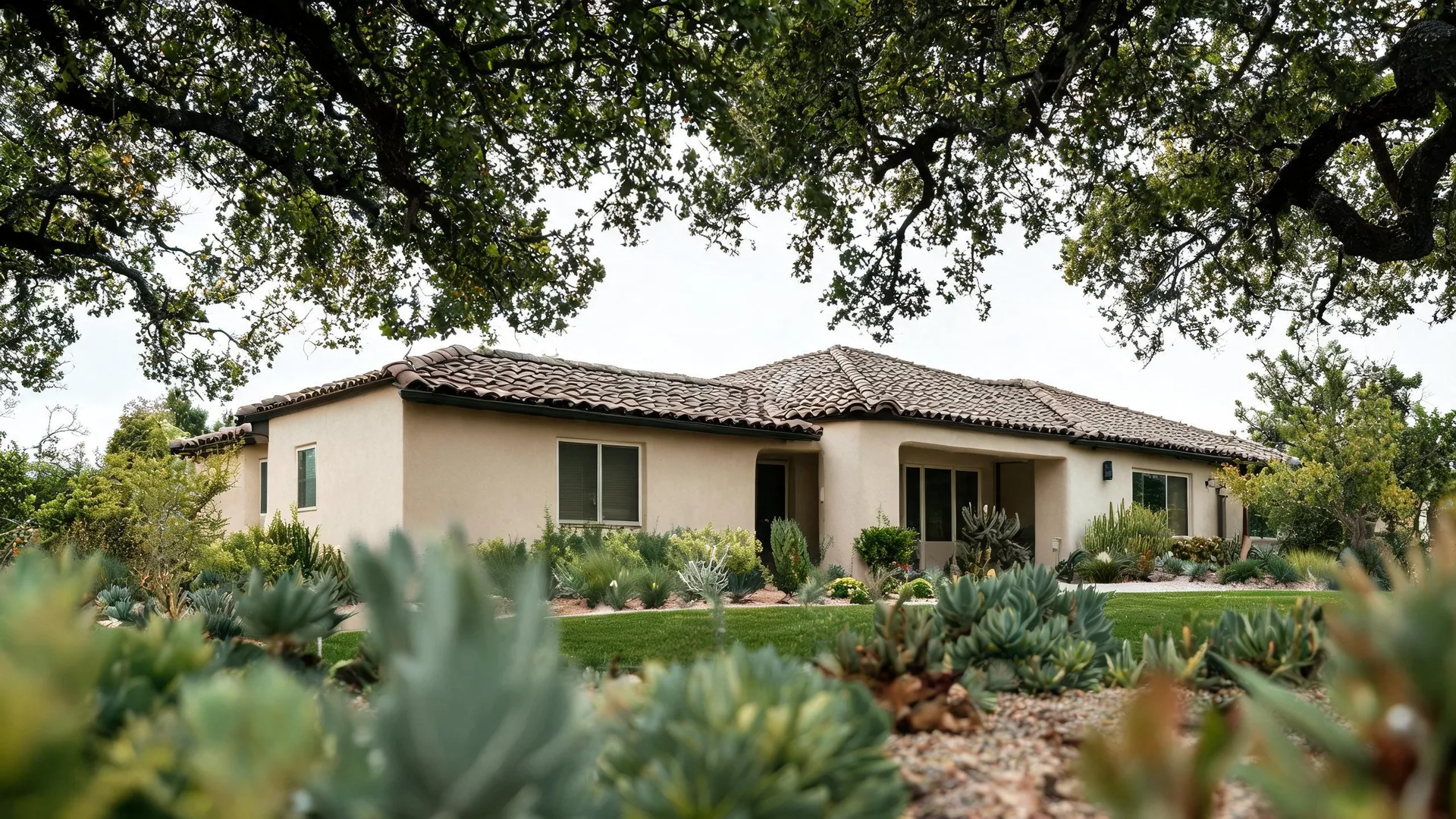
Single-story stucco house with a clay tile roof, framed by overhanging oak branches, with a lawn and drought-tolerant plantings including agaves in the foreground.

Heat Pump Repair in South Lake Tahoe, CA

Tell us about the job

Takes about a minute. No obligation.

RepairHeat PumpEl Dorado County, CA
Step 1 of 2

What ZIP code is the job in?

Warm air that isn't warm enough

A heat pump in heating mode should push air that feels warm at the vent, not just lukewarm. If it's running long stretches and the house still isn't catching up, the reversing valve or the compressor could be struggling, and that's worth a look before it quits outright.


Ice that won't clear itself

Some frost on the outdoor unit during a defrost cycle is normal. What's not normal is a coil that stays caked in ice for hours or looks solid all the way through. That points to a defrost control problem or a refrigerant charge that's off, and it only gets harder on the system the longer it runs that way.

8 months
October through May, your system heats
2 months
July through August, it cools
33°F
the average winter night it heats against
83°F
the average summer afternoon it cools against
Isometric line illustration of a cutaway single-story house showing interior rooms with furniture and ceiling ductwork, connected to an outdoor condenser unit on the ground outside the left wall.
Your system heats October through May and cools July through August.

NOAA nClimDiv, 1991–2020 normals

Half the homes in El Dorado County were built in 1983 or later.

A heat pump that age still has working life in it, which makes repair worth doing first.

At 31.97 cents a kWh, a heat pump that's struggling costs you every month it runs that way

Power costs 31.97 cents a kWh statewide
225 damaging wind events from 2015 to 2024
10 hail events from 2015 to 2024

Heat here starts in October, so September is worth paying attention to. That's when a lot of these calls come in, not because the cold broke anything, but because it found what was already weak. A heat pump that limped through last winter on a tired compressor or a low charge doesn't rest in the months off. It sits the same way it was left. Then October asks it to run for eight months straight, and whatever was marginal in May shows up fast. Getting it looked at before the first real cold snap is easier than waiting for it to quit during one.

Repair it

If your system came with a newer house, it likely has plenty of life left. Repair is usually the right call.

Find a contractor
A man in a dark cap, dark shirt and tan pants, seen from behind, carries a canvas tool bag up concrete steps toward a blue front door, with a potted green plant in a blue planter beside the entry.
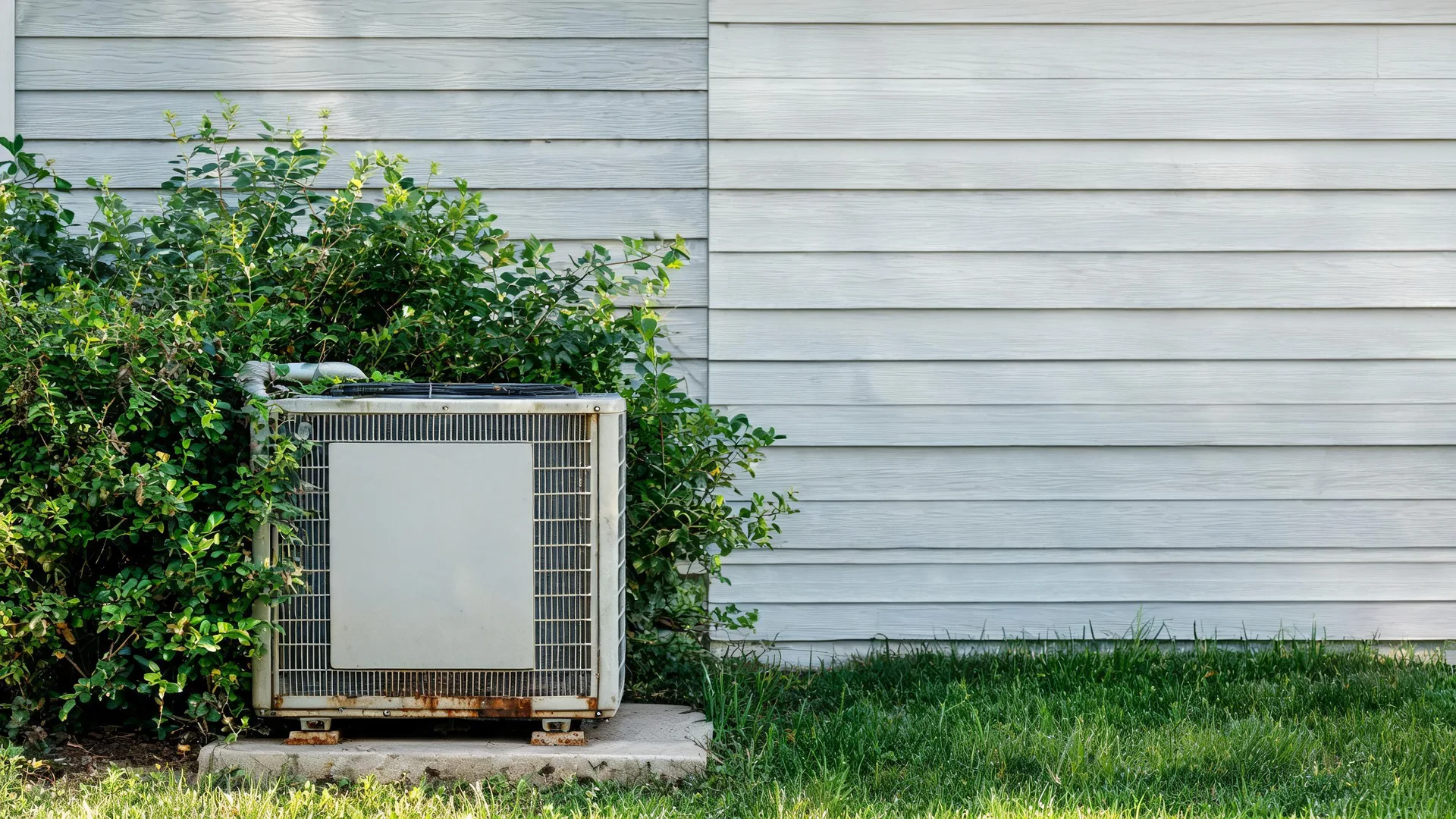
A gray outdoor HVAC unit mounted on a concrete pad beside a house with gray lap siding and a stone foundation.

The weather here tests it. The cold doesn't wear it out.

Winter lows here average 33°F, not well below freezing, so a heat pump isn't working as hard to pull heat out of that outside air as it would somewhere colder. The county has seen plenty of winter storms over the past decade, but hail is rare and a heat pump's outdoor unit is built to sit outside through wind and snow anyway. None of that is what wears a compressor down. Running hours do that, and running hours here are set by how mild the winters are, not by the storms passing through.

What you can check at the thermostat

Make sure it's set to heat, not auto or cool, and that the set temperature is actually above room temperature. Swap the batteries if the display is dim or blank. People call about a broken heat pump and the fix is a thermostat that got bumped into the wrong mode.

What you can check at the unit

Look at the outdoor unit and clear away anything piled against it, leaves, snow, a cover left on by mistake. Check the indoor filter and swap it if it's gray and clogged. Airflow problems from a blocked filter can look exactly like a failing heat pump, and this is the one repair you can actually do yourself.

Most heat pump failures trace back to a handful of things. The capacitor that gets the compressor and fan motors started weakens over time and eventually can't do its job, so the outdoor unit hums or tries to start and gives up. Refrigerant charge drifts low through a slow leak at a fitting or coil, and once it's low the system has to run longer to move the same heat, which stresses the compressor further. The reversing valve, which is what lets the unit switch between heating and cooling, can stick from wear or a stuck solenoid, leaving you with a unit that only wants to do one or the other. Defrost controls fail too, either the sensor that tells the system ice has built up or the board that triggers the defrost cycle, and when that happens frost keeps building instead of clearing. None of these start as a dead system. They start as long run times and weak output, which is why they're worth catching early.

A diagnostic call starts outside at the unit itself, listening to how the compressor and fan start up and checking whether the reversing valve is shifting the way it should. From there it moves to gauges on the refrigerant lines, because charge that's low or high tells a tech most of what they need to know about where the trouble is. Indoors, the check is airflow and temperature split, how much warmer the air leaving the vents is compared to what's coming back in, since a small split points at the heat exchanger or the compressor rather than anything electrical. Electrical testing covers the capacitor, the contactor and the control board, since a weak capacitor can look like a dead compressor until it's actually tested. The point of all this is to find the one part that's actually failing rather than guessing and swapping parts that are fine.