Illuminated white stucco houses with red-tile roofs nestled against a dry hillside under a deep blue twilight sky.

Heat Pump Repair in Stockton, CA

Tell us about the job

Takes about a minute. No obligation.

RepairHeat PumpSan Joaquin County, CA
Step 1 of 2

What ZIP code is the job in?

Dry air is gentler on the system

Summer air in San Joaquin County holds less moisture than most of the country, with a dew point around 48°F through June, July and August. A heat pump's coil does less work pulling moisture out of air that's already dry, so it isn't straining the way it would in a muggy climate.

Less wear means more worth saving

A heat pump that hasn't fought heavy humidity for years is less likely to have corrosion or coil damage sitting under the surface. When one of these units breaks down here, the cause is usually a specific failed part rather than years of hard use, which is exactly the kind of problem a repair fixes.

6 months
November through April, your system heats
5 months
May through September, it cools
40°F
the average winter night it heats against
91°F
the average summer afternoon it cools against
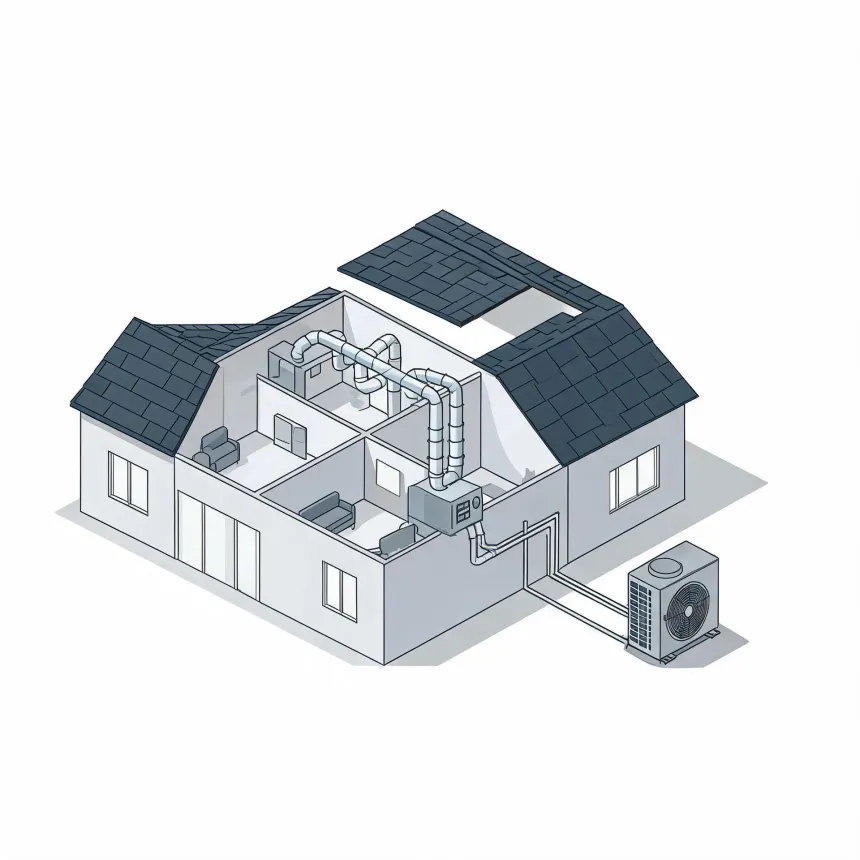
Isometric line illustration of a cutaway single-story house showing interior rooms, ceiling ductwork connected to an indoor air handler, and refrigerant lines running to an outdoor condenser unit on a pad.
Your system heats November through April and cools May through September.

NOAA nClimDiv, 1991–2020 normals

Half the homes in San Joaquin County were built in 1984 or later.

A heat pump that came with a newer house still has years left in it, and that's worth paying to fix.

A broken heat pump costs more by the hour here than almost anywhere else

Power here costs 34.85 cents per kilowatt-hour
21 damaging wind events from 2015 to 2024
Winter nights average 40°F
November starts heat, May starts coolingHeat pumps here tend to act up in the first cold snap of November or the first hot stretch of May, right when a weak part finally gets tested.

A heat pump that's cycling wrong or running constantly doesn't just make the house less comfortable. It runs up the bill while it does it, and power here costs more than almost anywhere else in the country. Waiting a few weeks to see if it gets worse means a few weeks of paying extra for a system that isn't doing its job right. If yours is short cycling, blowing warm air when it should be cooling, or running longer than it used to, that's worth a service call now rather than after another bill comes in high.

If the house is newer, fix the heat pump that came with it

If your heat pump came with the house and the house is newer, get it looked at rather than replaced. A failed capacitor or a bad control board is a repair either way, and a newer system has the life left in it to make that repair worth doing.

Find a contractor
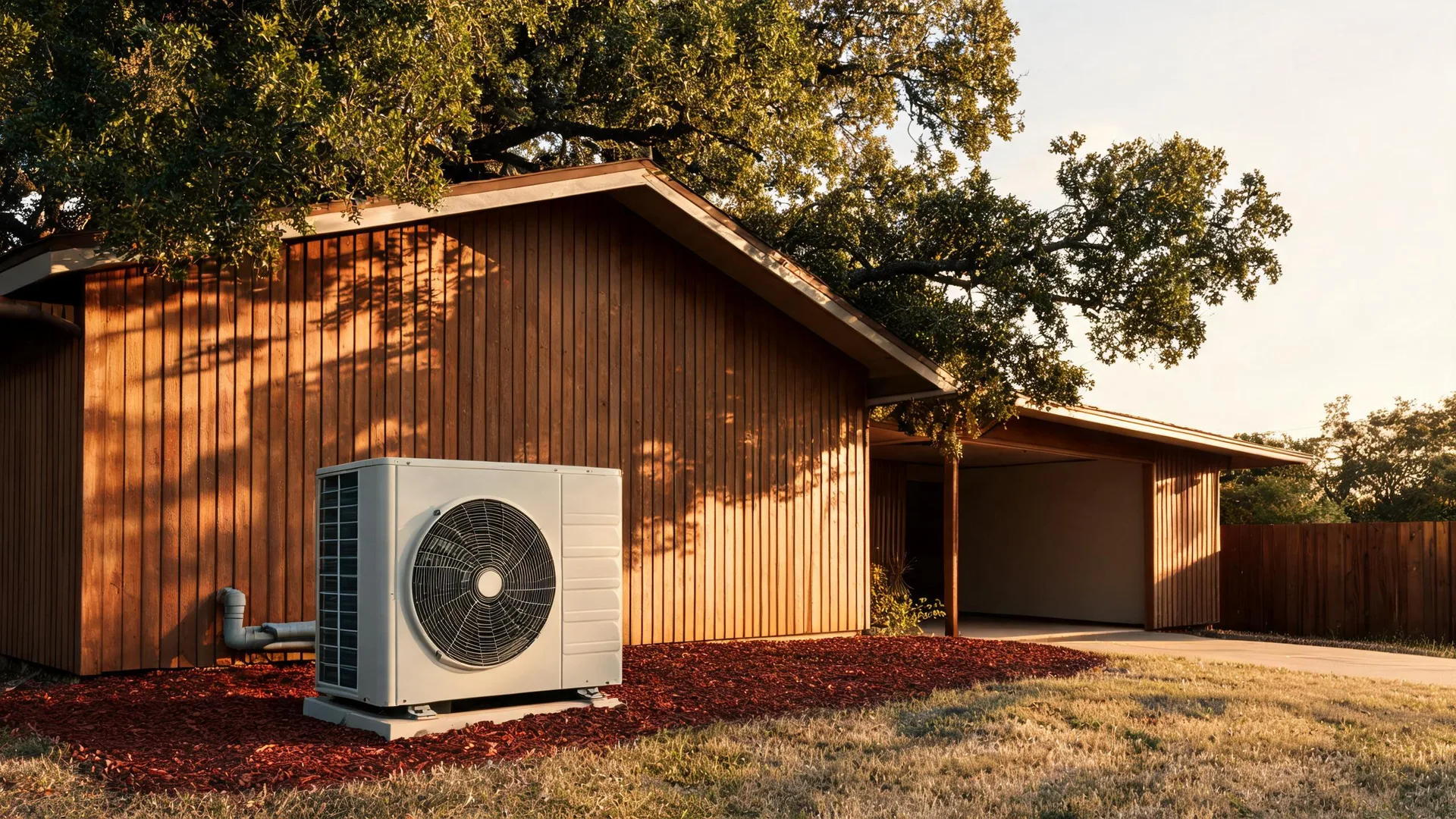
A residential heat pump outdoor unit mounted on a concrete pad next to a house with gray vinyl siding.

Years of mild running, not years of hard use

A heat pump here isn't fighting humidity, and it isn't fighting hard winters either, so most of its wear comes from straight hours of runtime, not stress. Wind is the one thing that does hit this system from outside, with damaging wind in San Joaquin County 21 times between 2015 and 2024, enough to knock a unit out of level or loosen a panel without wrecking it. That kind of damage shows up as a rattle, a trip breaker, or a refrigerant line working loose, not a dead compressor. Years of this add up to wear and tear, not failure, so when a system finally breaks it's almost always one part giving out rather than the whole unit being spent. Worth having that part checked before anyone talks about replacing the system.

Most calls are one failed part

A capacitor weakens and can't start the compressor or the fan motor. A contactor pits from years of opening and closing until it sticks or stops making contact. A defrost board stops sending signal and the outdoor coil ices over. Refrigerant leaks out slowly at a fitting or a coil pinhole and the system runs low. Each of these takes down the whole unit, but each one is a single part failing, not the machine wearing out.

Finding the part decides the job

A technician checks the capacitor's charge, tests the contactor under load, and reads refrigerant pressure before touching anything else. That's what tells you if this is a part swap or something bigger. Most of the time it's the former: the compressor and the coils outlast the smaller parts that control them, so a failure usually means replacing what failed, not the system around it.

A few things are worth checking before anyone comes out. Look at the outdoor unit first. If leaves, dirt or a shrub are blocking airflow around it, clear a couple feet on all sides. Check the air filter inside. A filter clogged with dust chokes airflow and can make the whole system work harder or shut down to protect itself. Look at the thermostat next: make sure it's set to the mode you want and the batteries aren't dead, since a blank or unresponsive display is sometimes just that. Check the breaker panel too. A heat pump trips a breaker sometimes without anything being badly wrong, and resetting it once is safe. If it trips again right away, stop and leave that for a technician. None of this fixes a bad capacitor or a refrigerant leak, but it rules out the simple stuff first.

Age by itself doesn't tell you much about a heat pump. What matters is whether the parts that failed are the only parts that are tired. A compressor that's original to the system but has never been worked on hard is usually fine to keep running once the failed part around it gets replaced. What changes the math is a system that's needed three or four service calls in as many years, each one a different part. That pattern means the whole unit is wearing out at once, not that one thing broke. A single failure, even a big one like a bad compressor, is still just one thing. Ask whatever technician comes out what else they're seeing while they're in there, not just what killed it this time.