







Lit white stucco buildings with terracotta roofs nestled among oak trees on a dry hillside under a deep blue night sky.

Heat Pump Repair in Vallejo, CA

Tell us about the job

Takes about a minute. No obligation.

RepairHeat PumpSolano County, CA
Step 1 of 2

What ZIP code is the job in?

A heat pump works harder when the air is thick with moisture, and around Vallejo that is not much of an issue. The dew point in summer averages 50 degrees, lower than most places in the country get. Less moisture means the coil and the compressor aren't straining to wring water out of the air on top of cooling it. The county does see damaging wind from time to time, 52 events between 2015 and 2024, which is worth a look at the outdoor unit after a bad storm. Short of that kind of event, a heat pump here is usually dealing with age or a part that wore out, not a system that got run into the ground. That's a good reason to have it looked at before deciding it needs replacing.

6 months
November through April, your system heats
4 months
June through September, it cools
40°F
the average winter night it heats against
88°F
the average summer afternoon it cools against
Isometric grayscale illustration of a cutaway house showing interior rooms, ductwork and an indoor air handler connected by lines to an outdoor condenser unit on the ground outside.
Your system heats November through April and cools June through September.

NOAA nClimDiv, 1991–2020 normals

Half the homes in Solano County were built in 1982 or later.

A heat pump that came with a newer house usually hasn't hit the end of its life, so repair is the way to look at it first.

Every kilowatt-hour here costs more, so a struggling unit costs more too

Power here costs 38.50 cents per kilowatt-hour
52 damaging wind events from 2015 to 2024
Winter nights average 40°F
Heat starts in November. That's when a weak part gives outSix months of heat, four months of cooling, and the jump into either one is when a bad part shows itself

A heat pump with a bad capacitor or a low charge still runs, it just runs worse, and every hour it does that it's pulling power without giving you the comfort you're paying for. Here that shows up on the bill faster than it would somewhere with cheap power. A short in the control board or a stuck reversing valve isn't going to fix itself while you wait, and the unit keeps drawing current either way. Since repair is usually the right call on a system this age, there's little reason to put off having someone look at it.

Get the repair done while the system still has life left in it

If your heat pump came with the house and the house is newer, repair is worth getting to before the part that's struggling now takes another one down with it. Have it looked at.

Find a contractor
A man in a dark jacket and tan pants, seen from behind, carries a canvas tool bag up concrete steps toward a blue front door of a house with light horizontal siding and a potted shrub in a blue planter.
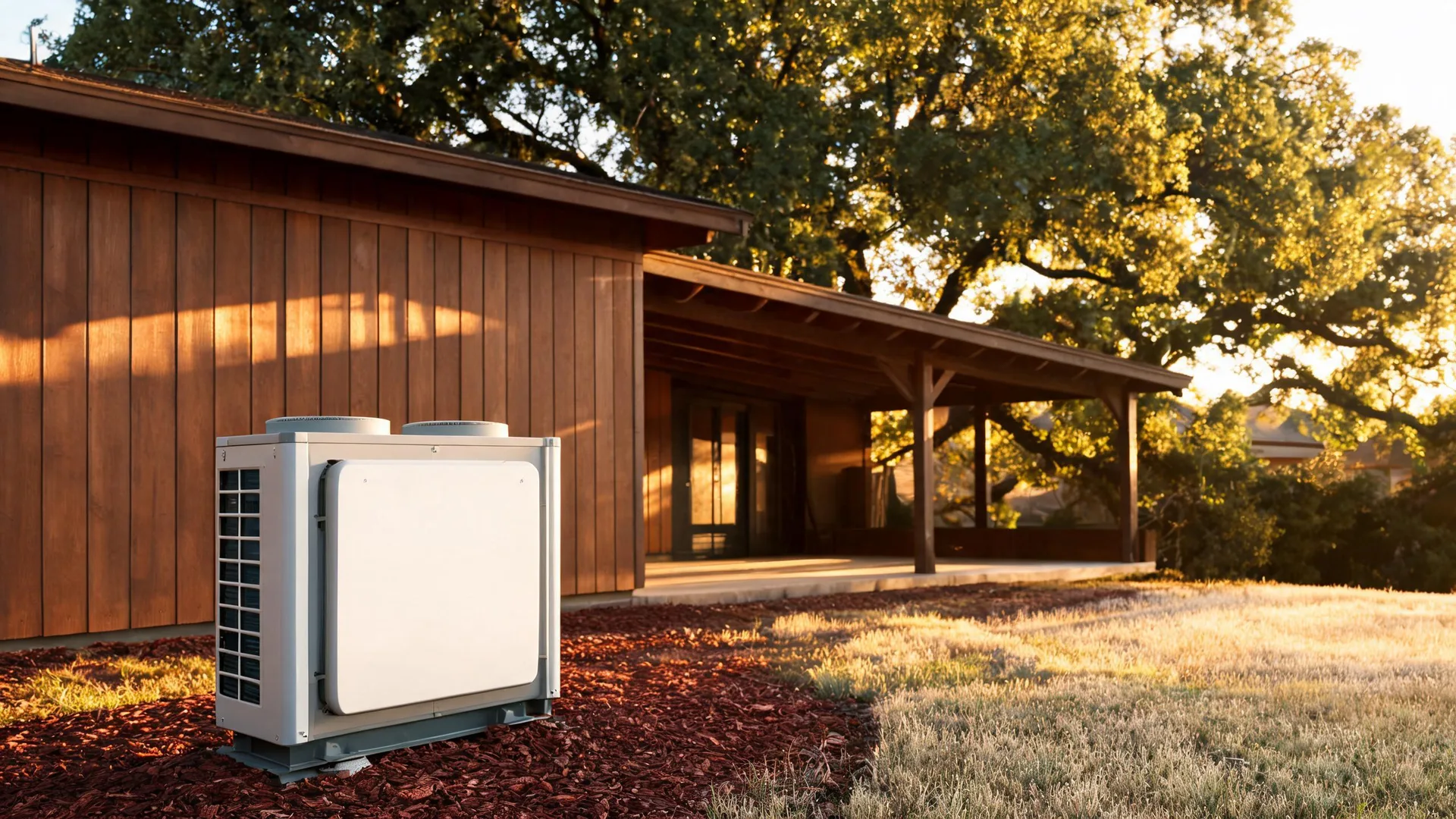
A gray heat pump outdoor unit mounted on a concrete pad next to a residential house with lap siding and stone accents.

Time is on your side here

If a bad storm has come through recently, that's worth a look before anything else, especially the outdoor unit. Bent fins, a knocked loose panel, or debris caught in the fan can cause problems that have nothing to do with the system's age. Outside of that, a heat pump here spends most of its working life doing a job that isn't that hard on it. So when something does go wrong, the fix is usually a single worn part, not a system in overall decline. That's worth knowing before anyone tells you the whole unit needs to go.

The reversing valve does the extra work

A heat pump has one part a straight air conditioner doesn't: the reversing valve that switches it between heating and cooling. That valve gets worked every time the system changes direction, and a stuck or leaking valve shows up as heat that won't come on, or a unit stuck blowing cold when it should be warm. It's one of the first things worth checking when a heat pump acts up.
Most failures are one part, not the whole system

A capacitor weakens and the compressor struggles to start. A contactor pits and the outdoor unit stops responding. A defrost sensor fails and ice builds up on the coil until the unit can't move air. Each of these is a single part doing one job, and each can be swapped without touching the rest of the system. That's why a heat pump acting up is usually a repair, not a sign the whole unit is done.

A part rarely fails all at once. A compressor that's starting hard draws more current on every cycle, and that extra heat wears the windings down a little further each time. A coil icing over because of a bad defrost sensor makes the system push harder for the same amount of heat, and the ice keeps building from there. Neither of those gets better by waiting. A system that's short cycling is starting and stopping far more than it should, and the start is the hardest moment in a compressor's whole cycle. Once a part is already going bad, running it through more cycles just spends down what's left of it. Getting the worn part replaced stops the wear there instead of letting it reach the compressor or the coil next to it.

Repair makes sense when the failure is one part and the rest of the system is sound. Replacement makes sense when the compressor itself is the problem, since that's the part that can't be swapped on its own without the cost and labor of swapping the whole outdoor unit. Before deciding either way, it's worth knowing which kind of failure this is. A technician can pull a static reading off the compressor windings and tell you if it's still healthy, and check the refrigerant charge to see if a leak has been quietly starving the system for a while. A heat pump that's been low on charge for a long time asks the compressor to work harder on every cycle, and that kind of strain adds up even after the leak gets fixed. None of that shows up by looking at the unit from across the yard. It takes gauges and a meter to know whether this is a part worth replacing or a compressor that's already most of the way to done.