



When to replace a furnace in Sacramento, CA

Find a furnace pro

A furnace that's getting harder to trust doesn't wait for a convenient time to quit, and most people don't start looking into this until a cold morning makes the question urgent. Winters in Sacramento are mild, so you've got room to make this decision carefully instead of in a panic, but that only helps if you actually use it. Figuring out whether yours is worth repairing again or worth replacing means getting a real look at it from someone who can tell you what's actually going on, not just guessing from how old it feels. The usual way into that, calling around, explaining the same thing to a few different companies, trying to judge quotes you don't have the background to compare, takes time you don't have to spend. Answer a few questions here and you're matched with a contractor who takes on jobs like yours in your area, and they'll reach out to you directly. That's the whole first step, and it's the one that gets you an answer instead of another winter of wondering.

How do I know when it's time to replace my furnace?

Your furnace doesn't run hard or run long here, not with winters as mild as Sacramento's. So when it starts acting up, you're left wondering if it's worth fixing or if you're close enough to the end that a repair is just money toward a machine that's going to quit anyway. A few signs point to one answer or the other.

Replace it once repairs get frequent or it's pushing 15 to 20 years old

A furnace that needs a repair every heating season, or one that's starting to show its age at 15 to 20 years old, costs you more to keep than to replace. In Sacramento, that furnace isn't working hard most of the year. Winters are short and mild, so a furnace here often lasts toward the long end of that range, not the short end. But age still catches up with the heat exchanger and the controls, and once a furnace needs attention every year, the repairs stop being the cheaper option. If yours is still under 15 years old and this is its first real problem, a repair is probably the right call. If it's older and this isn't the first time, replacing it is what makes sense.

A gray-haired man in a dark coat dusted with snow stands in a warmly lit home entryway, with a lamp, sofa, window and white staircase banister behind him.
An older man with gray hair and a beard, wearing a dark coat dusted with snow and a blue plaid scarf, stands smiling in a dimly lit entryway with a window, framed picture, table lamp and staircase behind him.
A gray-haired, bearded man in a dark winter coat with snow on the shoulders stands in a doorway of a home interior with a lit lamp, framed pictures, a potted plant and a staircase behind him, and an evergreen wreath at the left edge.
A gray-haired man in a dark coat with snow on the shoulders and collar stands smiling in a dimly lit entryway with a paneled front door, lamps, and a framed picture in an adjoining room.

How much does Sacramento's mild winter really ask of a furnace?

  • Winter nights average 40°F

    Nights average 40°F in December and January, nothing close to freezing, so your furnace is never working against real cold.

  • Heat runs November through April

    Six months of light use a year means a furnace here can rack up age without the wear a harsher climate would put on it.

  • 56.9% of homes heat with gas

    At 56.9% of homes, gas is the most common way Sacramento County heats, so parts and service for a gas furnace are easy to find.

NOAA nClimDiv 1991-2020 · ACS 2020-2024

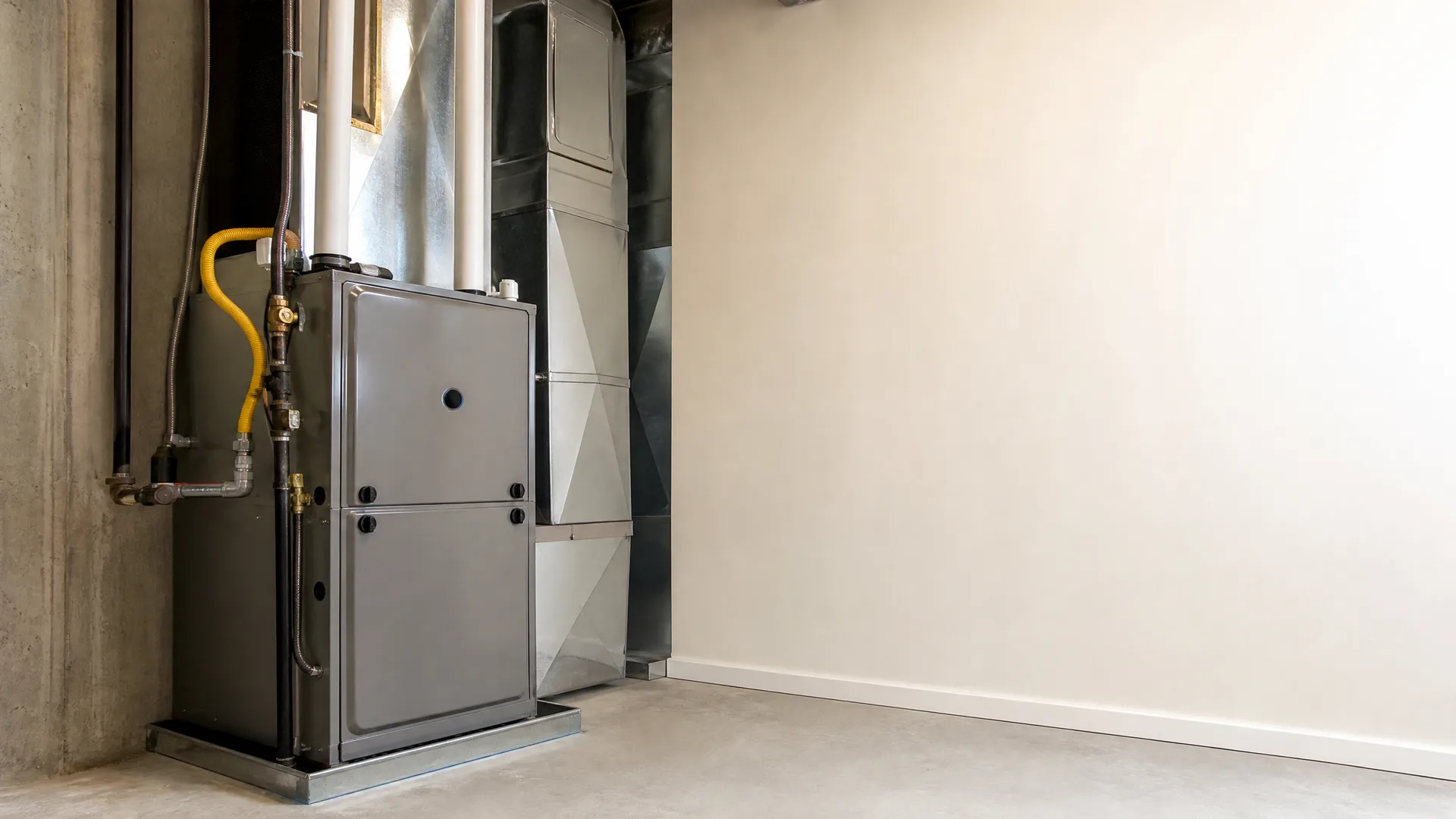
A gray gas furnace with attached yellow gas line, copper piping, white PVC vent pipes and sheet-metal ductwork stands against a wall in an empty basement room with a concrete floor.

Keep paying for repairs

A furnace that's fifteen years old or more and still holds steady through a mild Sacramento winter can be worth patching up again. If the cost to fix it is a few hundred dollars and the blower, heat exchanger and igniter are all sound, another repair buys you another winter. You're not fighting hard cold here, so a furnace with one weak part can keep going longer than it would somewhere colder.

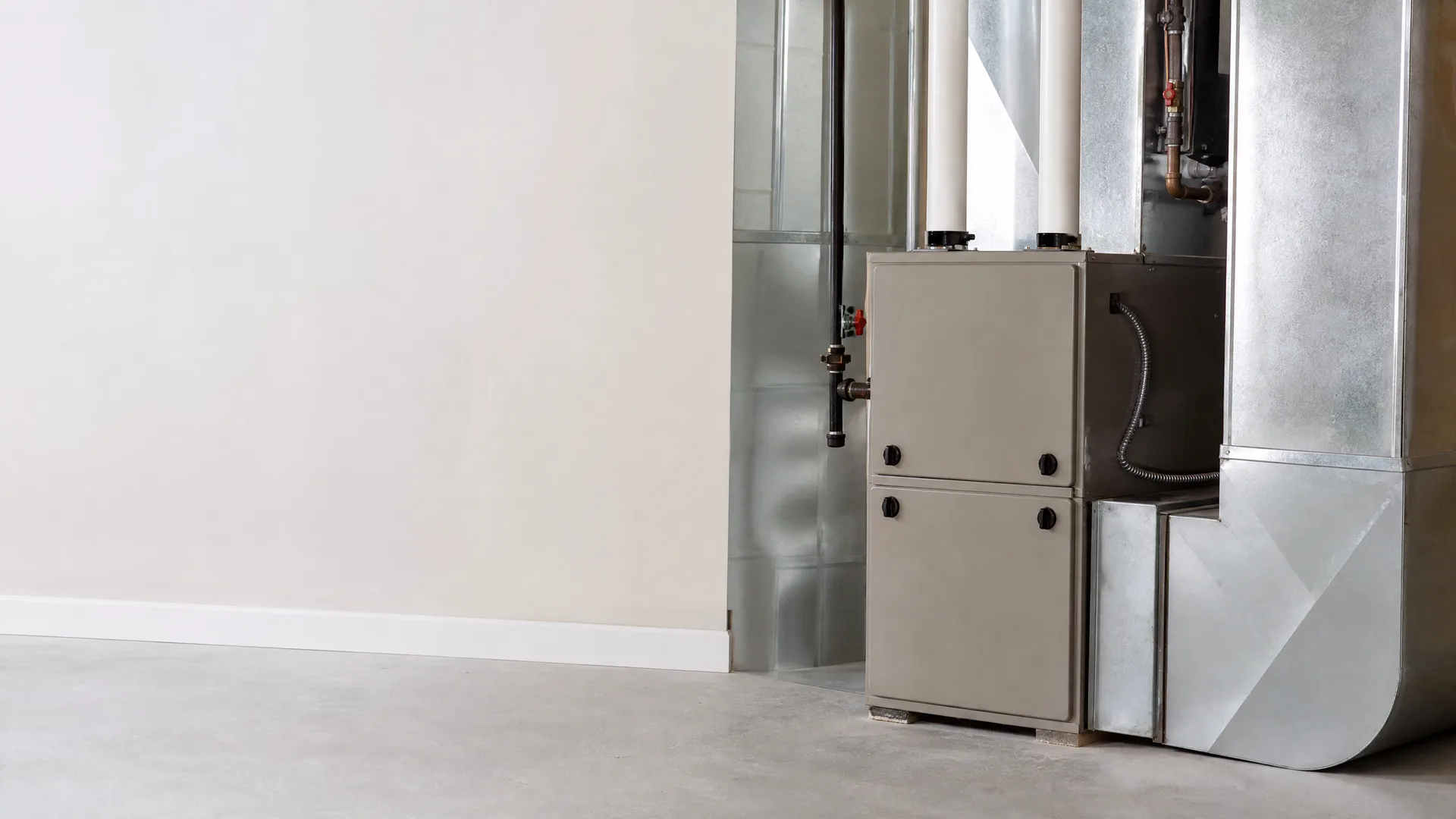
A beige high-efficiency furnace with white PVC vent pipes stands against a wall beside galvanized sheet-metal ductwork in an empty room with a concrete floor.

Stop paying for repairs

Once a furnace needs a second or third repair in a couple of years, or the part failing is the heat exchanger itself, replacing it makes more sense than patching it again. An old furnace also runs less efficiently than a new one, and with power costs in Sacramento among the highest in the country, that gap shows up on your gas and electric bills every month, not just the winter you notice the furnace struggling.

Repair Again or Replace Now

Keep repairing

  • A cracked heat exchanger means replacement, not repair, since it can let combustion gas into your air and no contractor will patch it.
  • If the blower motor, igniter and heat exchanger all still check out, one more repair can be the cheaper move even on an older unit.
  • Sacramento winters are mild enough that a furnace with a minor issue can often make it through December and January without strain.
  • A furnace under ten years old with a single failed part, like a flame sensor or a capacitor, is usually worth fixing outright.
  • Repeated repairs in the same season, two or three calls for different parts, is a sign the unit is wearing out all at once, not a one-off.

Replace now

  • A furnace that's stopped working more than once this winter is telling you it's failing on more than one front.
  • Gas is the main heating fuel in Sacramento, and an older furnace burning gas less efficiently costs you more every month it keeps running.
  • Power here is expensive, so if your system uses electric backup or auxiliary heat, an aging unit leaning on it harder hits your bill directly.
  • A furnace past fifteen years with a major part failing, like the heat exchanger or the blower motor, usually isn't worth another repair bill.
  • Rust or scorch marks near the burner or a yellow flame instead of blue both point to a furnace that needs to come out, not be patched again.
  • Uneven heat between rooms that's gotten worse over a year or two often means the furnace can no longer push air the way it used to.
View from under a dark covered porch of a paved driveway dusted with snow, a light stucco house wall with shrubs on the left, and snow-streaked hills under an overcast sky with falling snowflakes.

A furnace in Sacramento County doesn't get pushed hard, since winter nights average 40°F, not cold enough to run a furnace near its limit. That's gentle work, but it still means the furnace cycles on most nights from December through February, and a weak unit will show it in small ways before it quits outright: a room that stays cooler than the thermostat says it should, or a cycle that runs longer than it used to for the same 40-degree night. If you're noticing that, it's worth having someone look at the whole system rather than guessing. A contractor who knows Sacramento winters can tell you if what you're seeing is normal wear or the furnace falling behind on a job that was never that demanding to begin with.

NOAA nClimDiv 1991-2020

Find a furnace installation pro in Sacramento County

You can keep weighing it on your own, pulling up the furnace's age, counting repairs, checking what a cracked heat exchanger would mean for your air. Or you can hand the question to someone who looks at furnaces like yours for a living. That's what the button above does. Instead of searching for contractors, calling a few, explaining the same furnace trouble each time and lining up quotes to compare, you answer once and a contractor who covers Sacramento County reaches out to you. They can look at what you've got, the age, the repair history, the specific part that's failing, and tell you straight whether it's worth fixing again or time to let it go. A mild Sacramento winter gives you room to think this through instead of deciding it during a cold snap with no heat. Most people put this decision off until the furnace forces it. You don't have to.

What an aging furnace costs you

A furnace losing efficiency doesn't announce it. It shows up as a gas bill that creeps up a few dollars a month, a house that takes longer to warm after sunset, rooms that stay cooler than the thermostat says. None of that forces a decision on its own. But add a repair bill on top, for a blower motor or an igniter, and you're paying twice: once for the fix, once for the gas it's wasting while it limps along. Fifteen years of that adds up even on Sacramento's short winters.


What a failure in January looks like

If the heat exchanger cracks or the blower quits outright, you're not choosing a repair window anymore. You're calling around on a cold morning, trying to find a contractor who can come out that day, comparing quotes with your family in a house that's dropping toward 50°F. Sacramento winters are mild enough that most homes don't own a backup way to heat, so a dead furnace is a dead furnace until someone fixes or replaces it. Planning ahead means you pick the week, not the furnace.

A metal furnace with louvered panels stands against a concrete basement wall, connected to sheet-metal ductwork and a round flue pipe, with wooden framing posts and a pipe nearby.
Before you get your furnace installation
A gray gas furnace stands on a concrete basement floor, connected to sheet-metal ductwork, white PVC vent pipes, and a yellow gas line, with plastic sheeting covering the walls.
After you get your furnace installation

Where You Stand Now

  • A furnace fifteen years or older with a cracked heat exchanger needs replacement, no exception.
  • One that's younger with its blower, igniter and heat exchanger still sound is usually worth one more repair.
  • Sacramento winters are mild enough that a furnace here can log more years of light duty than one in a colder state.
  • A rising gas bill or rooms that stay cool after sunset point to a furnace losing efficiency even before it fails outright.
  • The repair bill itself is a fair test: a few hundred dollars is worth paying, a bigger one often isn't.
  • Age, repair cost and which parts still check out together tell you where you stand, not any one of them alone.

A cracked heat exchanger ends the question by itself. Past fifteen years, that's replacement, and no contractor will tell you otherwise, since it can let combustion gas into the air you breathe. Short of that, the picture is less clear-cut, and that's the point. A furnace with sound parts and a repair bill in the few-hundred-dollar range is usually worth fixing again, especially here, where mild winters mean six months of light duty a year instead of the harder run a furnace gets in a colder state. What changes the math is what else is going on. A gas bill that's crept up, rooms that take longer to warm once the sun's down, a furnace cycling more than it used to for the same result. Those are signs of a furnace spending more to do the same job, and they matter even when nothing has broken yet. So the real answer isn't the furnace's age alone, or the repair estimate alone, or the gas bill alone. It's the three of them together. An old furnace with failing parts and a big repair ahead points one way. A furnace with years left in it, sound parts, and a small fix needed points the other. Sacramento's winters buy you room to weigh this instead of deciding on a cold morning with no time to think it through.

A woman wrapped in a thick cream knit blanket sits in an armchair beside a lit table lamp, with an open book in the foreground and a frost-covered window behind her.
An older woman with grey-blonde hair in an updo and a beige turtleneck sweater smiles while looking to the side in a warmly lit kitchen, with a round loaf of bread on the counter in front of her and a dark window showing snow outside.

Furnace Installation

The right pro for this job

Skip collecting and comparing quotes for the new furnace.

A black-framed smartphone standing upright against a plain light gray background, its screen filled with solid green.
New system or replacementFurnace or heatingSacramento County, CA
Step 1 of 2

What ZIP code is the job in?


