Heat pump vs furnace in Sacramento County, California

Start My Quote

Serving Sacramento County homes

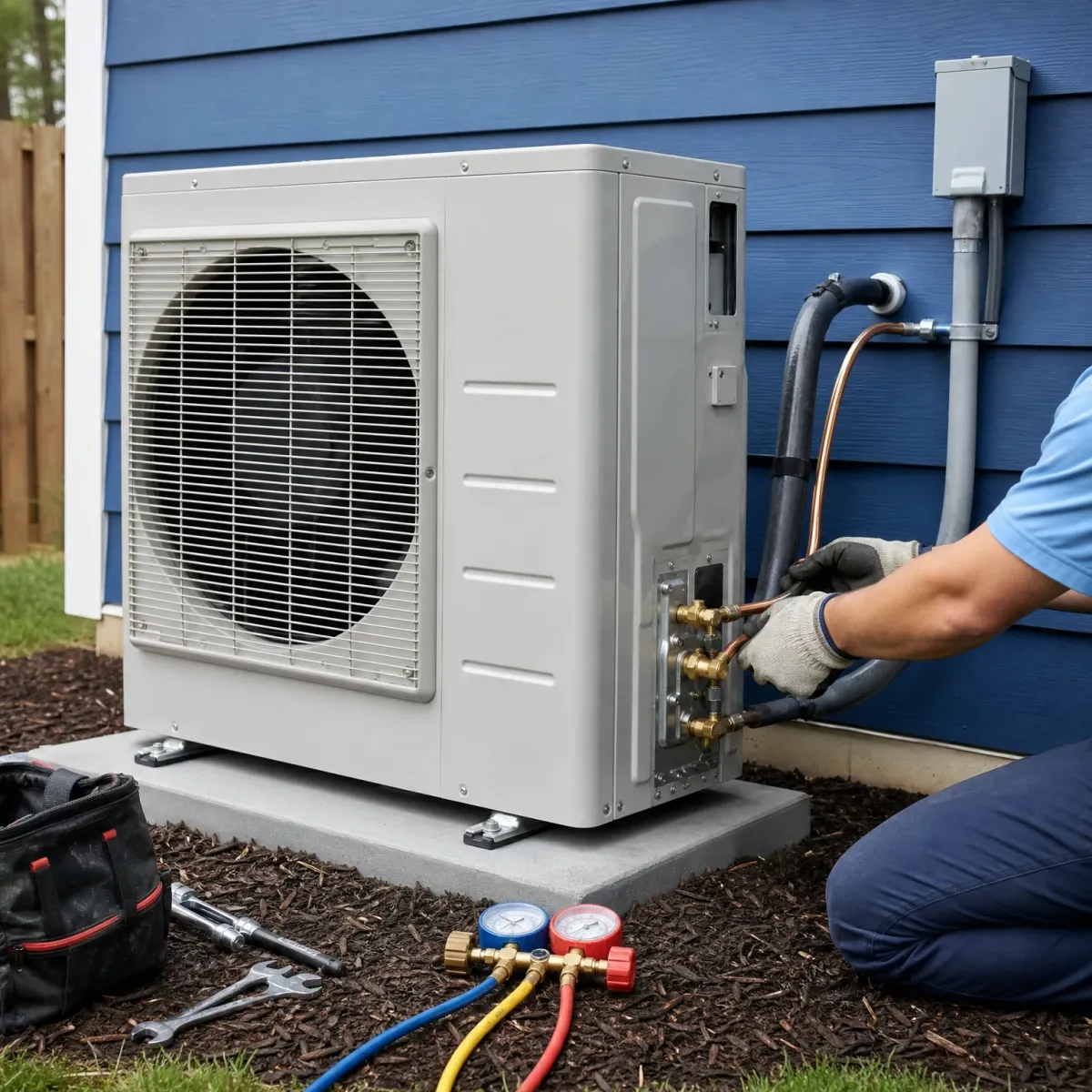
A kneeling person in a blue shirt and work gloves connects refrigerant lines at the side of a gray outdoor heat pump unit on a concrete pad beside a blue clapboard house, with a manifold gauge set and hand tools lying on mulch in the foreground.

Tell us about the job

Takes about a minute. No obligation.

New system or replacementSacramento County, CA
Step 1 of 3

What kind of equipment?

Which costs less to run in Sacramento County?

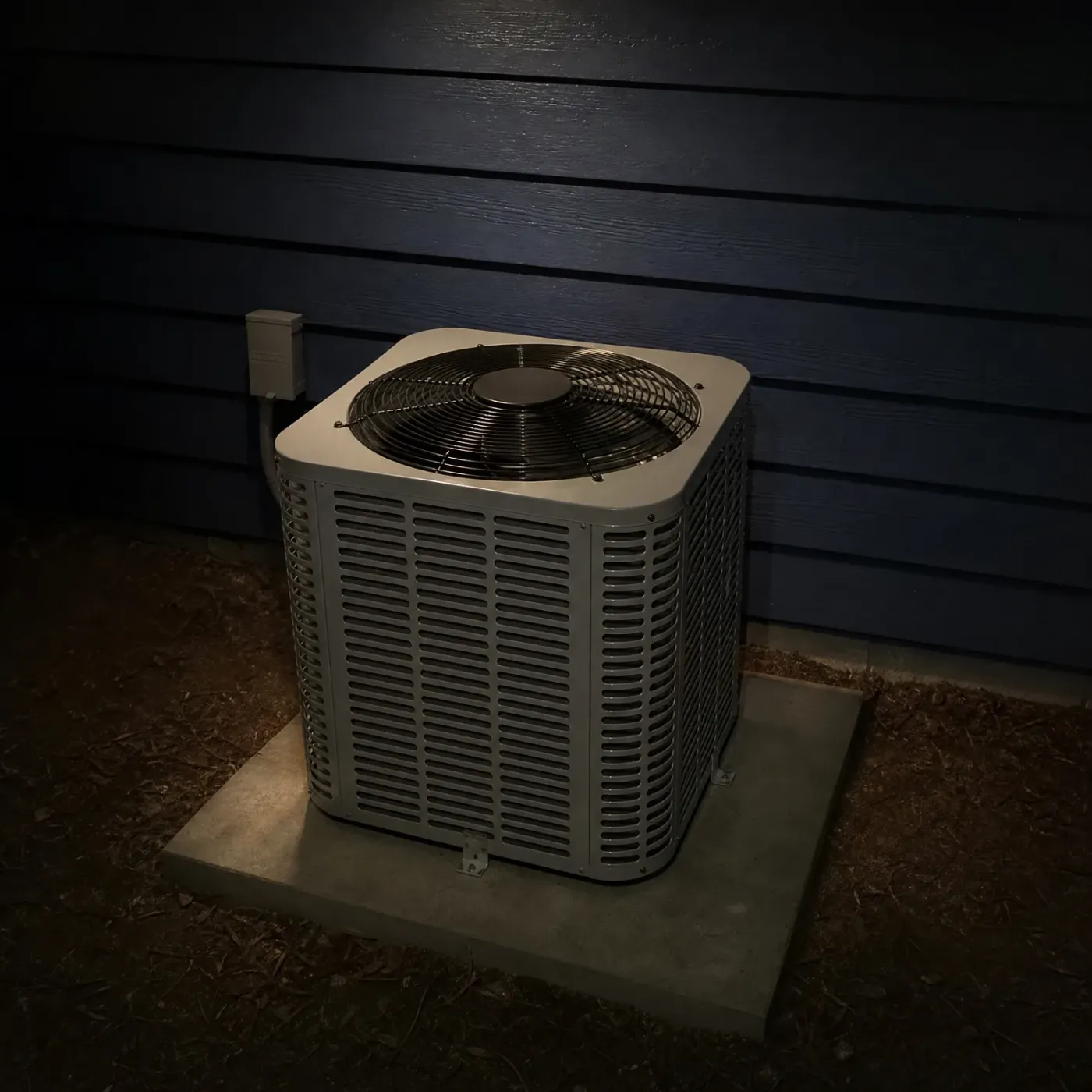
An outdoor air conditioning condenser unit on a concrete pad beside a dark blue horizontal lap-sided wall at night, with a small electrical disconnect box and conduit on the wall above it and mulch surrounding the pad.

Heat pump

To heat your home here$4.26per 100,000 Btu

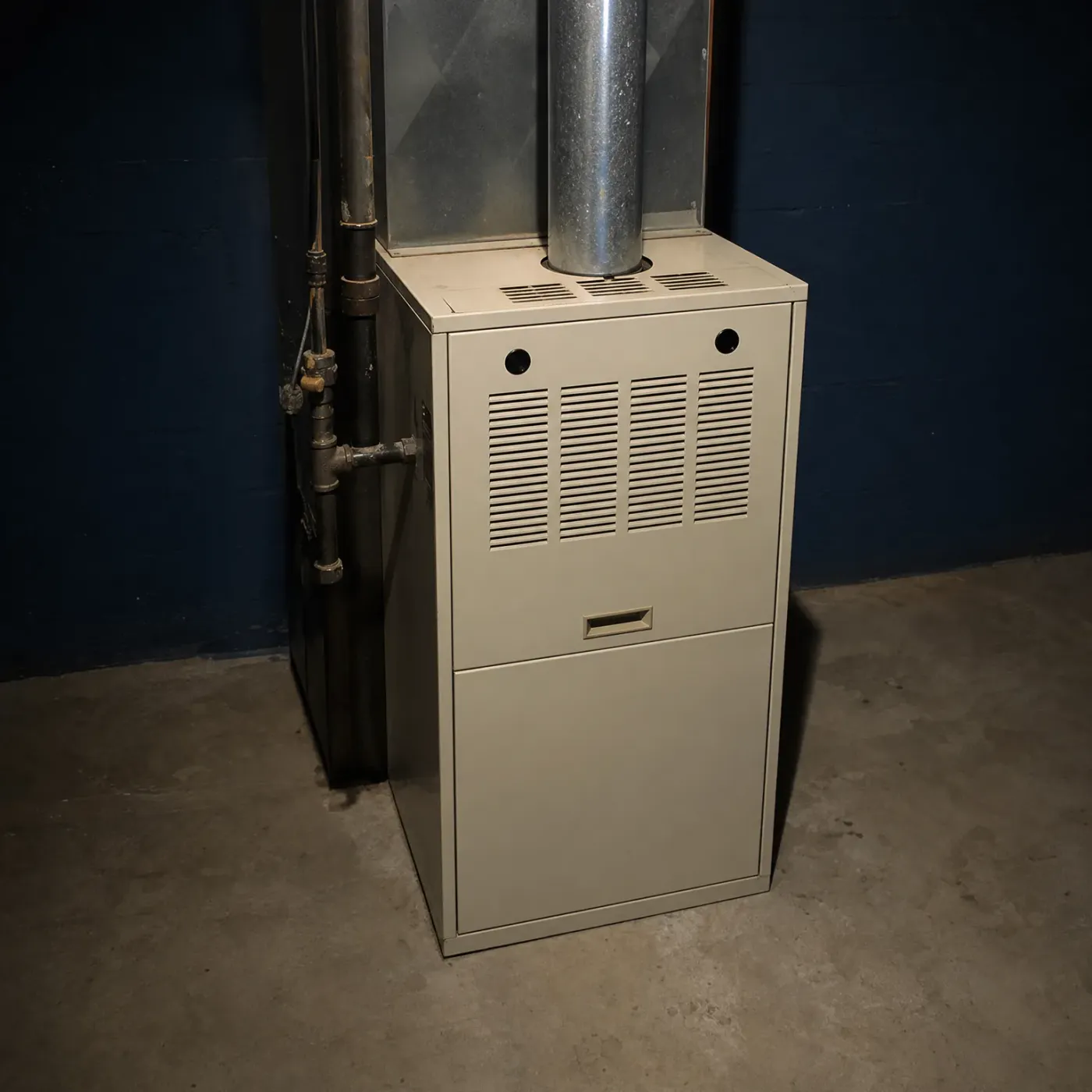
A beige sheet-metal furnace with a louvered front panel stands on a concrete floor against a dark blue painted block wall, with a metal flue pipe and ductwork above and older pipes to the left.

Furnace

To heat your home here$2.31per 100,000 Btu

At California's gas and electricity prices, a gas furnace makes the same heat as a heat pump for at least 45% less.

Btu stands for British thermal unit, the standard measure of heat energy.

Where does a heat pump shine?

  • Made for mild winters

    Nights here settle around 40°F in December and January, not much colder. A heat pump handles that range without strain, since it's only bridging a small gap between outside and room temperature.

    Covered front porch of a gray horizontal-siding house with a navy blue door, stone steps, a potted shrub, boots on the mat, and a wooden bench with a striped blanket, with bare trees and low sun behind.
  • Covers a long cooling season

    Cooling runs May through September here, so whatever you install is going to spend most of the year on that job. A heat pump is built to do that work well and still covers the colder months from the same unit.

    A covered porch with blue lap siding, wood ceiling and ceiling fan, wicker furniture with cushions, a wooden table, a gas grill, potted plants, and a glass of iced tea in the foreground, with green trees beyond the railing.
  • No gas line, nothing burning in the house

    There's no gas line to the unit and no flame anywhere in it. Carbon monoxide isn't part of the picture.

    A kitchen with navy blue cabinets, white countertop, white subway tile backsplash, a stainless steel range hood above a black induction cooktop with a metal kettle, plus mugs, a utensil crock, a cutting board and a potted plant.

Where does a furnace shine?

  • Runs on the gas most homes here already use

    Most homes in Sacramento County already run on utility gas for heat, so a furnace likely just connects to a line that's already there. No new fuel source to bring in, just a hookup to what your house is probably already set up for.

    A two-and-a-half-storey gray-painted brick house with a gabled roof, covered porch with columns, and light blue front door, flanked by red brick houses, with snow on the front yard and sidewalk.
  • Proven, simple, easy to get serviced

    Gas furnaces have heated homes for generations. Almost every HVAC tech knows them inside and out.

    A gloved hand holds a clean pleated air filter in front of a furnace, with shelving holding a mug, basket, and toolbox to the right.
  • Pairs with any central AC

    A furnace's blower and ducts carry cooled air too. Adding central AC uses the same system.

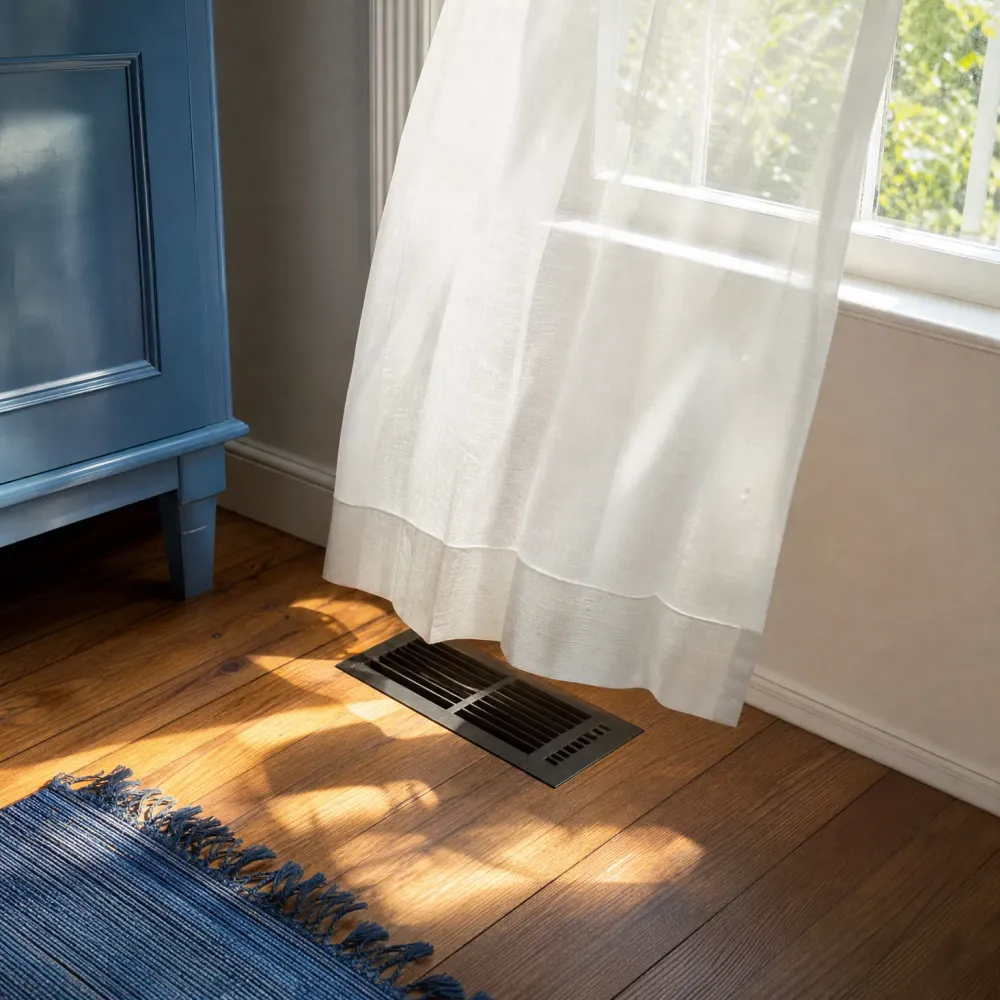
    A dark metal floor vent set into a hardwood floor near a window with a sheer white curtain, a blue cabinet and a blue fringed rug at the edges of the frame.

Which costs less to run in Sacramento County

A gas furnace costs less to run here. The band above puts it at $2.31 per 100,000 Btu against $4.26 for a heat pump, and that gap holds up for most of the year because the heat runs six months here, November through April, longer than the five months of cooling. That is where most of the dollars in this decision go.

The cold here is mild, and that matters for a different reason than cost. The overnight low averages 40°F across December, January and February, and it only drops to 32°F or below on about 9 nights a year, a small slice of the roughly 180 nights the heat is running. A heat pump loses capacity as the air gets colder, but Sacramento County rarely gives it cold enough to show it.

So the running-cost gap is real, and a heat pump will not struggle to keep the house warm here either. Those are two different questions, and the facts answer them differently.
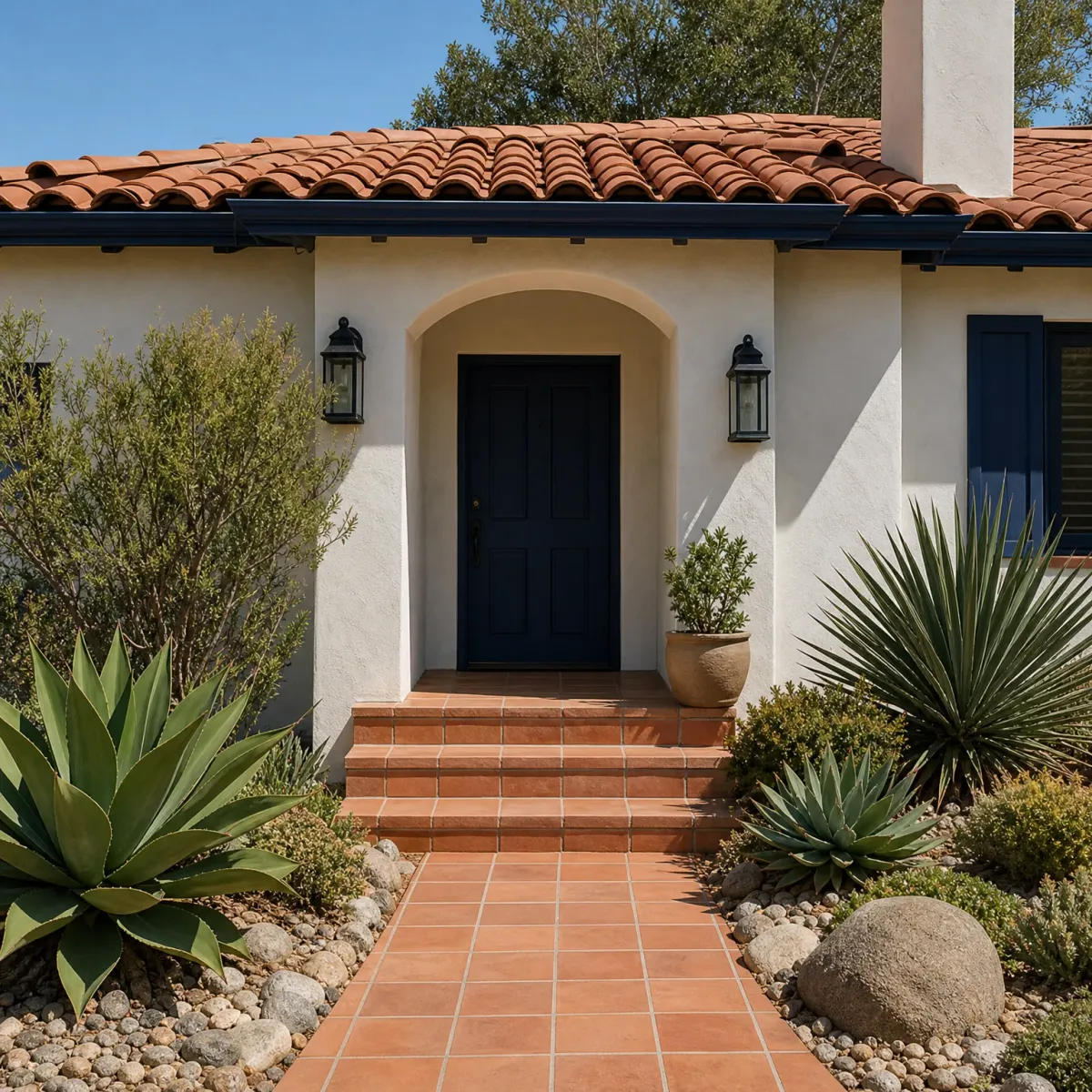
Entrance of a white stucco house with a red clay tile roof, navy blue front door flanked by two black lanterns, terracotta tile steps and walkway, and agave and yucca plants in gravel beds on either side.

What a furnace gives up, and what a heat pump takes on

A gas furnace only heats. For the five months of cooling, about 85 days a year reaching 90°F or above, it does nothing, and a separate air conditioner has to carry that load. A heat pump is also the air conditioner, the same unit running the compressor in reverse, so buying one is a decision about both seasons at once, not just the six months of heat.

Utility gas heats 56.9% of homes in the county, electricity 38.7%. A furnace runs on what most homes here already have, with the gas line already in place and technicians who service these every day. A heat pump needs no gas line to that part of the house, nothing burning indoors, just a compressor and the electrical circuit to run it.

If the air conditioner still has good years left, a furnace is the cheaper machine to run and leaves the AC alone to do its job. If the AC is also near the end, a heat pump replaces both at once, in a county mild enough that the cold nights will not lean on it hard.

Sources: NOAA nClimDiv · NOAA 1991–2020 seasonal normals · Census ACS 2020–2024 · EIA SEDS 2024 · 10 CFR 430.32

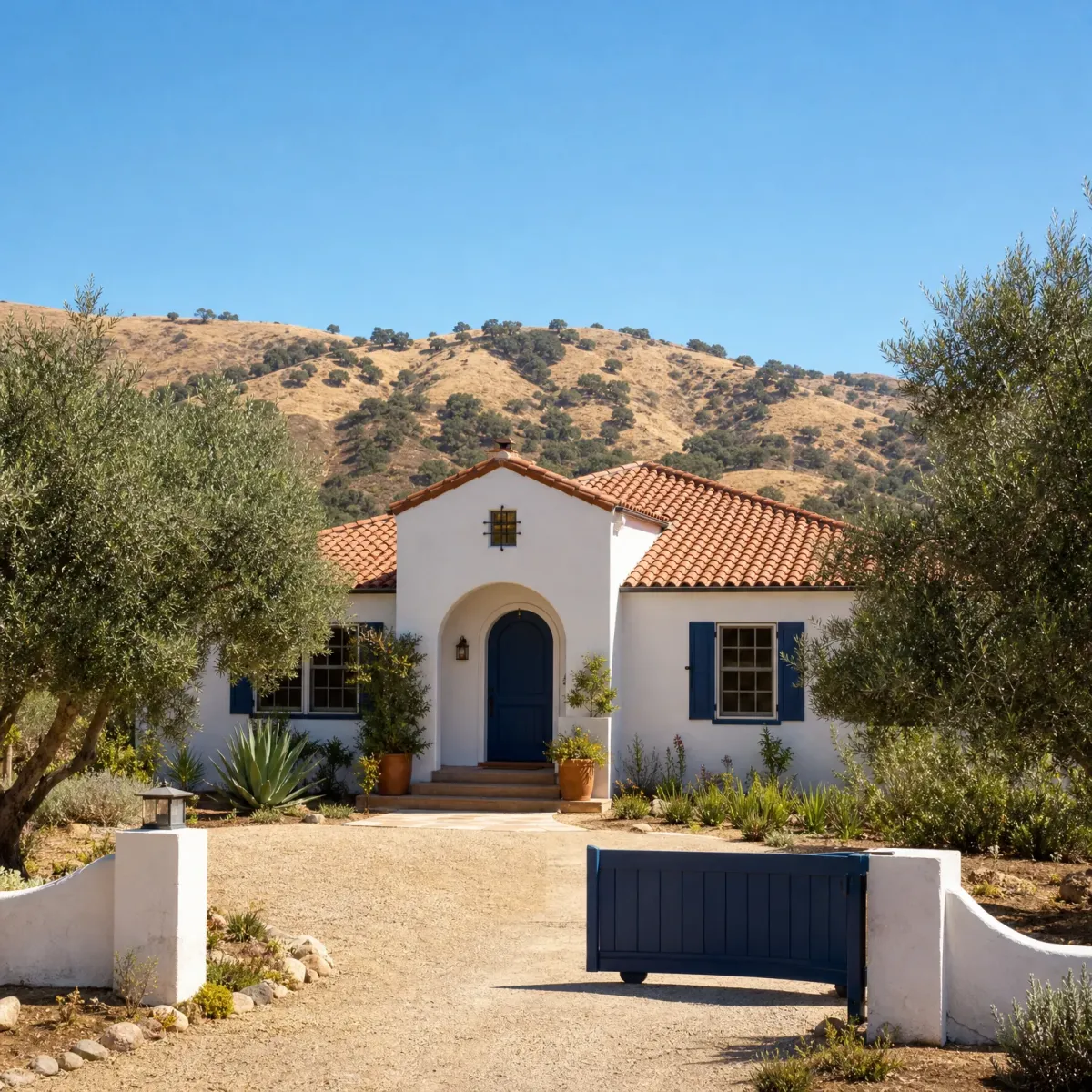
A white stucco house with a red clay tile roof, arched blue front door and blue shutters, set behind a gravel drive with a blue gate and low white walls, with olive trees, agave and a dry grassy hill behind it under a clear blue sky.

Common questions about heat pumps and furnaces

  • Will a heat pump keep my house cool enough here?

    Yes, a heat pump cools the same way a central air conditioner does, through the same ducts and coil, so it will keep your house cool through the roughly 85 days a year here that hit 90°F or above. Sacramento County's five-month cooling season is nothing special for a heat pump to handle.

  • Can I keep my furnace and add a heat pump?

    Yes, and in Sacramento County that pairing works well. A heat pump handles the mild stretches and the furnace covers the roughly 9 nights a year here that drop to freezing or below, so each one runs where it's strongest instead of one machine covering all six months of heating alone.

  • Is a heat pump cheaper to run than a furnace in Sacramento County?

    No, a furnace costs less to run here. A gas furnace makes heat for $2.31 per 100,000 Btu against $4.26 for a heat pump, because natural gas runs far cheaper per Btu in California than electricity does. That gap holds across the six months a year heat runs here.