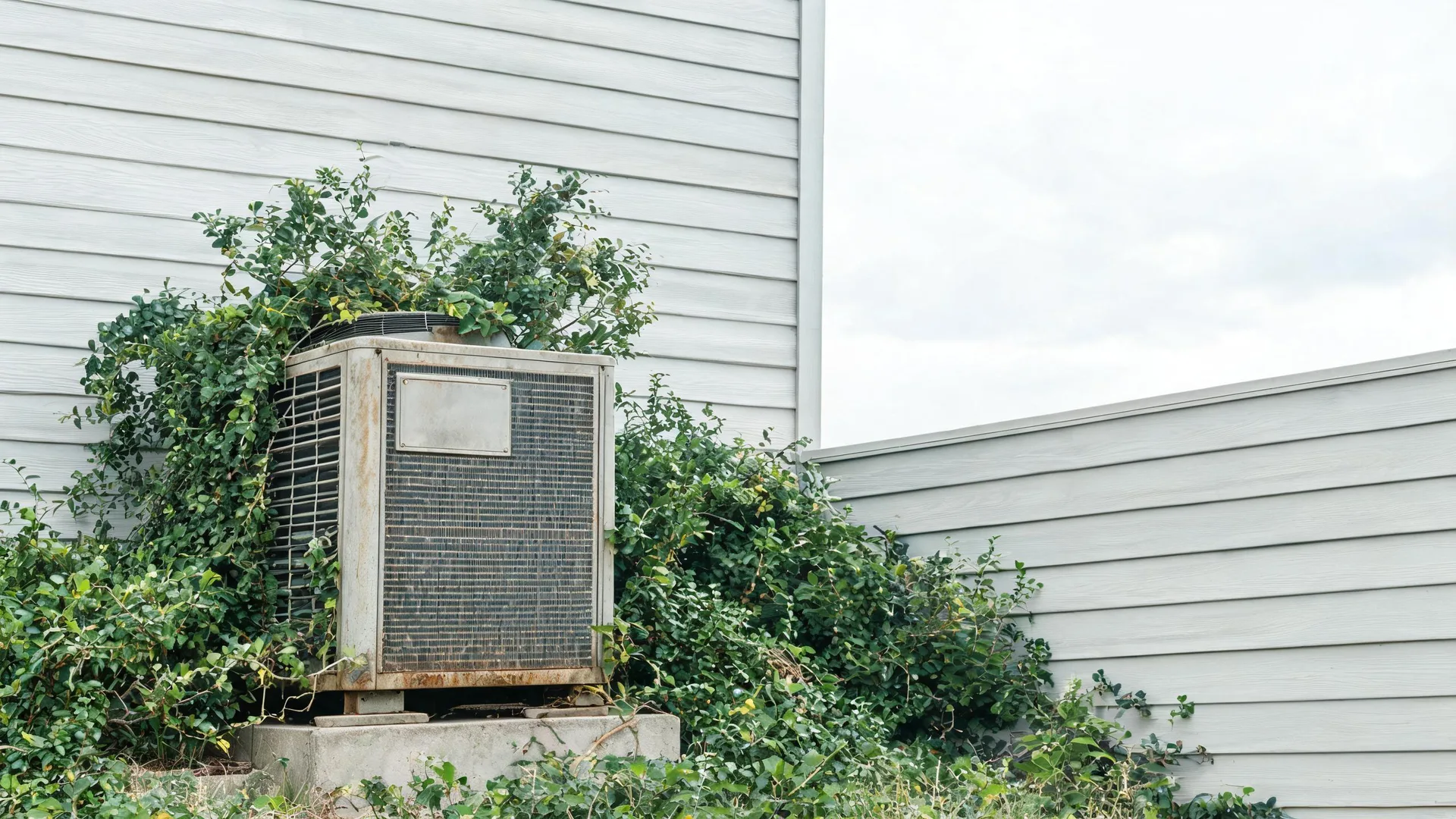
A gray outdoor HVAC condenser unit mounted on a concrete pad in the front yard of a two-story suburban house.

Heat Pump Repair in Sacramento, CA

Tell us about the job

Takes about a minute. No obligation.

RepairHeat PumpSacramento County, CA
Step 1 of 2

What ZIP code is the job in?

Half the homes here were built in 1981 or later

Sacramento County splits about down the middle, half its houses built in 1981 or earlier and half in 1981 or later. A heat pump that came with a newer house has usually had a shorter working life behind it than the machine itself is rated for.

That favors a repair over a replacement

If your house falls on the newer side of that line, the heat pump probably still has years left in it. A repair gets it running again without asking you to replace a system that hasn't used up its working life.

6 months
November through April, your system heats
5 months
May through September, it cools
40°F
the average winter night it heats against
92°F
the average summer afternoon it cools against
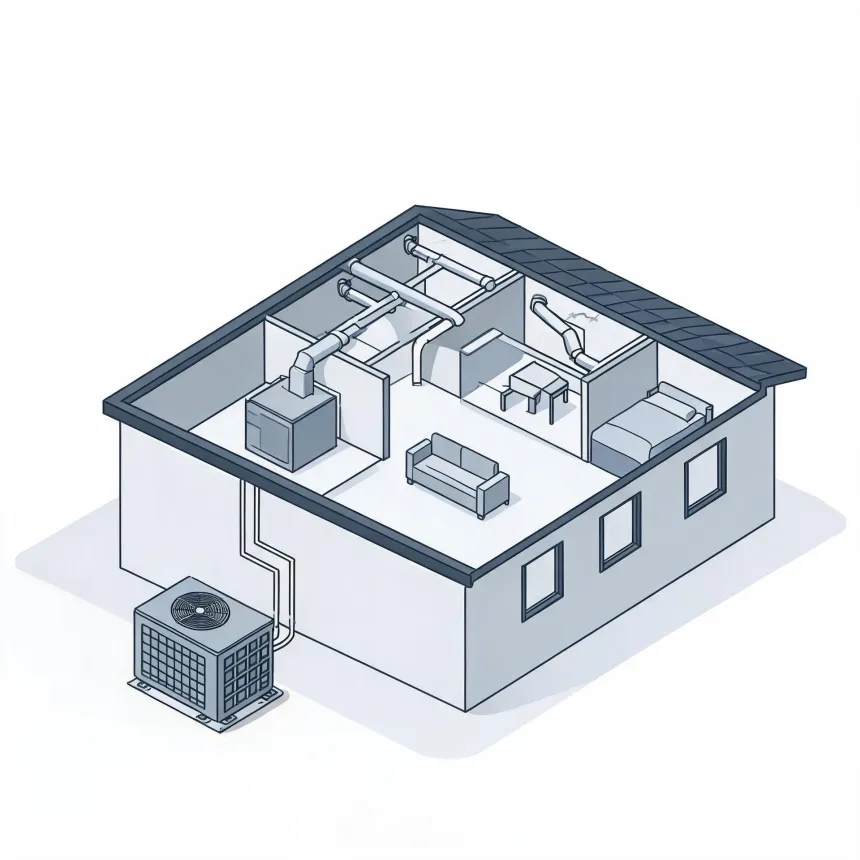
Isometric line illustration of a cutaway single-story house showing interior rooms with ducted air distribution, an indoor air handler, furniture, and an outdoor condenser unit connected by lines outside the wall.
Your system heats November through April and cools May through September.

NOAA nClimDiv, 1991–2020 normals

Low humidity here means a heat pump isn't fighting moisture all summer.

Less strain on the system means a repair is more likely to hold.

A heat pump that runs badly here still runs up a expensive bill

Power here costs 20.61 cents per kilowatt-hour
54 damaging wind events from 2015 to 2024
Winter nights average 40°F
The first cold snap finds the weak partHeat runs here from November through April, and a part that was already weak tends to give out in that first month of real demand.

A heat pump that's short on refrigerant or struggling to start still draws power the whole time it runs, just to put out less heat or cooling than it should. On a system with expensive power behind it, that difference shows up fast. Waiting a month to get it looked at is a month of paying more for less. If it's blowing warm air, cycling on and off, or running longer than it used to, that's worth a call now rather than after another bill comes in.

If your house is newer, the heat pump is worth fixing

If your home was built in 1981 or later, the heat pump in it has probably had an easier run than its rated life allows for. Getting it repaired now is the straightforward move, not a stopgap before a bigger job.

Find a contractor
A man in a cap, gray work shirt and tan pants climbs porch steps toward a blue front door, carrying a canvas tool bag, with a blue ceramic planter of white flowers beside him.
A gray heat pump outdoor unit mounted on a concrete pad next to a residential house with lap siding and stone accents.

A light workload, day after day

That strain being low most of the year is also why a repair holds up over time rather than becoming the first of several. A part that fails under light, steady use usually failed because it wore out or was never quite right to begin with, not because the system was pushed past what it could handle. Get the part replaced and the rest of the unit is still in the shape that clip shows, running the same way tomorrow as it did today.

What you can check yourself

Look at the outdoor unit first. If the fan isn't spinning, check the breaker before anything else. A tripped breaker or a thrown disconnect switch next to the unit will shut the whole system down and both are safe to reset once. If it trips again, stop and leave it alone. Check the thermostat batteries and the mode setting too. A thermostat stuck in the wrong mode or with a dead display gets mistaken for a broken heat pump more often than people expect. Inside, check the air filter. A filter packed with dust chokes airflow across the indoor coil, and that alone can make a heat pump blow weak or warm air.

What to leave for a tech

Ice on the outdoor coil, a refrigerant line that feels frosted, or a burning smell from either unit mean it's time to shut the system off and call rather than keep testing it. The same goes for a breaker that trips more than once or a sound that wasn't there before, like grinding or a loud click on startup. Refrigerant charge, the reversing valve, and anything electrical inside the cabinet need a gauge set and training to check safely. Running a heat pump with low refrigerant or a failing part doesn't usually destroy it outright, but it can turn a small repair into a bigger one the longer it keeps running that way.

A heat pump that's low on refrigerant still tries to move heat with what it has left, and the compressor pays for that. It runs hotter than it should and pulls harder on every cycle. Keep that up long enough and you move from a refrigerant leak, a simple fix, to a compressor that's worn out, which is not. Ice on the coil does its own damage if it's ignored. That ice blocks airflow, so the system runs longer to do the same job, and a coil that stays iced over can crack a line or flood the compressor with liquid refrigerant it was never built to handle. A part that's failing electrically, a capacitor going weak or a contactor pitting, tends to drag down whatever it's wired to next. None of this happens on the first day. It happens because the system kept running instead of getting shut off and looked at.

A diagnostic visit starts outside at the unit itself, not with a clipboard. A tech checks the readings, the pressures, the amp draw on the compressor, before taking anything apart. That tells them whether the problem is refrigerant, electrical, or airflow, and it narrows down what to check next instead of guessing. Inside, they'll pull the cover and look at the parts that actually fail: the capacitor, the contactor, the reversing valve, the board. Most of the time the system is doing something specific wrong, like short cycling or blowing air that never gets warm, and that symptom points to a handful of likely causes rather than all of them. A good diagnosis ends with the tech telling you what's worn out and what it'll take to fix it, not a guess dressed up as an answer.