




White stucco buildings with red-tiled roofs glow with warm interior lights across a tree-covered hillside at dusk.

Furnace Repair in Sacramento, CA

Tell us about the job

Takes about a minute. No obligation.

RepairFurnace or heatingSacramento County, CA
Step 1 of 2

What ZIP code is the job in?

Half the homes in Sacramento County were built in 1981 or later. If yours is one of them, your furnace is probably newer too, especially if it came with the house. A newer furnace is worth repairing almost every time. The parts that fail, an igniter, a flame sensor, a blower motor, are the same parts that fail on an old unit, and swapping one out is a small job on a system that still has years ahead of it.

6 months
November through April, your furnace is on duty
40°F
the average winter night it heats against
57%
of homes here heat with gas, so most furnaces here burn gas
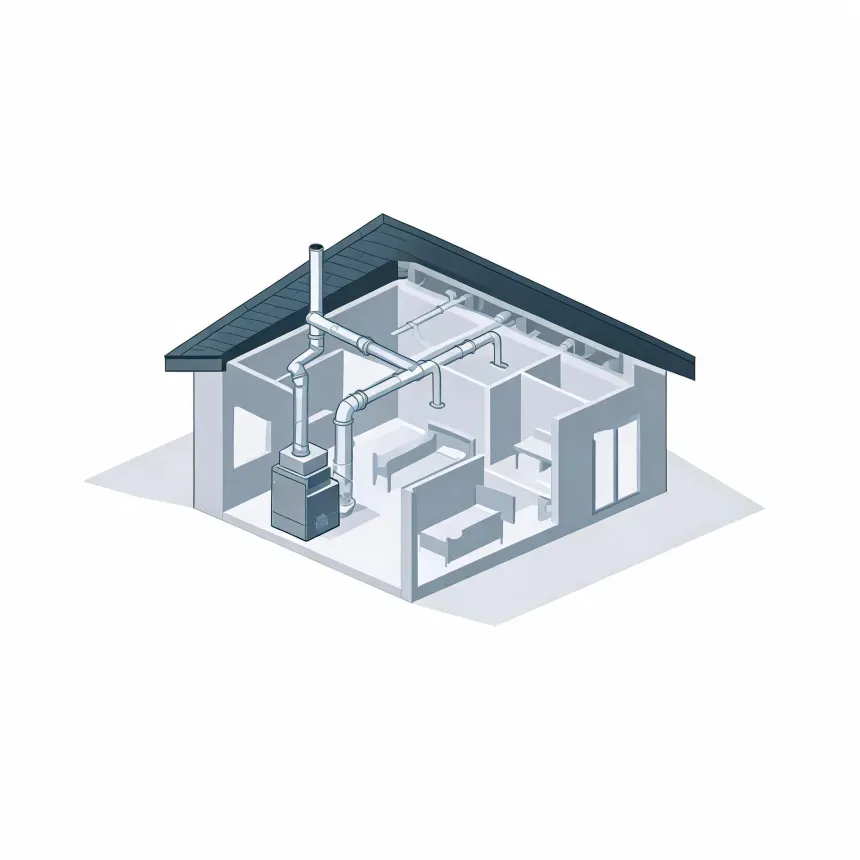
Isometric cutaway illustration of a small single-story house showing interior rooms, a furnace unit with a flue, and connected ductwork running below the dark gabled roof.
Your furnace works hardest from November through March.

NOAA nClimDiv, 1991–2020 normals

Furnaces in Sacramento County run about six months a year, November through April.

A furnace that sits idle the other six months has less reason to wear out early.

First cold nights in November ask the most of a furnace that sat all summer

Heat runs November through April
Winter nights average 40°F
Climate zone 3B

Overnight lows average 40°F here in December and January, nothing close to what a furnace in a colder state has to push against. So when yours is struggling to keep up on a cold night, the problem usually isn't the machine working past its limits. It's a specific part that's failed. Worth getting looked at before you decide it's time for something new.

A newer furnace is worth fixing

If your furnace came with the house, get the repair quoted before you assume it needs replacing. A failed igniter or blower motor on a newer system is a small fix, not a sign the unit is done.

Find a contractor
A man in a dark jacket and tan pants, seen from behind, carries a canvas tool bag up concrete steps toward a blue front door of a house with light horizontal siding and a potted shrub in a blue planter.
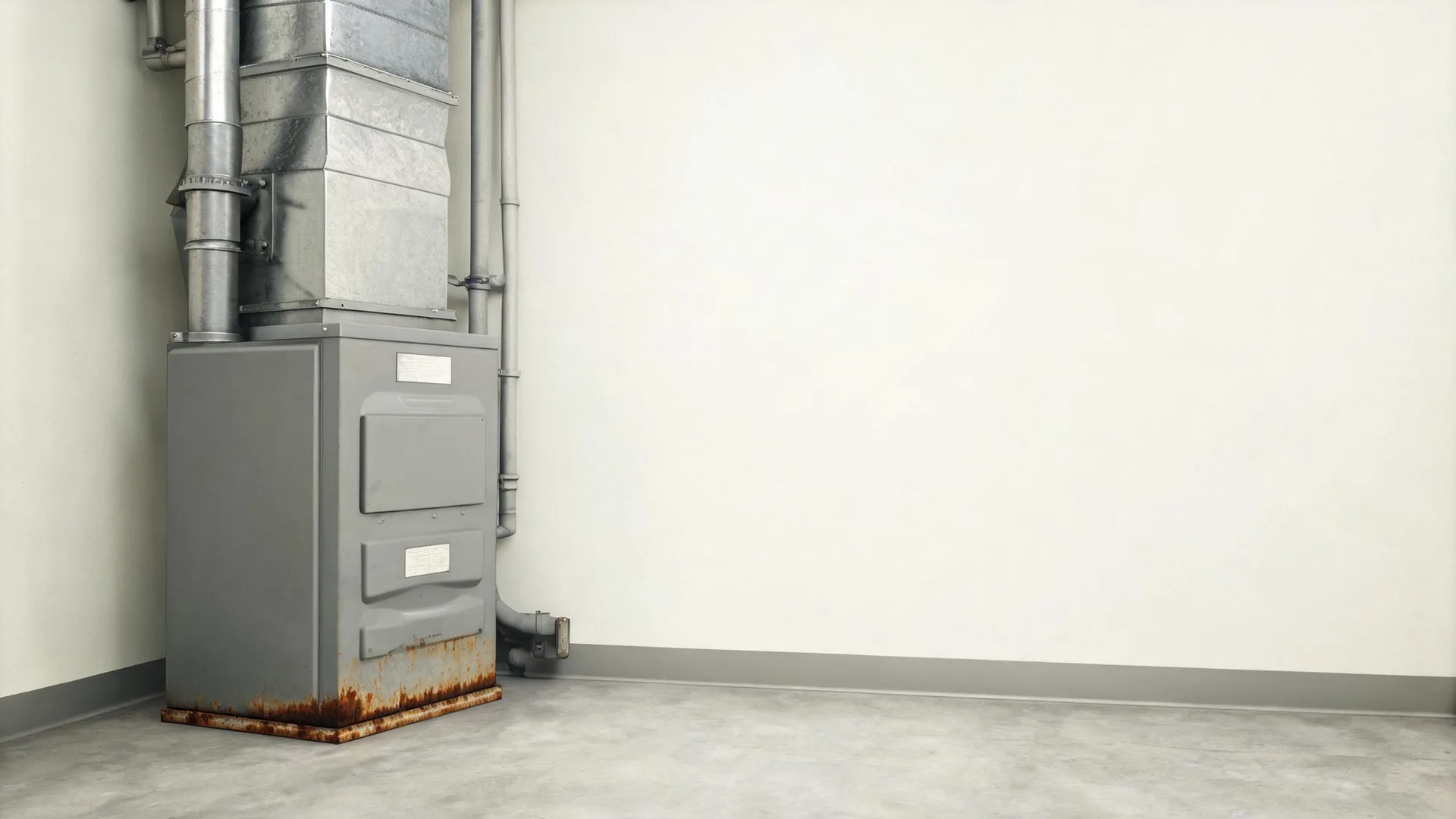
A gray residential gas furnace installed in an unfinished basement, connected to sheet-metal ductwork and PVC pipes.

What you can rule out before the tech shows up

Before you call anyone, check the thermostat battery and the filter. A dead battery can blank the display or stop it from calling for heat at all. A filter clogged with dust chokes airflow, and some furnaces will shut themselves off rather than run with it blocked. Next go to the breaker panel and look for a tripped switch. Furnaces run on a dedicated circuit, and a breaker that's tripped more than once points to something worth having a tech check rather than resetting again. If you've got a standing pilot, see if it's lit. If it's an electronic ignition system, listen for the inducer motor starting up. It should run for a few seconds, then you should hear a spark or see a glow before the burners catch. If the inducer runs but nothing follows, tell the tech that when they arrive, it narrows down the problem. Last, walk outside and check that the vent hood isn't blocked by anything. A blocked vent can shut the whole system down as a safety measure.

A limit switch that keeps tripping will keep tripping

Some furnaces shut down on their own when something's wrong, then start right back up on the next call for heat. A limit switch that trips from poor airflow will trip again and again until the airflow problem is fixed. Each cycle puts the same strain on the blower motor that caused the first shutdown.

A cracked heat exchanger doesn't heal between cycles

A hairline crack gets worse under the stress of heating up and cooling down, not better. Letting the furnace keep running on a bad exchanger risks carbon monoxide getting into the air it's blowing through the house.

An unfinished basement featuring a forced-air furnace, exposed wooden ceiling joists, bare concrete walls, and miscellaneous items including cardboard boxes and coiled cables on the floor.

A new furnace would cut about $50 a year off heating for a typical Sacramento County home.

  • A new high-efficiency furnace$260 a year
  • An older furnace$310 a year

Estimates for a typical Sacramento County home, compared with an older unit built to the previous federal minimum, from EIA household energy data, California fuel prices and NOAA climate normals. Your home will differ.

Repair makes sense when one part has failed and the heat exchanger is sound.

Replacement makes sense when the heat exchanger is cracked or the furnace keeps needing parts.

Age is the first thing to weigh, but it's not the only one. A furnace that's needed repeat service calls is telling you something, even if each fix was small on its own. The real question is what's failing. An igniter or a flame sensor is a cheap part doing a narrow job, and replacing it doesn't say anything about the rest of the system. A cracked heat exchanger is different. That's the part that separates the flame from the air moving through your house, and once it's compromised, the whole furnace is done regardless of how new it is. A tech checking this out should be able to tell you which kind of problem you've got, and that answer matters more than the furnace's birthday.