





White stucco houses with red tile roofs lit from within, nestled on a hillside at dusk beneath a deep blue sky.

Furnace Installation in Bakersfield, CA

Tell us about the job

Takes about a minute. No obligation.

New system or replacementFurnace or heatingKern County, CA
Step 1 of 2

What ZIP code is the job in?

Kern County logged 777 severe weather events between 2015 and 2024, and 711 of those were damaging wind. Wind like that can knock out power for hours, sometimes longer. Statewide, 17% of California households went at least a day without power in 2024. A gas furnace still needs electricity to run the blower and the control board, so a storm that takes down power lines can take your heat down with it even if the gas line is fine. The county saw winter storms 53 times in that same stretch, which is exactly when a furnace matters most. Worth asking your installer how the system handles a power cut, and what backup options exist for the parts that need electricity to work.

6 months
November through April, your furnace is on duty
37°F
the average winter night it heats against
59%
of homes here heat with gas, so most furnaces here burn gas
80% AFUE
the federal minimum any new unit must meet
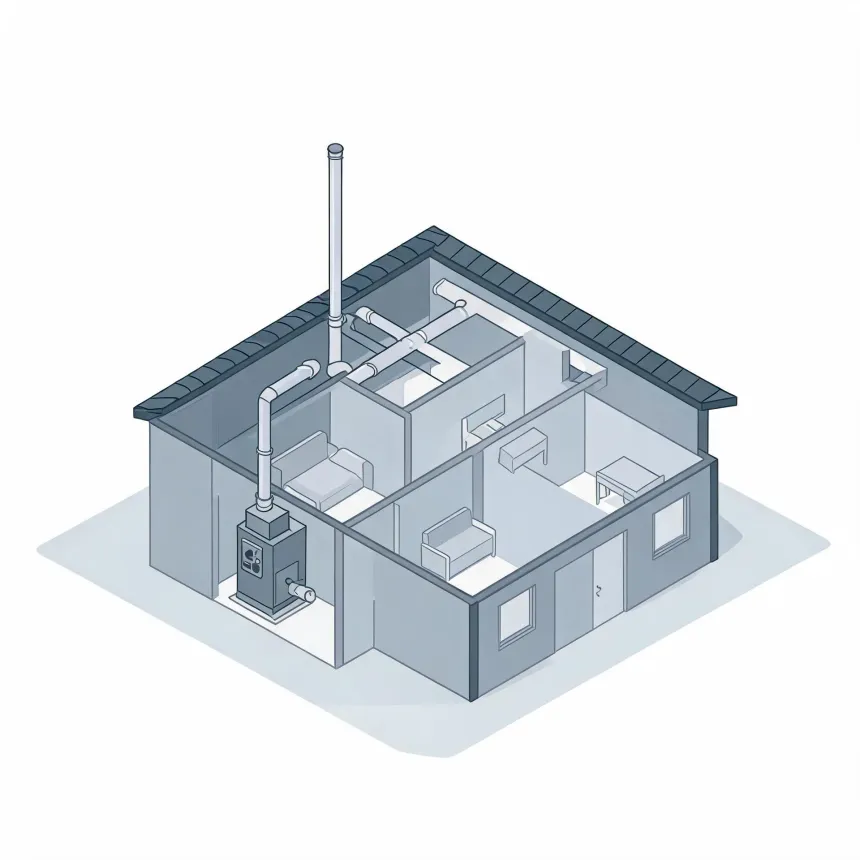
Isometric grayscale illustration of a cutaway single-story house showing interior rooms with furniture, a furnace unit connected to ductwork and a tall vertical flue pipe extending above the roof.
Your furnace works hardest from November through March.

NOAA nClimDiv, 1991–2020 normals

Gas heats 58.9% of homes in Kern County, more than any other fuel.

Replacing a gas furnace with another gas furnace is the straightforward path for most homes here.

Put a new furnace in before November, not after the first cold snap

Heat runs November through April
Winter nights average 37°F
53 winter storms from 2015 to 2024
A high-efficiency furnace isn't the priority hereNatural gas ran $18.44 per million Btu in California last year, so saving fuel matters less than the furnace actually running when you need it.

Any furnace installed here now has to clear zone 3B's efficiency rule, and for a gas furnace that means turning at least 80 percent of the gas it burns into heat over the winter. That's been the federal floor since late 2015, so most new units on the market already meet it. The number moves to 95 percent, but not until furnaces manufactured on or after December 18, 2028, so that's a later purchase's problem, not this one's. A federal tax credit is available for qualifying high-efficiency equipment installed now, worth asking your installer which models here qualify.

Plan the install around the outages, not just the furnace

When the power goes with the wind, the furnace stops with it, blower and control board both. Ask your installer about a transfer switch or backup power for the parts that need electricity, and where the outdoor unit sits matters too. Get this settled as part of the install, not after a storm already found the gap.

Find a contractor
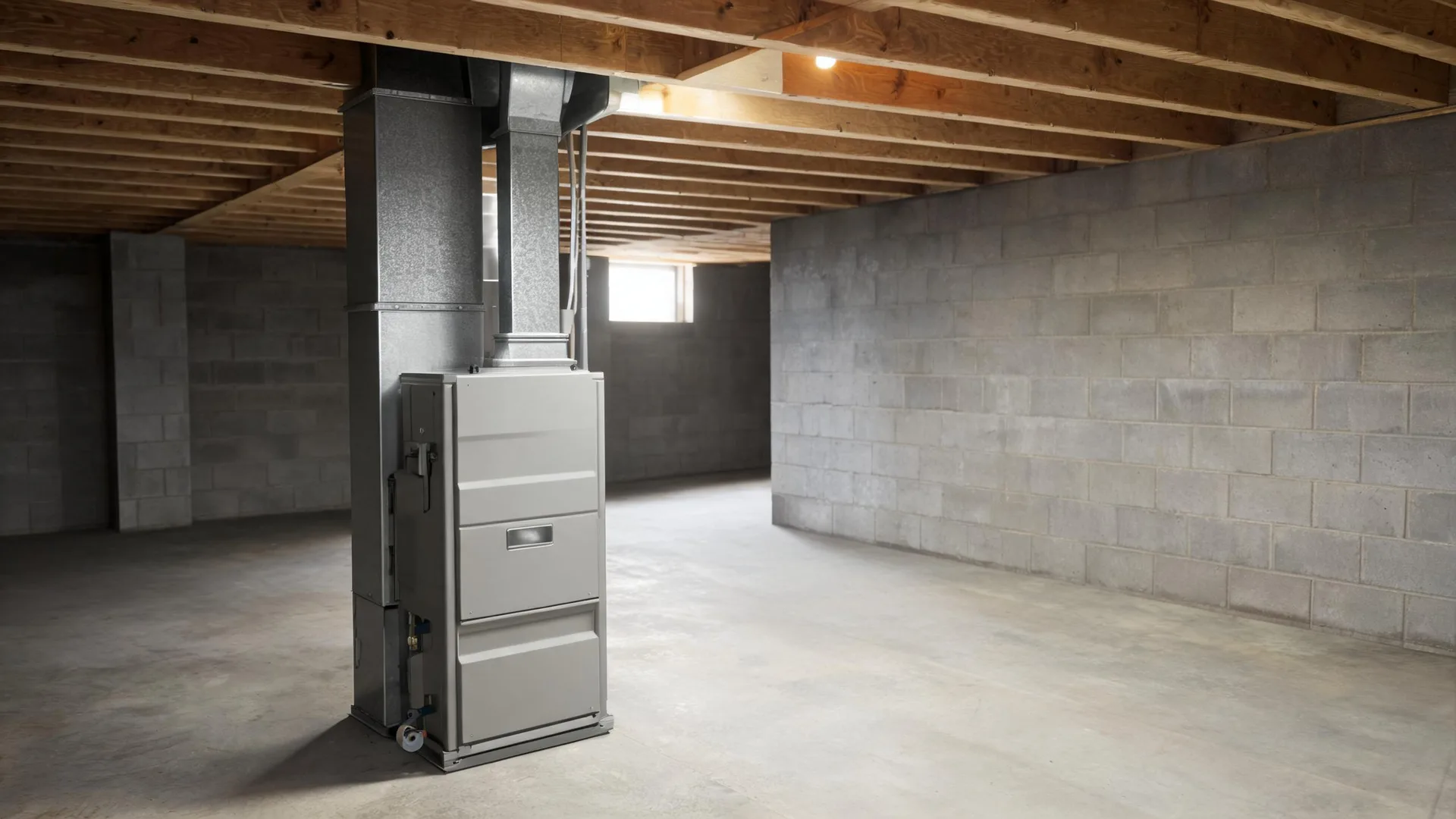
A gray residential gas furnace installed in an unfinished basement, connected to sheet-metal ductwork and PVC pipes.

The furnace is the easy part to price

The furnace itself is only part of what you're paying for. Size matters more than most people think. A unit that's too big for the house cycles on and off too fast, which wears out parts sooner and never runs long enough to heat evenly. A unit that's too small runs constantly and still can't keep up on the coldest nights. Getting the size right means someone actually calculating the heat loss for your house, not just matching the old unit's number. The ductwork is the other half of the job. If the existing ducts are undersized, leaky, or routed poorly, a brand new furnace will fight them the whole time, and you'll feel it as weak airflow in some rooms and a loud blower trying to compensate. Sealing or modifying ducts adds labor beyond just setting the furnace in place. Venting is its own piece of work too. Gas furnaces have to vent exhaust safely to the outside, and the type of venting required depends on the furnace's efficiency rating, which changes how the vent pipe is run and what it's made of. Electrical work comes into it as well, since the blower motor, control board, and igniter all need a reliable power supply, and older electrical setups sometimes need updating to handle it. None of this shows up on the sticker price of the furnace itself, but it's where a lot of the real work happens.

The old furnace doesn't come out first

A tech disconnects the gas line, the vent pipe, and the electrical before anything new goes in, and checks that the gas is shut off at the valve before touching a fitting. If the furnace sits in a closet or attic, getting the old cabinet out can take as much care as setting the new one in, especially if it was installed before the doorway or framing around it.

The vent connection usually can't just be reused

A new furnace with a different efficiency rating often needs a different kind of venting than the one it replaces. An old metal flue sized for a standing-pilot furnace isn't necessarily right for a unit with a different burn, so the vent run is one of the first things a tech checks against the new equipment, not just the old hole in the wall.

An unfinished concrete basement containing a gas furnace with sheet-metal ductwork, utility shelving, and exposed overhead joists.

A high-efficiency gas furnace would save about $60 a year to run in Kern County compared with a gas furnace.

  • A high-efficiency gas furnace$290 a year
  • A gas furnace$350 a year

Estimates for a typical Kern County home, from EIA household energy data, California fuel prices and NOAA climate normals. Your home will differ.

Since fuel cost isn't driving the decision here, put the attention on what actually fails during an outage. Ask the installer about a furnace that stays simple to repair and easy to get parts for, rather than the model with the highest efficiency number. A straightforward gas furnace with a standard control board is usually quicker to service when something goes wrong, and quicker to get running again after a storm. That matters more here than shaving a few dollars off a gas bill that's already manageable. Spend the upgrade money on making sure the thing turns on, not on squeezing out another point of efficiency.