



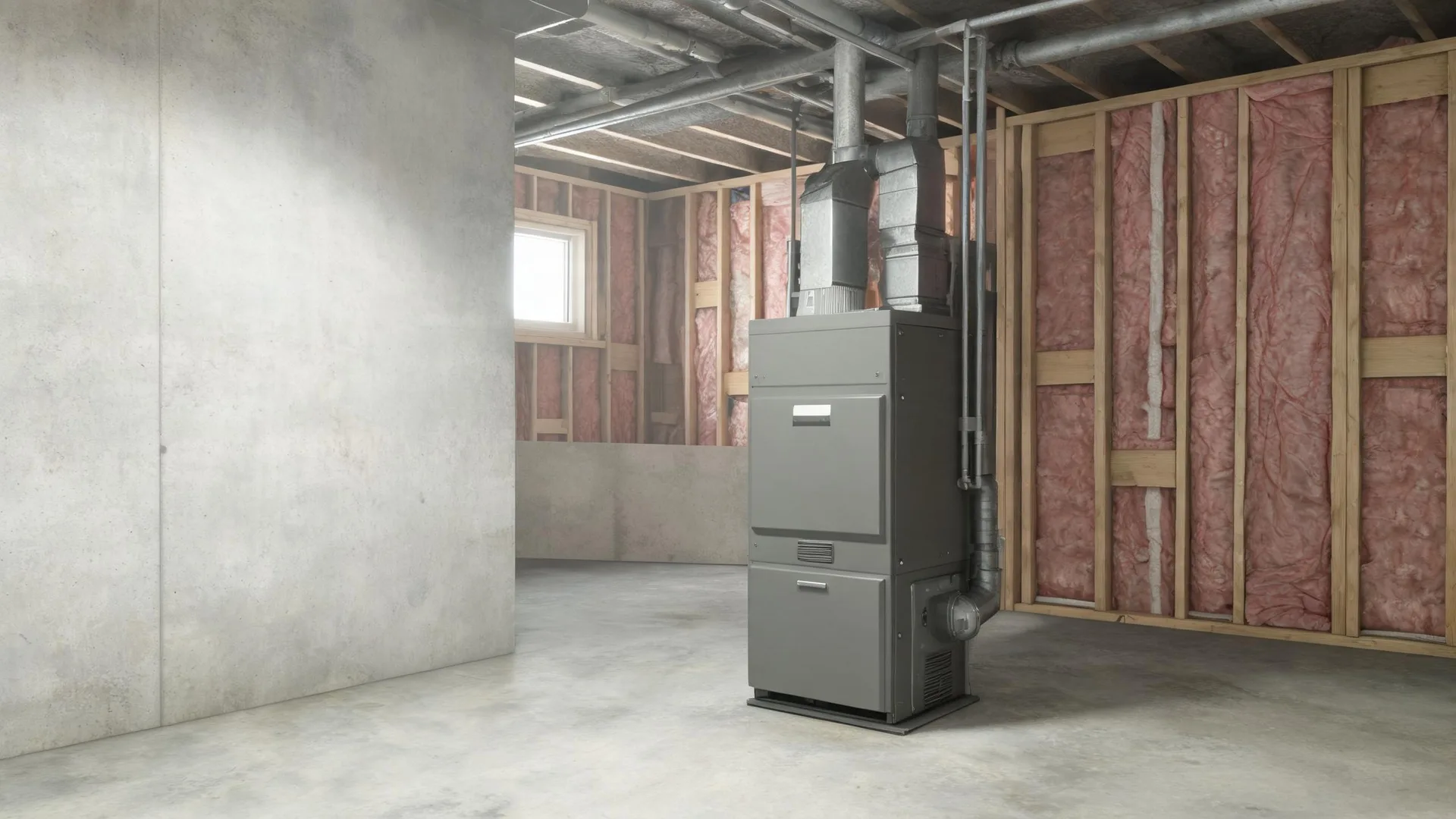
A gray forced-air furnace with metal ductwork stands in an unfinished basement with exposed wooden joists, concrete walls, and a single hanging light bulb.

Furnace Installation in Concord, CA

Tell us about the job

Takes about a minute. No obligation.

New system or replacementFurnace or heatingContra Costa County, CA
Step 1 of 2

What ZIP code is the job in?

Most homes in Contra Costa County heat with gas, 66.1% of them. Electricity comes in second at 28.3%, and bottled or LP gas and fuel oil barely register. If a gas furnace is already what you have, swapping in a new gas furnace is usually the straightforward route, since the gas line and venting are already there. A switch to electric heat means different wiring and ductwork questions worth asking about before you decide. Either way, check what your home came with before you assume which path is simpler.

6 months
November through April, your furnace is on duty
41°F
the average winter night it heats against
66%
of homes here heat with gas, so most furnaces here burn gas
80% AFUE
the federal minimum any new unit must meet
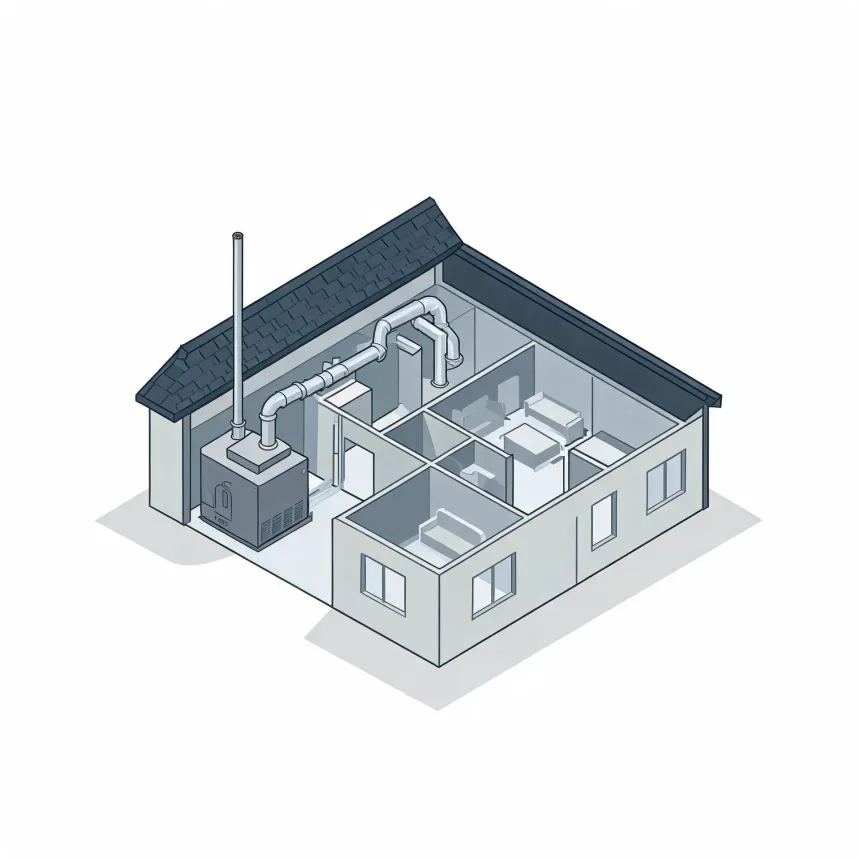
Isometric grayscale illustration of a cutaway single-story house showing interior rooms with furniture, plus an exterior furnace unit with a tall flue pipe and ducting running into the attic space.
Your furnace works hardest from November through March.

NOAA nClimDiv, 1991–2020 normals

Furnaces in Concord start running in November.

Get yours installed in October, and it's ready before the first cold night, not scrambling to catch up after one.

Gas here is $18.44 per million Btu, so the cheapest furnace to run isn't always the one worth paying more for

Heat runs November through April
Winter nights average 41°F
Climate zone 3B

Nothing about Concord calls for a bigger or higher-end furnace than what fits the house. A standard-capacity gas furnace at standard efficiency does the job here, same as most places. Where the weather does matter is the power staying on. Contra Costa County has logged 166 damaging wind events over the past decade, and a furnace needs electricity to run even when the fuel is gas, for the igniter and the blower. Worth asking your contractor how the system you pick handles a power interruption, separate from whatever size and efficiency you land on.

Six months of mild winters. Pick a furnace sized for that, not more.

November through April, with overnight lows averaging 41°F, this furnace isn't working hard. A standard system sized right for your house will handle it without strain. Put the money where it matters, like a setup that keeps running if the power drops.

Find a contractor
A man seen from behind in a grey shirt and tan work pants climbs stone steps toward a blue front door, carrying a canvas tool bag with hand tools in its side pockets, beside a blue planter with a small shrub.
A gray gas furnace with attached ductwork and piping installed in an unfinished concrete basement.

Built in 1978 or earlier, or later, the furnace runs the same hours

Half the houses in this county were built in 1978 or earlier, half in 1978 or later. That split doesn't tell you much about the furnace itself, but it's worth checking which side your house falls on, since what's behind the wall changes what a swap involves. A furnace runs the same way day into night, all winter, whether the house around it is older or newer. Nothing in that age split points toward a bigger unit or a higher tier of equipment. Size it to the house you have, not the year it was built.

An oversized furnace short-cycles, and that wears it out faster

A furnace sized too big heats the house fast, shuts off, then kicks on again a few minutes later. That on-off pattern is harder on the igniter and the blower motor than a longer, steadier run would be. Rooms farther from the furnace end up cooler too, because the air never moves long enough to reach them evenly.

Sizing comes from a heat loss calculation, not a guess based on square footage alone

A contractor works out furnace size by looking at the square footage, the windows, the insulation, the ceiling height, and how many exterior walls each room has. Houses that look alike from the street can need different sized furnaces depending on what's behind the walls. That calculation is worth asking for in writing before any equipment gets chosen.

An unfinished basement featuring concrete block walls, exposed floor joists, a bare concrete floor, and a forced-air furnace with a large metal exhaust duct in the corner.

A high-efficiency gas furnace would save about $50 a year to run in Contra Costa County compared with a gas furnace.

  • A high-efficiency gas furnace$270 a year
  • A gas furnace$320 a year

Estimates for a typical Contra Costa County home, from EIA household energy data, California fuel prices and NOAA climate normals. Your home will differ.

Installation day starts with the old furnace coming out. Disconnecting the ductwork, gas line, and venting takes some time before the unit can even be lifted out. The new furnace goes in, and each connection gets rebuilt one at a time. The gas line gets checked for leaks. The venting gets checked for a proper seal and the right slope. The electrical gets tied in and the ductwork gets connected back up. Once it's running, a tech checks the gas pressure and the temperature rise across the heat exchanger, because a furnace that's wired right but set up wrong still won't heat the way it should. Expect some noise, and a few hours with the heat off while the old one comes out and the new one goes through its checks. By the end, the old equipment is gone and the new furnace has been fired up and tested, not just set in place.