




A row of stucco houses with red clay tile roofs seen behind a tall stucco wall and trimmed hedges, framed by overhanging tree branches.

Furnace Installation in Modesto, CA

Tell us about the job

Takes about a minute. No obligation.

New system or replacementFurnace or heatingStanislaus County, CA
Step 1 of 2

What ZIP code is the job in?

Gas furnaces are the common choice in Modesto, since utility gas heats 66.1% of homes in Stanislaus County. Electricity comes in second at 27.7%, with a small share of homes running on bottled or LP gas. If gas already runs to your house, installing a gas furnace in place of the old one is usually the straightforward route, since the gas line and venting are already there. A contractor can confirm what your home is set up for before quoting a replacement.

6 months
November through April, your furnace is on duty
39°F
the average winter night it heats against
66%
of homes here heat with gas, so most furnaces here burn gas
80% AFUE
the federal minimum any new unit must meet
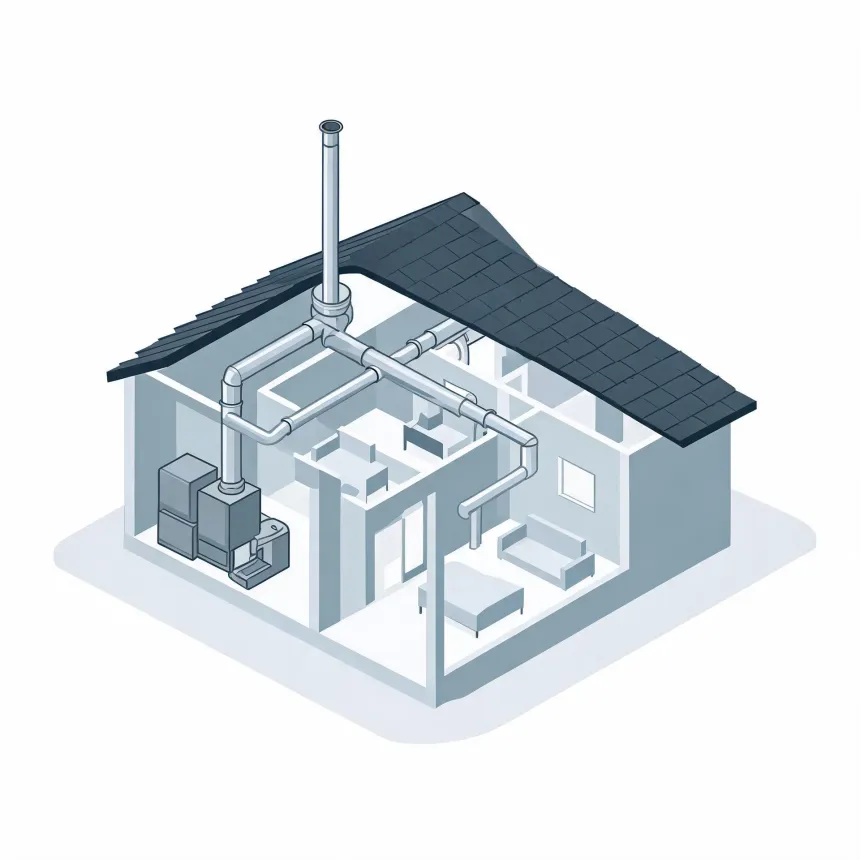
Isometric cutaway illustration of a small house showing a furnace unit connected to ductwork and a vertical flue pipe extending through the dark shingled roof, with sparse furniture in the rooms.
Your furnace works hardest from November through March.

NOAA nClimDiv, 1991–2020 normals

Gas in California ran $18.44 per million Btu in 2024.

A high-efficiency furnace costs more up front and takes longer to earn that back at this price, so pick the furnace that fits your house, not just the one with the best rating.

Six months of mild nights, not a hard winter

Heat runs November through April
Winter nights average 39°F
Climate zone 3B

At $18.44 per million Btu, the difference between a standard and a high-efficiency furnace shows up as a few dollars a month, not a number worth building the decision around. So ask the contractor about sizing first. A furnace too big for the house cycles on and off more than it should, and that wears parts out faster no matter how high its rating is. Ask what warranty comes with the unit, since that covers you if the igniter or heat exchanger fails early. The right size, installed correctly, will serve you better than the highest rating in a furnace that does not fit the house.

Get it installed before November

Heat goes on in November here and stays on through April. Replace the furnace in October and it's done before you need it, on a schedule you picked rather than one a cold night picked for you.

Find a contractor
A man in a cap, dark shirt and cargo pants, seen from behind, carries a canvas tool bag up wooden porch steps toward a blue front door.
A gray gas furnace with attached ductwork and piping installed in an unfinished concrete basement.

A light enough job that reliable beats fancy

November through April, then it shuts off for the year. That's the stretch a furnace here actually has to work with, and it's not pushing against hard cold while it does it. A standard furnace can handle that without strain. Put the attention into getting the size right and the install done correctly, since that's what decides how the furnace holds up, not the efficiency rating on the label.

Sizing comes from a room by room heat loss calculation, not the old furnace's rating

A contractor measures the house, the windows, the insulation, and works out how much heat escapes on the coldest night. That number sets the furnace size. Matching whatever is already installed just repeats a guess someone else made years ago, and that guess may have been wrong from the start.

Both oversized and undersized furnaces fail in their own way

A furnace too big heats the house fast, shuts off, and starts again soon after, so the burner and igniter cycle far more than they should over a season. A furnace too small runs long stretches trying to catch up and never quite gets there on the coldest nights. Either way the house ends up less comfortable than one sized to match the heat loss.

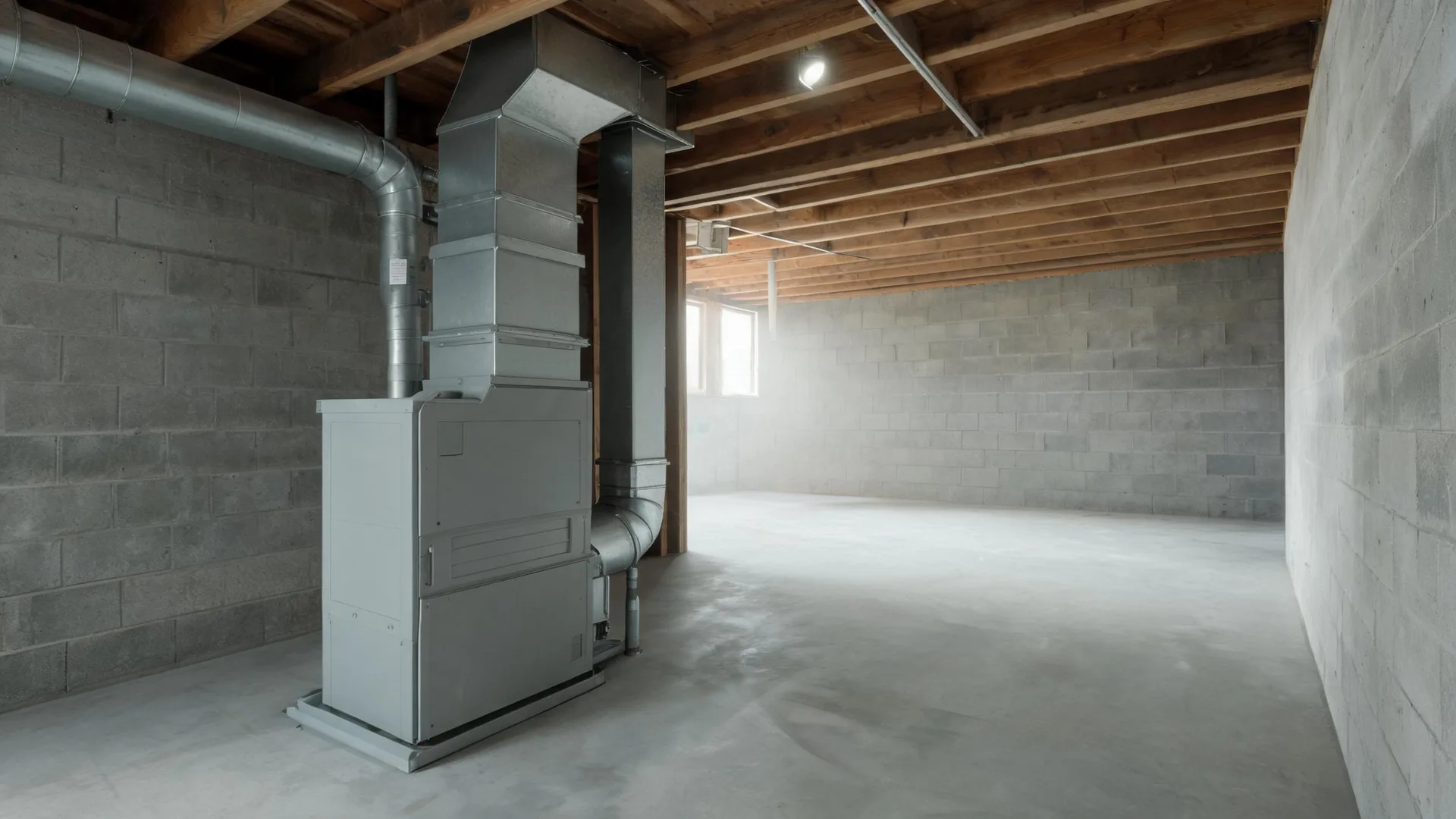
An empty unfinished basement containing a forced-air furnace with overhead ductwork, exposed ceiling joists, and a single hanging light bulb.

A high-efficiency gas furnace would save about $50 a year to run in Stanislaus County compared with a gas furnace.

  • A high-efficiency gas furnace$270 a year
  • A gas furnace$320 a year

Estimates for a typical Stanislaus County home, from EIA household energy data, California fuel prices and NOAA climate normals. Your home will differ.

Installation day starts with the old furnace coming out, along with the old vent pipe if it doesn't match what the new unit needs. The gas line gets connected and tested for leaks before anything else happens. A new furnace often changes the ductwork near the unit, even when the rest of the duct run stays the same, since the new cabinet rarely matches the old one's exact dimensions. The vent pipe gets sized for the new furnace specifically, since a high-efficiency unit vents differently than a standard one and the old piping may not be rated for it. Once it's hooked up, the furnace gets fired and checked. Gas pressure, temperature rise across the heat exchanger, airflow at the vents. A contractor should test the house for carbon monoxide and check the draft before calling the job done, not just confirm the burner lights.