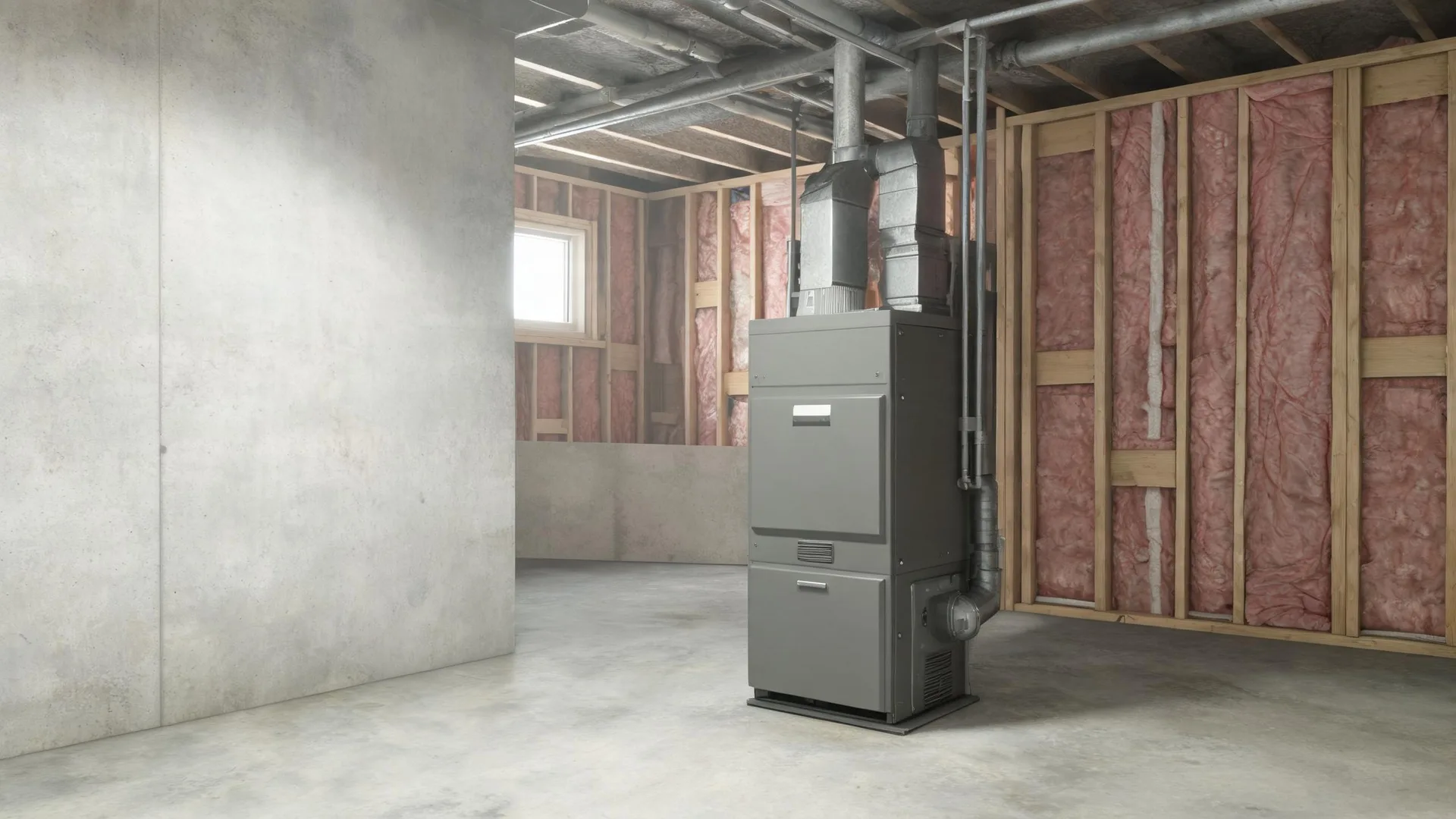
An unfinished basement containing a forced-air furnace with metal ductwork, exposed wooden ceiling joists, a hanging Edison bulb, and bare concrete floors.

Furnace Installation in Santa Cruz, CA

Tell us about the job

Takes about a minute. No obligation.

New system or replacementFurnace or heatingSanta Cruz County, CA
Step 1 of 2

What ZIP code is the job in?

Storms hit this county often

Santa Cruz County recorded 228 severe weather events between 2015 and 2024, with damaging wind alone striking 207 times. Hail, tornadoes and winter storms show up in the count too. A furnace sitting through that many years of weather needs a cabinet and intake that can take it.

Power doesn't always hold

17% of California households went at least a full day without power in 2024. A gas furnace still needs electricity to run its blower and controls, so when the power drops, so does the heat, no matter how much gas is in the line.

7 months
November through May, your furnace is on duty
41°F
the average winter night it heats against
57%
of homes here heat with gas, so most furnaces here burn gas
80% AFUE
the federal minimum any new unit must meet
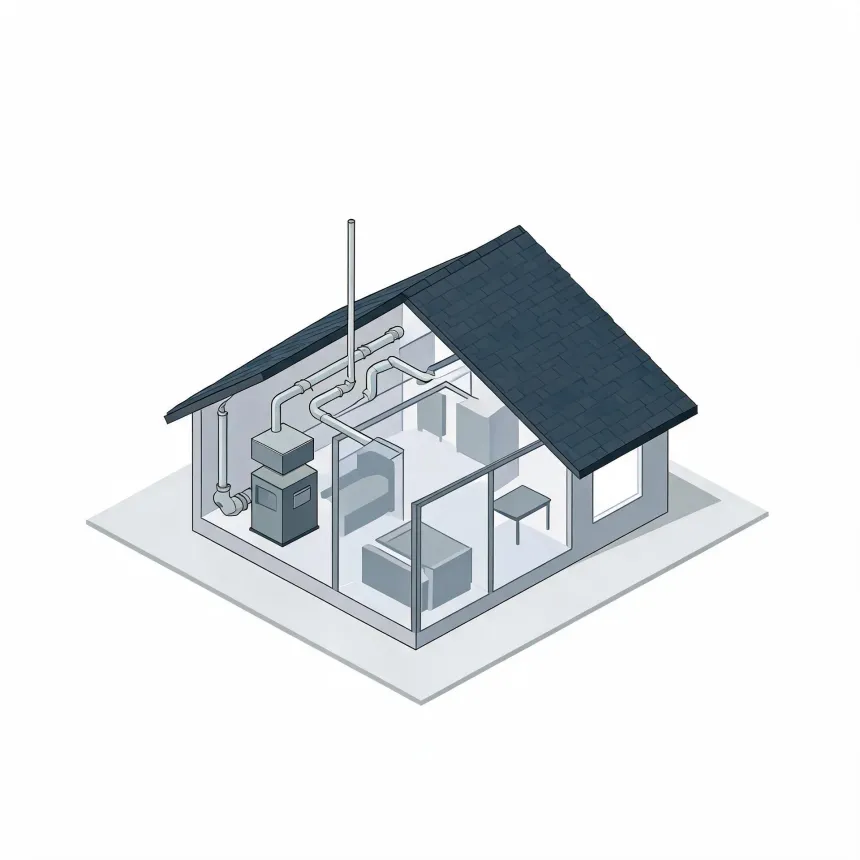
Isometric cutaway illustration of a small house with a dark shingled roof, showing an interior furnace unit, ductwork, and a flue pipe extending through the roof.
Your furnace works hardest from November through April.

NOAA nClimDiv, 1991–2020 normals

Furnace runs about seven months a year here, November through May.

A system built to run nonstop doesn't gain you much. Pick one that's built to last, not one built for a harder climate.

Get it done before November, while it's still your choice

Heat runs November through May
Winter nights average 41°F
Climate zone 3C
Most homes here already run on gasGas heats 57.3% of homes in Santa Cruz County, more than electric and propane combined.

Santa Cruz County falls under climate zone 3C, the mild end of the state's energy code. Any furnace installed here has to turn at least 80 percent of the gas it burns into heat, the federal minimum for units built since November 2015. That number climbs to 95 percent for furnaces made on or after December 18, 2028, so what counts as compliant is changing. A furnace meeting today's 80 percent minimum is still a legal install now. Ask what's available at 95 percent too, since a federal tax credit can apply to higher-efficiency equipment.

Plan this furnace for the power going out, not just the cold

A new furnace means picking where it sits and what backs it up. Ask about a cabinet and intake placement that can take wind and hail, and ask what keeps the house warm when the power goes out, since the blower needs electricity even with gas in the line.

Find a contractor
A gray gas furnace with attached ductwork and piping installed in an unfinished concrete basement.

Sized to the house, not the old unit

Sizing a furnace comes down to how much heat the house loses, not how big the old unit was or how many square feet the place measures. A contractor works that out room by room: the windows, the insulation, the ceiling height, which walls face outside. Two houses the same size can need different size furnaces depending on how they're built. Get the size wrong and the furnace tells on itself fast. Too big, and it blasts the house up to temperature and shuts off before it's finished a full cycle, then does it again twenty minutes later. All that starting and stopping wears on the igniter and the blower motor sooner than steady running would, and the air coming out never quite evens itself out. Too small, and it runs long stretches without catching up, so the thermostat never quite reaches its mark on the coldest mornings. Either mistake shows up over years, not on day one, which is why the calculation matters more than it seems to at the time.

Ask what size the load calculation says

A contractor should size the furnace to the house, room by room, not just match the old unit or guess from square footage. A furnace too big cycles on and off fast, which wears the ignition system sooner and leaves the house feeling stuffy. One too small runs long stretches and never quite catches up on the coldest mornings. Ask to see the calculation, not just the number it landed on.

Ask what the warranty covers and for how long

Furnace warranties usually split the heat exchanger from everything else, the blower motor, the igniter, the circuit board. Some only pay out if the unit was registered within a set window after install, and some drop coverage if anyone other than a licensed contractor touches it. Get the terms in writing before you decide between two models, since a longer warranty on paper is worth less if the fine print cuts it short.

A gray forced-air furnace with metal ductwork stands in an unfinished basement with exposed wooden joists, concrete walls, and a single hanging light bulb.

A high-efficiency gas furnace would save about $60 a year to run in Santa Cruz County compared with a gas furnace.

  • A high-efficiency gas furnace$310 a year
  • A gas furnace$370 a year

Estimates for a typical Santa Cruz County home, from EIA household energy data, California fuel prices and NOAA climate normals. Your home will differ.

Installation day starts with the old furnace coming out, not the new one going in. The ductwork gets inspected before anything else, since a new furnace connected to leaky or undersized ducts won't heat the house right no matter how good it is. Expect the gas line, the vent pipe and the electrical connection to all get checked or replaced as needed, not just hooked back up out of habit. Once the new unit is set, it gets fired up and run through its paces: checking the temperature rise across the heat exchanger, checking static pressure in the ducts, making sure the flame looks right and the blower is moving the air it should. A combustion analyzer gets used to confirm the furnace is burning clean and venting safely before anyone calls the job done. None of this is quick, and a contractor rushing through it is skipping steps that matter later.