


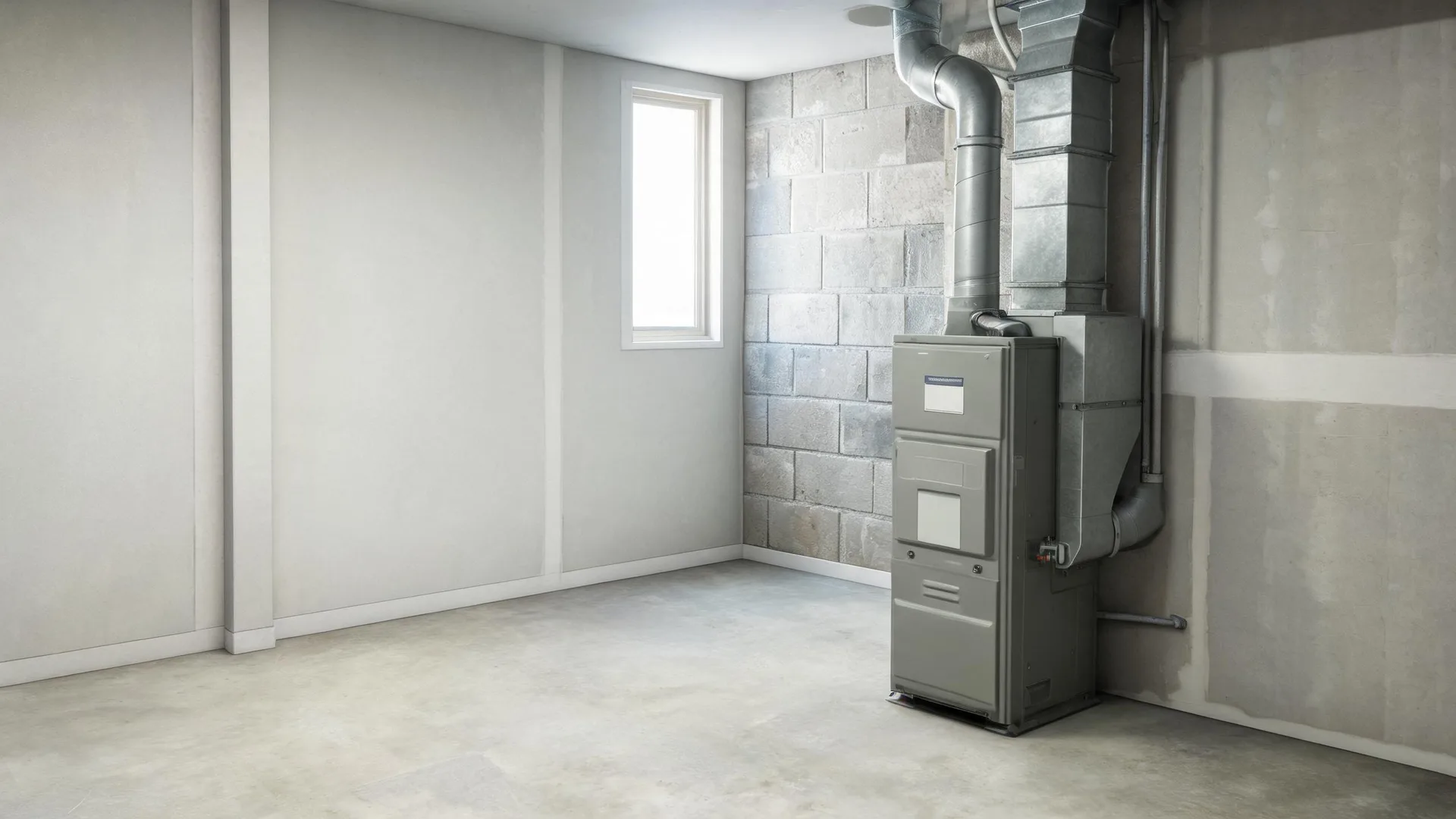
An unfinished basement featuring a grey forced-air furnace with metal ductwork, concrete block walls, exposed wooden joists, and a single hanging bare bulb.

Furnace Installation in Santa Maria, CA

Tell us about the job

Takes about a minute. No obligation.

New system or replacementFurnace or heatingSanta Barbara County, CA
Step 1 of 2

What ZIP code is the job in?

Gas heats 68.9% of homes in Santa Barbara County, more than any other fuel. That shows up in what gets installed in Santa Maria. If gas already runs to your house, a gas furnace is usually the straightforward call. Same fuel line, same venting approach, a crew that has installed this setup many times before. Electric heat makes up 22.8% of homes here, and bottled or LP gas heats 2.7%. Neither rules out a different fuel for your house. It just means if you're replacing what's already there, you're replacing the system most of your neighbors have too.

7 months
November through May, your furnace is on duty
40°F
the average winter night it heats against
69%
of homes here heat with gas, so most furnaces here burn gas
80% AFUE
the federal minimum any new unit must meet
Isometric cutaway illustration of a single-story house in gray tones, showing interior rooms with furniture, ceiling ductwork, and an exterior furnace unit with a tall flue pipe.
Your furnace works hardest from November through April.

NOAA nClimDiv, 1991–2020 normals

Furnaces in Santa Barbara County run about seven months a year, and overnight lows average 40°F in the coldest stretch.

A furnace built for harder winters is more than this house needs.

October is the month to get this done, before heat season starts in November

Heat runs November through May
Winter nights average 40°F
Climate zone 3C
Here, pick the furnace that fits, not the one that pays for itselfCalifornia gas ran $18.44 per million Btu in 2024, among the highest in the country

Santa Barbara County sits in climate zone 3C, the warm marine zone under the state energy code. Any gas furnace installed here still has to meet 80.0 percent AFUE, the federal minimum that applies nationwide. That's not a high bar in a place with short winters, but it's the floor everywhere, not just here. The floor is set to rise. Furnaces built from December 2028 on will need to hit 95.0 percent AFUE instead. A unit going in now only has to clear today's line, not the one coming.

A standard furnace fits most houses in Santa Maria

Half the homes in Santa Barbara County went up in 1974 or earlier, half since. Neither end of that calls for anything special. A standard size, installed to meet the efficiency floor already covered above, is the right call for most houses here.

Find a contractor
A gray residential gas furnace installed in an unfinished basement, connected to sheet-metal ductwork and PVC pipes.

A light load, year after year

Seven months of the year this furnace runs, and most nights it's only working against a 40 degree chill, not a hard freeze. That's a light workload. Put the money into a unit that's sized right and installed well, not into a higher-tier model chasing efficiency gains this house will rarely call on.

What AFUE actually measures

AFUE tells you how much of the fuel burned turns into heat in the house versus what goes out the flue. A furnace rated higher wastes less gas doing the same job. It says nothing about how fast the house heats up or how big a unit you need, only how much of what it burns is put to work.

Where the rating stops mattering

The gap between a furnace at the federal floor and one rated higher shows up on the gas bill, not in comfort. Both will heat the house the same way on the same mild night. The higher-rated unit costs more up front, and what it saves depends entirely on how many hours a year it's actually firing.

An unfinished basement containing a metal furnace with ductwork, exposed wooden joists on the ceiling, cardboard boxes, a coiled cable, and a single hanging incandescent bulb.

A high-efficiency gas furnace would save about $50 a year to run in Santa Barbara County compared with a gas furnace.

  • A high-efficiency gas furnace$290 a year
  • A gas furnace$340 a year

Estimates for a typical Santa Barbara County home, from EIA household energy data, California fuel prices and NOAA climate normals. Your home will differ.

Installation day starts with the old furnace coming out, and that alone can take a while if the duct connections or gas line need rework to meet current code. The installer checks the venting next. A furnace draws combustion air and pushes exhaust out through a flue, and that path has to be sized and sloped right or the unit won't pass inspection. Once the new furnace is set in place, the gas line gets connected and pressure tested before anything is fired up. Low voltage wiring to the thermostat gets run or reused, and the ductwork gets sealed where it meets the furnace cabinet, since a loose connection there leaks heated air into a crawlspace or attic instead of the house. Only after all of that does the crew fire the unit and check the flame, the temperature rise across the heat exchanger, and the airflow at the registers. A furnace that fires right on the first try still needs that final check before anyone calls the job done.