





A gas furnace with sheet-metal ductwork and PVC pipes installed in an unfinished basement.

Furnace Maintenance in Anaheim, CA

Tell us about the job

Takes about a minute. No obligation.

Tune-up, service, or cleaningFurnace or heatingOrange County, CA
Step 1 of 2

What ZIP code is the job in?

Furnaces in Anaheim sit idle most of the year, then get asked to run every day starting in December. November is the time to get yours looked at. A tech can check the igniter, test the heat exchanger, and clear anything that settled in the vent over the summer, all before you need the heat to show up on the first cold night. Wait until December and you're booking the check at the same time the furnace is already working hardest, which is exactly when you don't want to find out something needs a part. Four months of regular use, December through March, is enough to show a weak igniter or a dirty flame sensor. Better to find that in November than the first night it drops cold.

Furnaces in Anaheim only run about four months a year, December through March.

A furnace with that light a load still needs a yearly check to last.

Most of Anaheim heats with gas, which means a burner and venting to check, not just a filter

67.2% of homes heat with gas
Climate zone 3B
Heat runs December through March

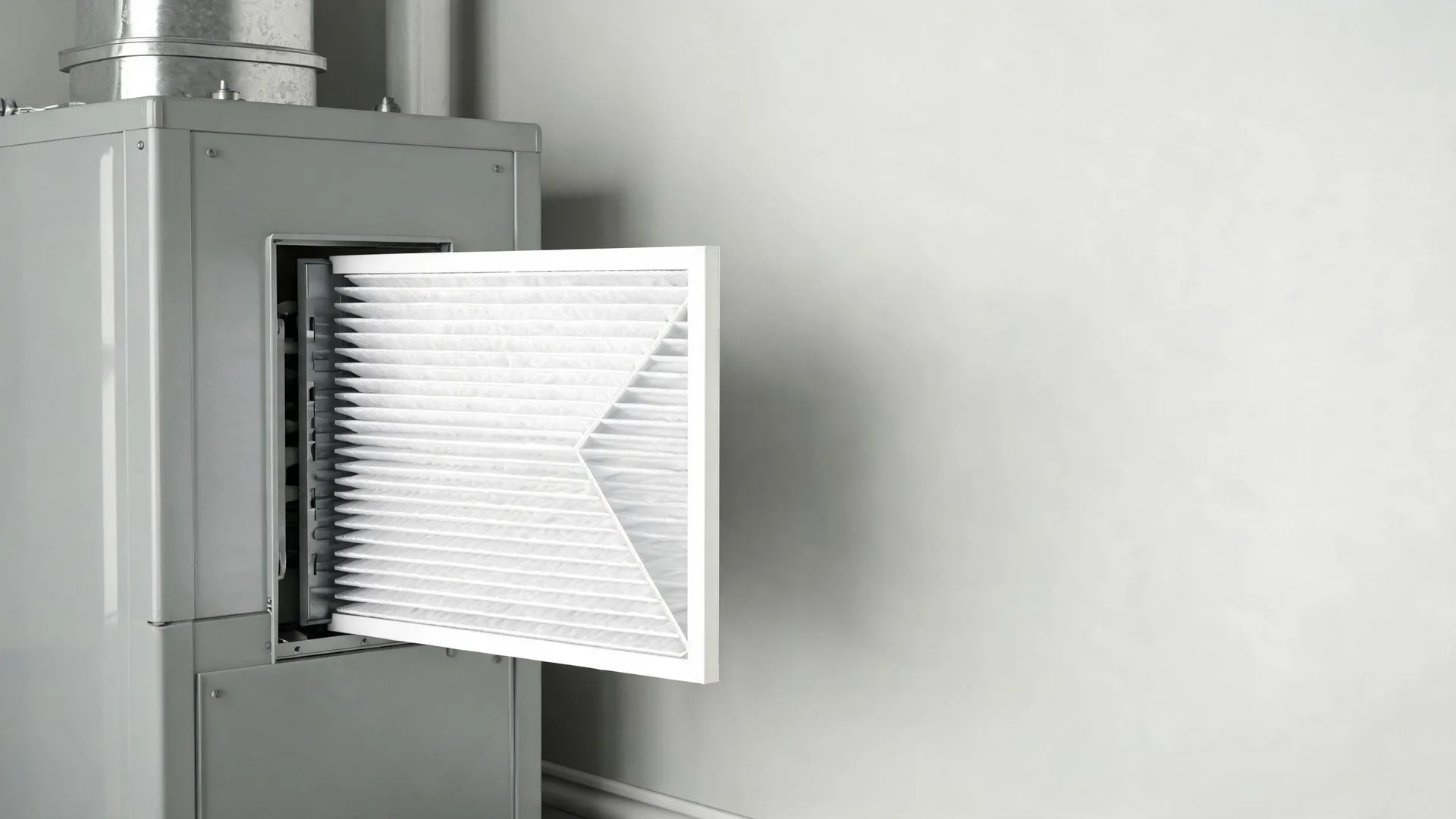
Between visits, the filter is the one thing worth checking yourself. Pull it out and hold it up to a light. If you can't see light through it, swap it for a new one. A clogged filter starves the burner of airflow and makes the heat exchanger work harder than it should. Keep the area around the furnace clear too, nothing stacked against it or blocking the return grille. If you smell gas, or the burner flame looks yellow and uneven instead of steady blue, that's not a wait-and-see. Shut it down and get it looked at.

Book it before the season

It starts running hard in the first month of the season here. Book the check the month before.

Find a contractor
A man in a cap, dark long-sleeve shirt, tan work pants and boots walks up wooden porch steps toward a teal front door, carrying a canvas tool bag with hand tools.
A gray high-efficiency gas furnace installed in an unfinished basement, surrounded by gas lines, a condensate drain, and sheet-metal ductwork.

What a real inspection opens up

A quick visit gets the filter swapped and the thermostat checked, then calls it done. A thorough one gets the cabinet open. The tech should pull the burner assembly and look at the flame itself, steady and blue with no yellow tipping, no lifting off the burner ports. They should check the flame sensor, a small rod sitting in the burner flame that tells the control board the fire is lit, and clean it if it's coated with oxidation, since a dirty one is one of the most common reasons a furnace shuts itself off mid cycle. The heat exchanger gets inspected for cracks or corrosion, because a cracked one can let exhaust mix into the air moving through the house. The inducer motor and the venting get checked too, to make sure exhaust is actually leaving the house and not backing up. A thorough tech also checks gas pressure at the manifold and tests the limit switch, the safety that shuts the burner off if the air around the heat exchanger gets too hot. If the visit is over before any screws come out of the burner compartment, it was the quick version.

What's loose or worn you won't feel yet

A blower wheel caked with dust still moves air, just less of it, and you won't notice until the far rooms run cold. Bearings in the inducer motor can be wearing toward failure while the motor still spins fine today. A tune-up catches these before they turn into a no-heat call, because the tech is checking amp draw and listening for noise you'd never clock walking past the closet.
The wiring nobody opens up for

Every screw terminal in the control board and blower compartment loosens a little over years of the cabinet heating and cooling. A loose connection runs hotter than it should and can burn a wire or trip the board's safety limit for no reason you'd guess from the thermostat. Tightening those down during a tune-up catches a problem before it shows up as a dead furnace on a cold morning.

Skip the yearly check and nothing fails right away. A furnace with a dirty flame sensor or a loose wire will usually keep running, just worse, until the day it doesn't. Dust builds on the blower wheel gradually, so the drop in airflow never shows up as a single moment you'd notice. The heat exchanger matters most to catch early, since a crack in it doesn't announce itself, it just lets exhaust mix into the air moving through the house. Most no-heat calls trace back to something that was already failing slowly, not something that broke all at once.

A tune-up is cleaning and testing, done together. Cleaning covers the burner assembly, the flame sensor, and the blower wheel, wiping away the dust and oxidation that build up over months of sitting idle. Testing is where the tech earns their keep. They fire the furnace and watch it through a full cycle, checking that the flame lights clean, the inducer clears the exhaust, and the burner shuts off exactly when the thermostat says it should. A part can look fine sitting still and still fail that test. That's the difference between someone glancing at the furnace and someone actually checking it works.