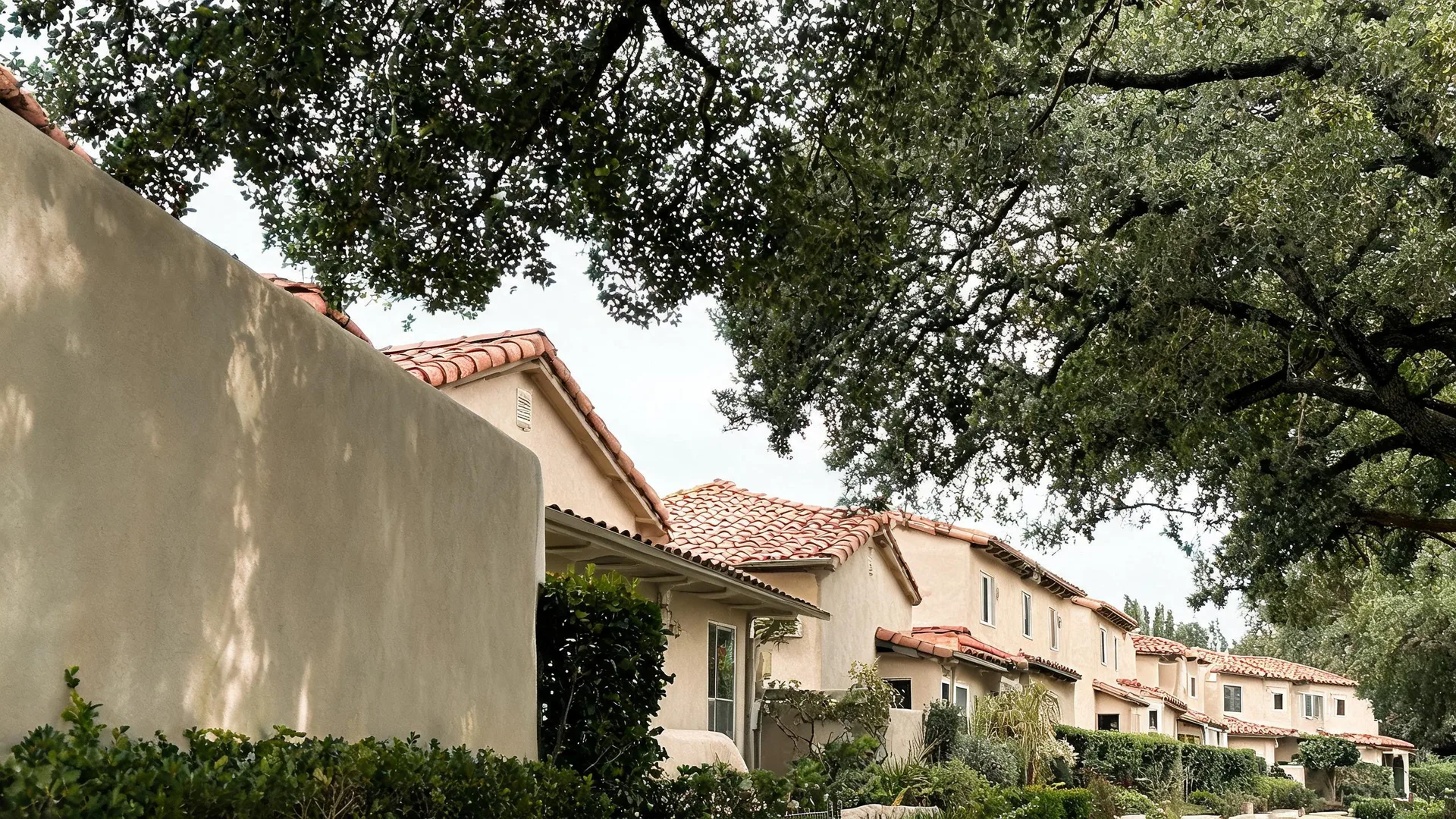
A row of stucco houses with red clay tile roofs seen from behind a tall beige stucco wall, framed by overhanging oak branches and shrubs in the foreground.

Furnace Maintenance in Hanford, CA

Tell us about the job

Takes about a minute. No obligation.

Tune-up, service, or cleaningFurnace or heatingKings County, CA
Step 1 of 2

What ZIP code is the job in?

The cabinet comes off

A thorough tune-up means the panel comes off and the burners, flame sensor and igniter get looked at directly. A quick visit checks the thermostat, listens for strange noise, and calls it done without ever opening the furnace up.


What a skipped step hides

A flame sensor coated in residue or a cracked igniter will not show up on a visual check from across the room. Skip that inspection and the furnace gives no warning. It runs fine until the night it does not start at all.

A furnace in Hanford only has to run about six months a year, November through April.

A furnace with that light a schedule still wears, just slowly, so a yearly check is what catches it before a cold night with no heat.

November starts the season here. October is when the furnace gets checked.

Heat runs November through April
Winter nights average 39°F
Climate zone 3B

Most homes in Kings County heat with gas, 65.2 percent of them. Electricity covers another 26.3 percent, and a small share runs on bottled or LP gas. A gas furnace needs a burner assembly, a flue, and a set of safety controls that shut it down if something goes wrong. That's more to check than a filter swap. The tune-up worth paying for gets the burners cleaned, the flue checked for a solid connection, and the flame sensor and igniter tested, because those are the parts that fail quietly on a gas system and leave the house cold.

A newer furnace still needs a yearly check to stay that way

Half the homes in Kings County were built in 1986 or later. If yours is one of them, the furnace itself may not be that old either. A yearly check is what keeps a newer system working the way it's supposed to for the years it has left in it.

Find a contractor
A gray gas furnace with attached ductwork and piping installed in an unfinished concrete basement.

Six months of work, done in the coldest part of the year

Six months of run time a year is light duty, but those are cold months. Overnight lows average 39°F through December, January and February, so once the furnace starts in November it's working against real cold, not just mild chill. A yearly check before the season starts is what confirms the burners and igniter can carry that load all winter.

Change the filter yourself

A dirty filter is the one thing worth checking without calling anyone. Pull it out, hold it up to a light, and if you can't see through it, swap it. A clogged filter starves the burners of airflow and makes the whole system work harder to push air through the ducts.

Leave the rest to the tune-up

Don't pull the cabinet panel or go near the burners and igniter yourself. Those parts need a meter and some training to test right, and a flame sensor or gas connection is not something to guess at. Between visits, just keep the area around the furnace clear and keep vents in the house open.

A furnace that never gets opened up will still run, for a while, on whatever buildup it's carrying. Dust settles on the burners and the flame doesn't spread evenly across them, so the furnace works harder to put out the same heat. A flame sensor that's picking up a coating of residue starts telling the control board the flame isn't there even when it is, and the furnace shuts itself off partway through the cycle, sometimes before the house is warm. None of that announces itself. It shows up as a furnace that runs longer than it used to, or one that starts and stops a few times before it catches, and most people don't notice that pattern until the night it doesn't catch at all. A yearly check catches the buildup and the weak signal before either one turns into a no-heat call.

A full tune-up checks more than whether the burners light. The technician tests the limit switch, the control that shuts the furnace down if the air inside the cabinet gets too hot, because a blocked vent or a weak blower can push temperatures past what the heat exchanger should handle. The inducer motor gets checked too, since that's what pulls exhaust out through the flue before the burners ever fire. If it's slow or pulling wrong, the furnace may refuse to start at all, or worse, start with exhaust going somewhere it shouldn't. Belts aren't part of the picture on a modern furnace, the blower motor drives the fan directly, but the bearings and the wiring to it still get looked at, since a motor that's struggling pulls more power and runs hotter than it should. None of this shows up from across the room. It only shows up when someone opens the cabinet and checks each part against what it's supposed to do.