A moss-covered weathered wooden fence in the foreground leads toward a row of dark-sided buildings with porches beside a grass lawn, backed by tall conifer trees under an overcast sky.

Furnace Maintenance in Redding, CA

Tell us about the job

Takes about a minute. No obligation.

Tune-up, service, or cleaningFurnace or heatingShasta County, CA
Step 1 of 2

What ZIP code is the job in?

A longer flame or a different sound means look now

A furnace flame should burn steady and blue. If it's flickering, yellow, or the burner sounds louder than usual, something in the combustion is off and a tech should look before the next cold stretch. Short cycling, where the furnace turns on and off more than it should, is another sign the system needs a look rather than a wait.


Catching it early keeps a small fix small

A furnace that's starting to struggle usually gives some warning before it fails outright. A cracked heat exchanger, a failing igniter, a clogged flue, these get worse on their own schedule, not yours. A check now means a tech can catch the early version of the problem instead of the homeowner catching the dead one.

The burner looks fine running. What's cracked inside the heat exchanger doesn't show from outside the cabinet.

A tech checks the flame sensor, the pressure switch, and the exchanger itself, not just whether the furnace turns on.

Half the furnaces in Shasta County are still young enough that a yearly check is worth it

Half the homes here were built by 1982
Heat runs October through May
Winter nights average 32°F

Gas heats more homes in Shasta County than anything else, 42.1 percent, and another 8.5 percent run on bottled or LP gas. That's most of the county burning fuel to make heat, not just moving it with electricity. A gas furnace needs its burner and venting checked every year because that's where carbon monoxide and cracked exchangers come from, not from the blower or the thermostat. A maintenance visit on one of these systems means a tech is checking the flue, the gas pressure, and the safety controls, not swapping a filter and calling it done.

Book the furnace check in September, before it has to work

Furnace here starts running hard in October. September is the month to get it checked, while it's still off and there's time to fix what the check turns up before the first cold stretch asks something of it.

Find a contractor
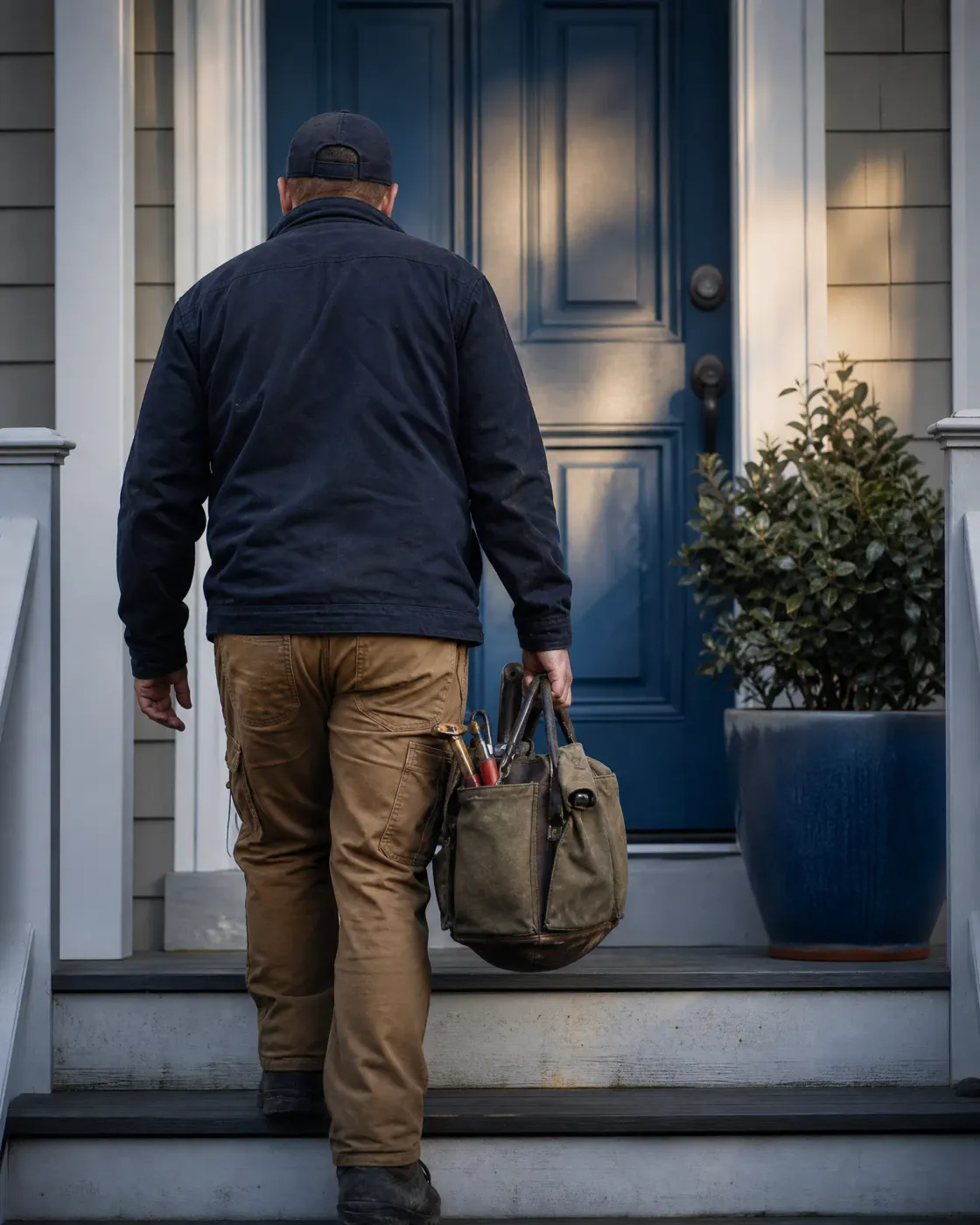
A man in a dark jacket, cap and tan work pants climbs steps toward a blue front door, carrying a canvas tool bag with tools in its side pockets, beside a shrub in a blue planter.
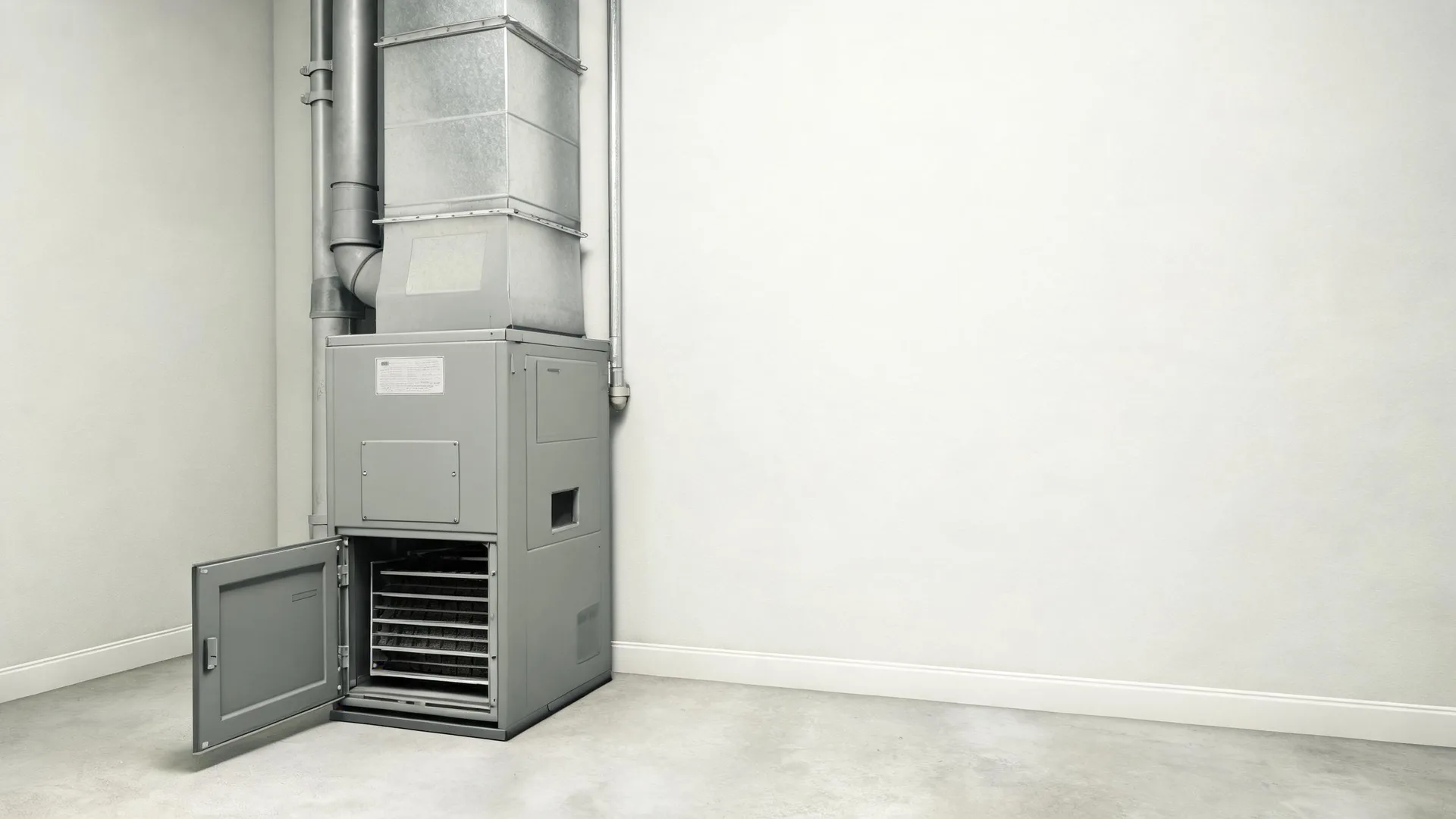
A gas furnace with attached ductwork, gas piping, and condensate lines installed in a concrete-block basement.

A newer furnace stays newer with a yearly look

If your furnace came with the house, and the house went up anywhere near 1982 or later, there's a good chance the furnace itself is newer still, since they tend to get swapped out before the house does. A newer unit still needs the yearly check. That's when a tech catches a small crack in the heat exchanger or a flue that's starting to clog, before it has a season or two to turn into something worse. A furnace that gets checked every year has a better shot at running the way it was built to.

A quick visit checks that it runs

A fast tune-up gets the furnace firing and checks that warm air comes out of the vents. That tells you it works today. It doesn't tell you what the burner flame looks like, what the flue is doing, or whether the pressure switch is holding where it should.

A thorough one checks how it runs

A tech doing it right pulls the burner assembly, looks at the flame pattern, checks the flue for blockage, and tests the gas pressure against what the furnace calls for. That's the difference between a furnace that turns on and a furnace that's burning fuel the way it's supposed to.

Between visits, the filter is the one thing worth checking yourself. A dirty filter chokes airflow, and a furnace starved for air runs hotter than it should and shuts off before it's done heating the house. Look at it monthly and change it when it's gray and matted, not see-through. Keep the area around the furnace clear too. Boxes or stored items too close to the cabinet block the air it needs to breathe and can be a fire risk near the burner. If you smell gas, hear the burner rumble or pop instead of a steady whoosh, or notice soot near the vents, that's not a between-visit fix. Turn it off and get a tech out rather than waiting for the next scheduled check.

A real tune-up starts before the burner ever lights. A tech pulls the panel and looks at the blower wheel, because a wheel caked in dust moves less air and makes the whole system work harder than it should. The flame sensor gets cleaned, not just glanced at, since a coated sensor is the usual reason a furnace fires for a few seconds and quits. Belts aren't part of this, most furnace motors drive the blower directly, but the motor bearings and the capacitor that gets it spinning are worth checking since a weak capacitor shows up as a motor that hums and struggles before it fails outright. The igniter gets looked at too, since those crack with age and are a common reason a furnace won't light at all. None of this shows up by just turning the thermostat up and feeling for warm air.