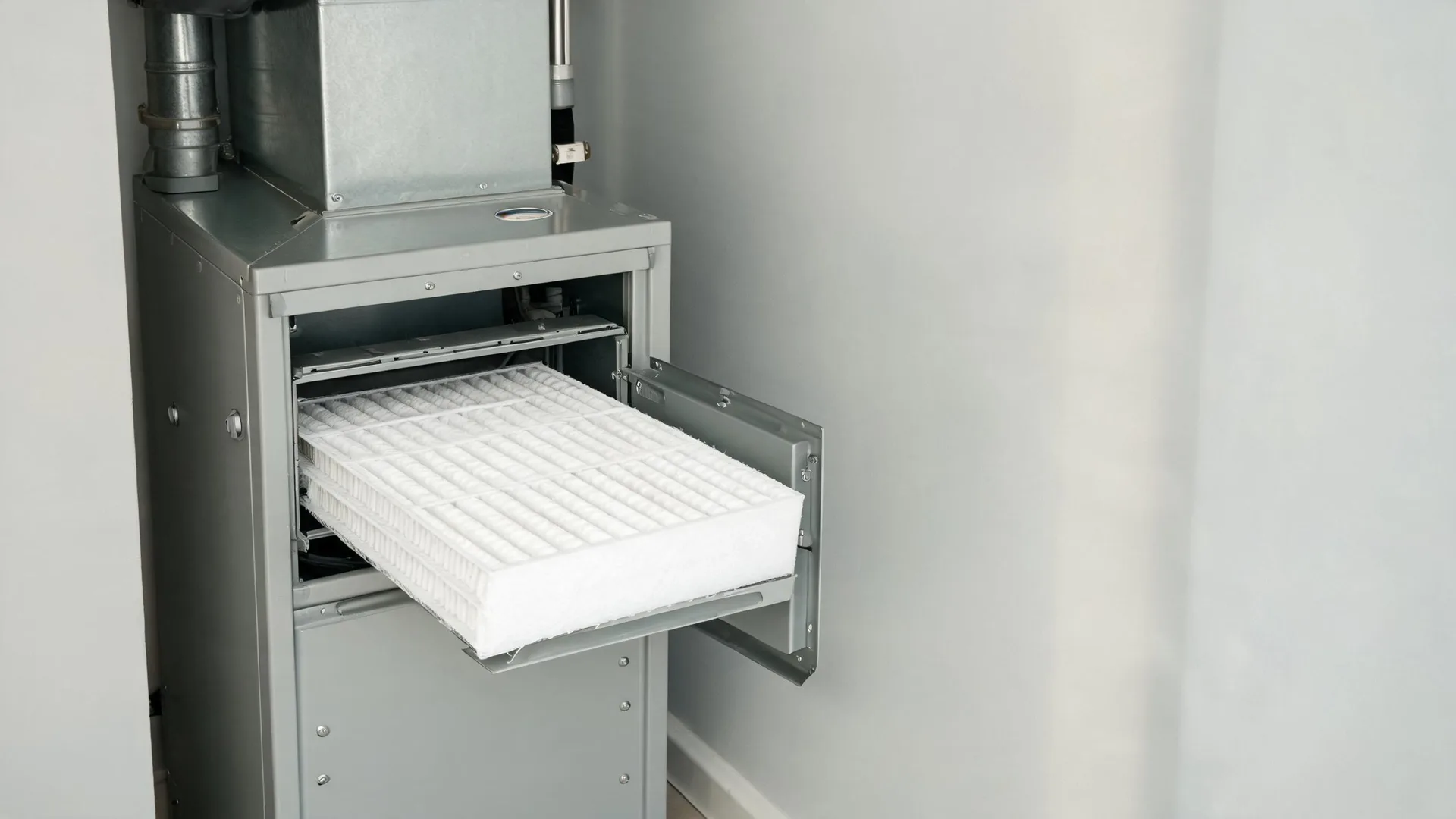
Change the filter yourself
The filter is the one part you can replace without a tech. A dirty one chokes the blower and the burners pay for it. Check it monthly during the months the furnace runs, and swap it when the light test shows it's blocked.
Takes about a minute. No obligation.
Your furnace in Santa Maria runs about seven months a year, November through May. That's real use, but nights here only average around 40°F in the coldest months. It's not being asked to fight single-digit cold or run nonstop for days. The wear it sees tends to come from age or a part that's been overlooked, not from strain. That makes a yearly check worth doing. Catching a weak part before the cold months is easier than dealing with it mid-winter.
A furnace can sit fine all spring and summer and still fail the moment it's asked to start.
A yearly check catches the weak part before the furnace has to find it for you.




A yearly check is a short list of things that matter. The igniter should glow and light the burners without hesitation. The flame sensor needs to be clean enough to recognize the flame is there and keep the gas valve open. The filter needs to be clear so air moves through the heat exchanger the way it was built to. None of that takes long to look at, and none of it gets better by waiting. A furnace that's sat idle since spring won't tell you what's wrong until it's asked to run.
Easy duty still wears parts. A yearly check keeps it going a long time.
Find a contractorThe filter is the one part of this you can check yourself. Hold it up to a light. If light barely comes through, air barely comes through either, and the blower has to pull harder to move air across the heat exchanger. A furnace that breathes through a clogged filter runs hotter than it should, and that heat has nowhere to go but back onto parts that weren't built to handle it. The heat exchanger itself is something a tech checks, not something to look at yourself. Dust and soot buildup there blocks the transfer of heat into the air moving through the house, so the burners run longer to do the same job. If your furnace is paired with central air, the same system has a drain line for condensate, and a clogged one can trip a safety switch and shut the whole thing down. None of these problems show up on a mild day when the furnace barely has to work. They show up on the first morning it's asked to run long and hard, which is exactly when you don't want to find out.
The filter is the one part you can replace without a tech. A dirty one chokes the blower and the burners pay for it. Check it monthly during the months the furnace runs, and swap it when the light test shows it's blocked.
The igniter, the flame sensor and the heat exchanger need a trained eye, not a homeowner's. Opening the cabinet to look at them risks more than it finds. The yearly check is where those get caught, not in between.
A thorough tune-up opens the cabinet. A quick one doesn't. If a tech is in and out without pulling the burner cover, nothing behind it got looked at, not the flame sensor, not the heat exchanger. A real check tests the igniter through a full cycle, not just a glance to see it glow once. It includes pulling the flame sensor and cleaning the oxide film off it by hand, since that film is what causes a furnace to shut off mid-cycle later. It means checking the venting for blockage, not just confirming the furnace turns on. A tune-up that's only a filter swap and a thermostat check hasn't touched the parts that actually fail.
A full tune-up checks the things that cause a no-heat call later, not just the things that are easy to reach. The burners get pulled and inspected for a flame that burns even across, since a flame that's yellow or uneven on one side points to a burner that's dirty or out of adjustment. The pressure switch and limit switch get tested, not just eyeballed, because a switch that's stuck can keep a furnace from starting at all or let it run past a safe temperature. The blower motor and wheel get checked for the kind of dust buildup that throws it off balance and wears the bearings down early. Gas pressure gets measured at the manifold, since too high or too low changes how clean the burners fire. A tech also checks the connections at the control board, because a loose wire there can cause the exact kind of intermittent failure that's hard to track down once the cabinet's closed back up.