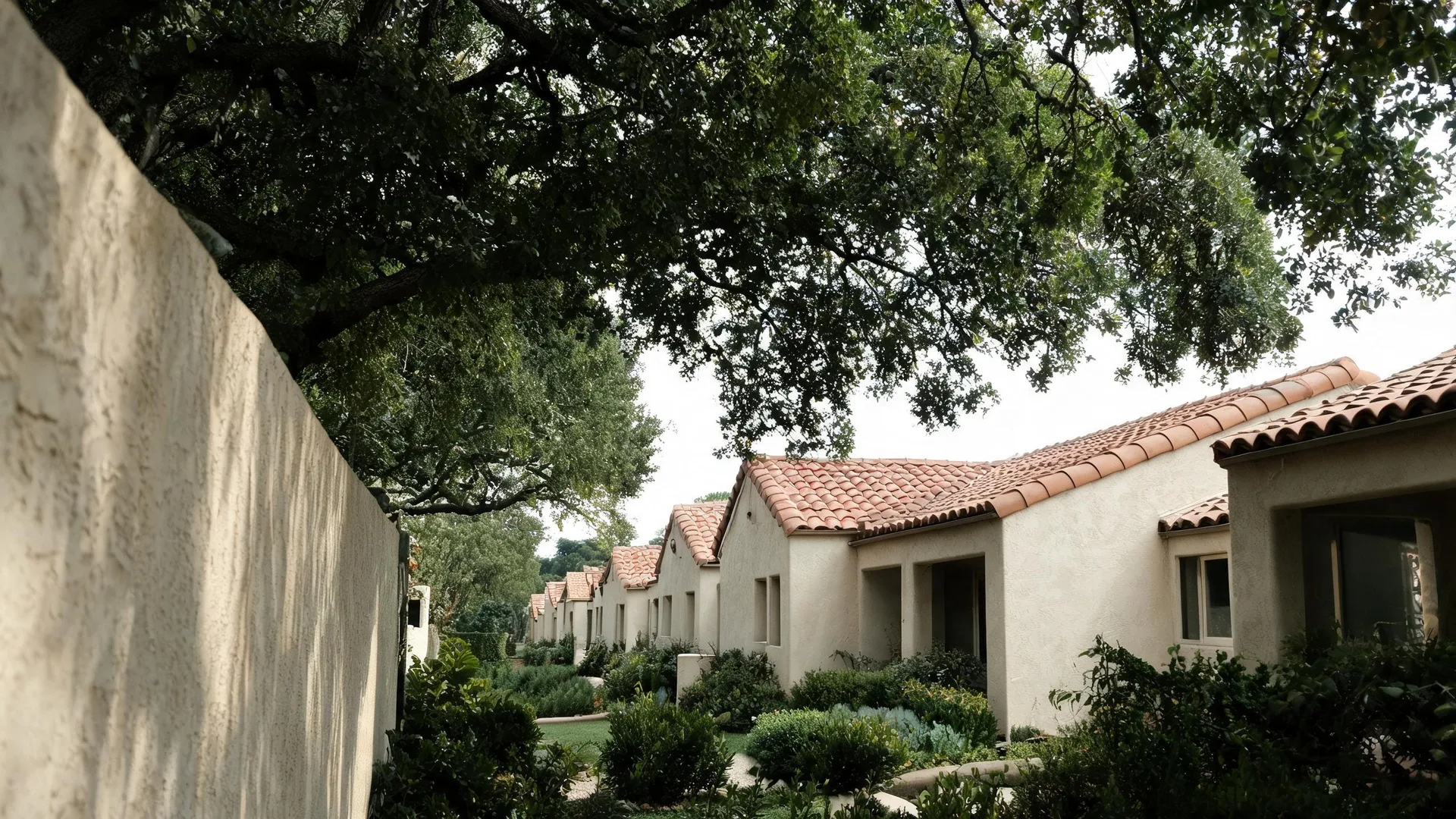
A row of white stucco buildings with red clay tile roofs behind shrubs and garden beds, seen past a tall stucco wall under overhanging oak branches.

Furnace Maintenance in Truckee, CA

Tell us about the job

Takes about a minute. No obligation.

Tune-up, service, or cleaningFurnace or heatingNevada County, CA
Step 1 of 2

What ZIP code is the job in?

A flame that looks fine can still be wrong

A technician pulls the burner assembly and looks at the flame itself, not just whether it lights. A flame that burns yellow or flickers instead of steady blue means incomplete combustion, and that can point to a cracked heat exchanger or a burner choked with dust. None of that shows up when you just listen for the furnace kicking on.

The flue has to carry gas away, not just exist

A technician checks the draft at the flue to confirm exhaust is actually leaving the house instead of backing up. A blocked or disconnected vent won't make the furnace run louder or smell different in a way you'd notice from the next room. The only way to know the draft is right is to check it directly.

A furnace that skips its yearly check still lights, still blows warm air, right up until the heat exchanger cracks or the igniter gives out mid-winter.

A clogged filter and a dirty flame sensor are both things a technician catches in minutes, before they turn into a cold house and a no-heat call.

Most homes in Truckee heat with gas, and that's a burner and venting job

35% of homes heat with gas
Climate zone 5B
Heat runs October through May
Newer furnaces still need a yearly checkHalf the homes in Nevada County were built in 1983 or later.

Heat goes on in October here and stays on through May, so the furnace is working hard from the first cold week. September is the month to get it checked, before that first real demand hits. A technician catches a weak igniter or a cracked heat exchanger on the bench, not in the middle of winter when the house is cold and the part has to be ordered. Once the season starts this system does not get a break for eight months straight.

Get the burner and venting checked

Gas and oil systems need the burner, venting and safety controls checked, not just a new filter.

Find a contractor
A man in a cap, dark long-sleeve shirt and tan work pants climbs porch steps toward a blue front door, carrying a waxed canvas tool bag with tools visible inside.
A gray gas furnace with attached ductwork and piping installed in an unfinished concrete basement.

A new furnace is the easiest check you'll get

A yearly check on a newer furnace is quick work. The burner lights clean, the flue drafts right, the flame sensor reads true, and the technician moves on. That's what a check should find on a system still well inside its working life. Skip a few years of those checks and small drift goes unnoticed, a flame sensor coated in film, a draft that's weakened, and the furnace still runs fine until the day it doesn't.

A dirty filter chokes the whole system

Furnace air has to pass through the filter before it reaches the heat exchanger. A filter clogged with dust cuts that airflow, and the heat exchanger starts running hotter than it should. Over time that heat stress is what cracks it. A filter is the cheapest part in the furnace and the one most likely to cause damage if it is ignored.

The drain line matters even on a furnace

A high-efficiency furnace condenses moisture out of the exhaust and sends it out through a drain line. If that line clogs with sludge or algae, the water backs up into the unit and trips a safety switch, or it leaks somewhere it should not. A technician checks that the line runs clear, because a blocked drain can shut the whole furnace down on a cold morning.

A furnace gives you warning before it fails, if you know where to look. Short cycling, where the burner fires then shuts off before the house warms up, usually means a flame sensor losing its read or a limit switch tripping early. A burner that hesitates before catching, or makes a soft thump when it does, is telling you the ignition is struggling even though it still lights every time. Rooms that used to heat evenly and now run cold in one corner can mean a blower wheel caked with dust, moving less air than it used to. A furnace that runs long stretches without ever satisfying the thermostat is working harder for the same result, and that strain lands on the heat exchanger. None of these stop the furnace from running. They just mean it's running worse than it was, and a check catches that before the part that's struggling is the part that fails.

A full tune-up is more than the burner and the filter. The technician checks gas pressure at the manifold, because too high or too low changes how the flame burns even when it looks fine by eye. The ignition system gets tested under real conditions, not just watched for one cycle, since some igniters fail only when they are hot. Electrical connections get checked for looseness, because a connection that is warm to the touch is one that is wearing out. The blower motor gets inspected and the bearings checked, since a motor that is starting to go will often run fine for months before it seizes. Every safety switch, the limit switch, the flame sensor, the pressure switch, gets tested on its own, not just assumed to work because the furnace ran when you turned it on.