A gray forced-air furnace with ductwork stands in an unfinished concrete basement surrounded by storage items and clutter.

Furnace Maintenance in Visalia, CA

Tell us about the job

Takes about a minute. No obligation.

Tune-up, service, or cleaningFurnace or heatingTulare County, CA
Step 1 of 2

What ZIP code is the job in?

Weather here tests a furnace

Tulare County saw 346 severe weather events from 2015 to 2024, including 191 cases of damaging wind and 149 winter storms. That kind of weather works on a furnace year after year, from the vent to the outdoor components tied to it.

A long outage is a real risk

Statewide, 17% of California households lost power for 24 hours or more in 2024. A furnace that was never checked is a worse bet when the power finally comes back on and your house needs heat.

Half the homes in Tulare County were built in 1983 or later.

A furnace in one of those houses still has years of work left in it, and a yearly check is what keeps it on track for them.

Eight months of heat a year is a long season to ask a furnace to run

Heat runs October through May
Winter nights average 31°F
149 winter storms from 2015 to 2024
October starts the workFurnaces here come on in October and run through May, so September is the month to get one checked.

Gas heats two out of every three homes in Tulare County, more than electricity and propane combined. A gas furnace runs on a burner and a flame, with a flue that has to carry exhaust out of the house every time it fires. A tune-up checks that the burner lights clean, the flame sensor reads it correctly, and the venting is clear enough to move that exhaust out. None of that is something a filter change touches. Skip it long enough and the furnace can still run, but the parts that keep it running safely are the ones nobody sees until they fail.

Get the furnace checked before it has to prove itself

Have the outdoor components checked for debris and storm wear before the furnace has to run on its own through the next outage. A check now catches what a season of wind and storms left behind.

Find a contractor
A man in a dark T-shirt and tan work pants, seen from behind, climbs porch steps toward a blue front door while carrying a canvas tool bag filled with hand tools.
A gray high-efficiency gas furnace installed in an unfinished basement, surrounded by gas lines, a condensate drain, and sheet-metal ductwork.

Eight months on, four off

Eight months of work a year does not leave much time to rest. A furnace that runs October through May is either heating the house or sitting one call away from doing it again. Get it looked at before October, while there is still room on the schedule and before a cold night tells you what a tune-up would have caught.

A real check means tools out

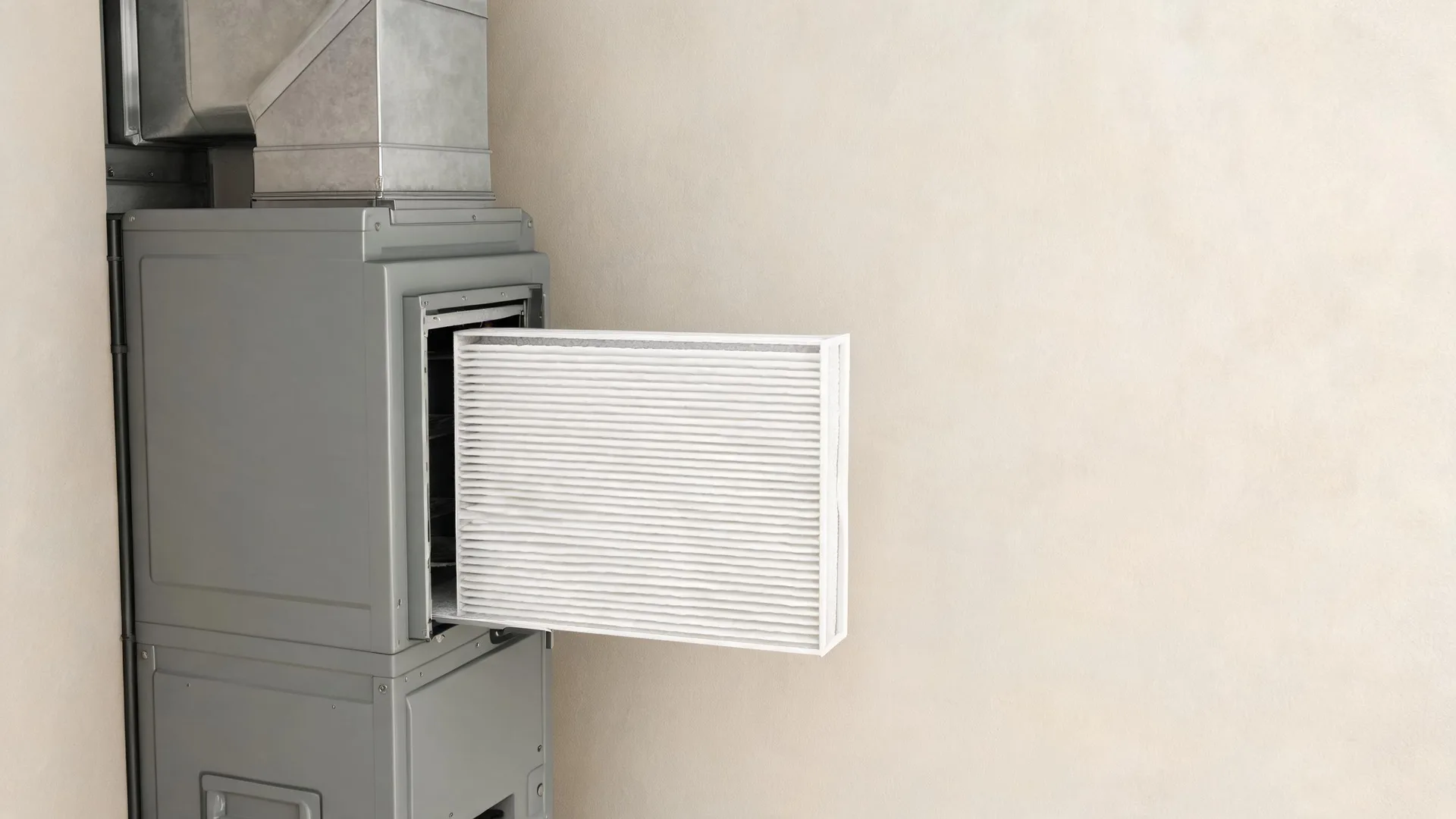
A thorough tech pulls the burner assembly and looks at the flame itself, checks draft with a meter at the flue, and tests the flame sensor instead of just wiping it down. They check amp draw on the blower motor and look at the heat exchanger for cracks with a light and a mirror. A quick visit skips most of this. If nobody opens the cabinet beyond swapping the filter, the burner and the heat exchanger never got looked at.

The furnace can pass and still be the problem

A tune-up tells you the furnace is safe to run and working the way it should. It does not mean the system was never checked, and it does not cover the thermostat, the ductwork, or anything outside the cabinet. If the house still heats unevenly or the furnace short cycles after a good tune-up, the cause is somewhere else in the system, not in the furnace itself.

A furnace can run fine and still be hiding a problem a tune-up is built to catch. Flame color matters more than most homeowners realize. A clean flame burns blue; a flame tinged yellow can mean the burner isn't getting the air mixture right, and that changes what comes out the flue. The heat exchanger is the other blind spot. It cracks from the inside, from years of heating and cooling every time the burner cycles on and off, and a hairline crack doesn't change how the furnace sounds or how warm the house gets. You find it with a light and a mirror, not by listening for a rattle. Pressure switches and limit switches fail quietly too, often by sticking rather than breaking outright, so the furnace still fires most days and only balks on the day it matters.

A tune-up has a fixed list, and a tech who skips items isn't doing a shorter version of the job, they're doing a different job. Static pressure gets measured, not guessed, because a blower working against too much resistance wears out early and nobody notices until it quits. The igniter gets tested under load, not just looked at, since a hot surface igniter can glow and still fail the moment it has to carry current. Gas pressure at the manifold gets checked against the furnace's own rating, because too high or too low both cause problems that show up somewhere else later. The condensate line, if the furnace has one, gets cleared before it clogs and shuts the system down on its own safety switch. Every wire connection in the control compartment gets snugged down, because a loose connection generates heat right at the spot where you don't want heat building up. None of this takes long to do right. It takes knowing to do it at all.