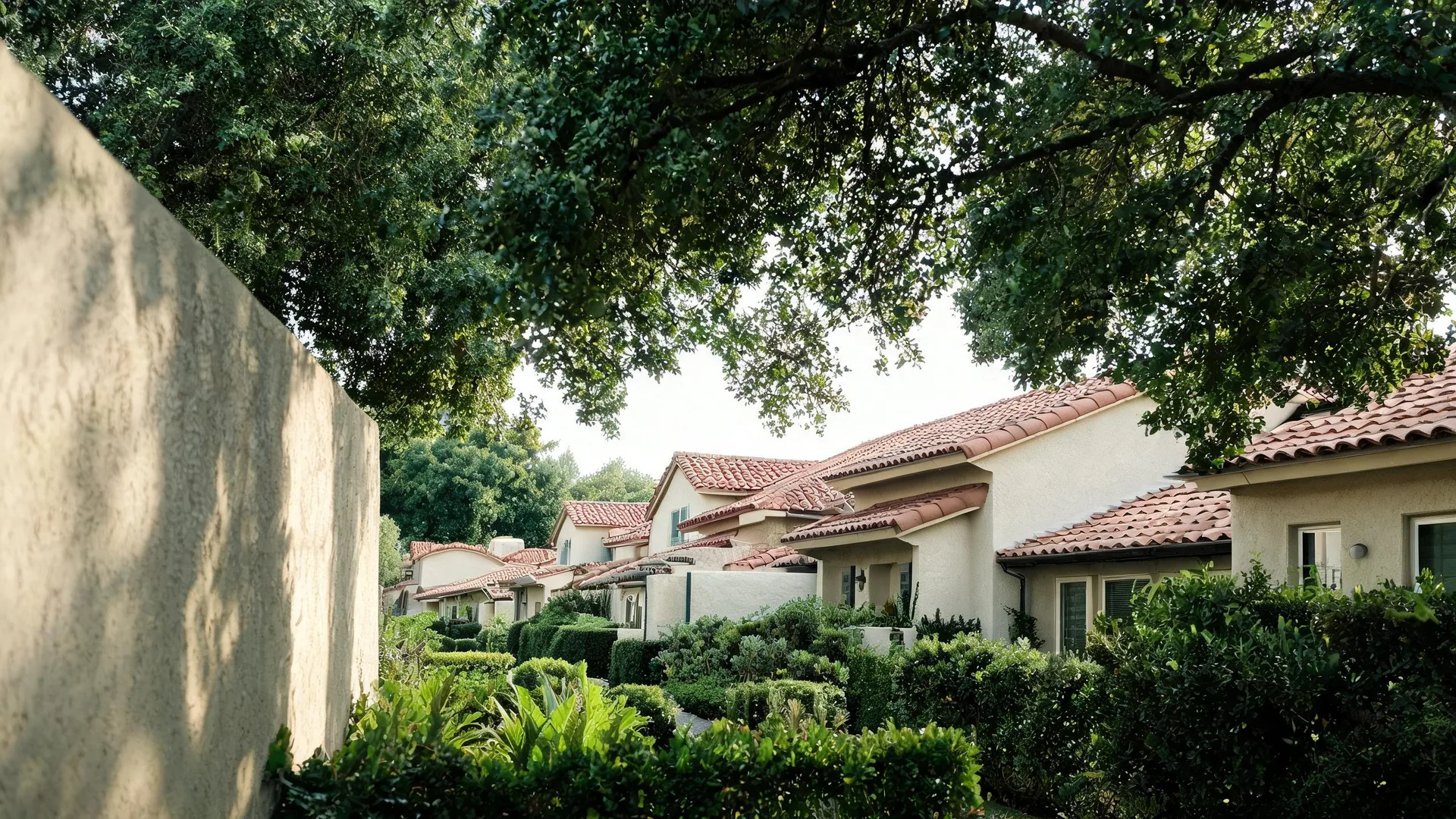



A row of stucco houses with red clay tile roofs seen beyond trimmed hedges and shrubs, framed by a large tree canopy overhead and a plaster wall at left.

Furnace Maintenance in Yuba City, CA

Tell us about the job

Takes about a minute. No obligation.

Tune-up, service, or cleaningFurnace or heatingSutter County, CA
Step 1 of 2

What ZIP code is the job in?

Your furnace in Sutter County only has to work about six months a year, November through April. Overnight lows average 40°F through December, January and February, mild compared to what furnaces handle elsewhere. That's not a hard winter. A furnace running against a 40 degree night isn't straining the way one does against single digits. So when something goes wrong here, it's rarely because the system was pushed too hard. More often it's a part that aged out or a filter nobody changed. A yearly check still matters. Light duty keeps a furnace going a long time, but only if it gets looked at.

Half the homes in Sutter County were built in 1982 or later.

A furnace that age still has plenty of life left in it, as long as someone checks it every year.

November starts the season. October is when you get the furnace checked.

Heat runs November through April
Winter nights average 40°F
Climate zone 3B

Most homes in Sutter County heat with gas, 60.2% of them. That means most furnaces here have a burner and a flue, not just a heating element. The burner has to light clean and burn clean. The flue has to carry the exhaust out of the house. A yearly check covers the flame sensor, the igniter, the venting and the gas pressure, not just the filter. Electricity heats 29.9% of homes here, and those furnaces skip the combustion side entirely, but they still have their own parts worth a yearly look. If yours runs on gas, the safety checks matter as much as anything else on the list.

Easy winters still call for a yearly check

Six months of light duty a year is still six months of running. A yearly check catches the part that aged out before it leaves you without heat on a cold night.

Find a contractor
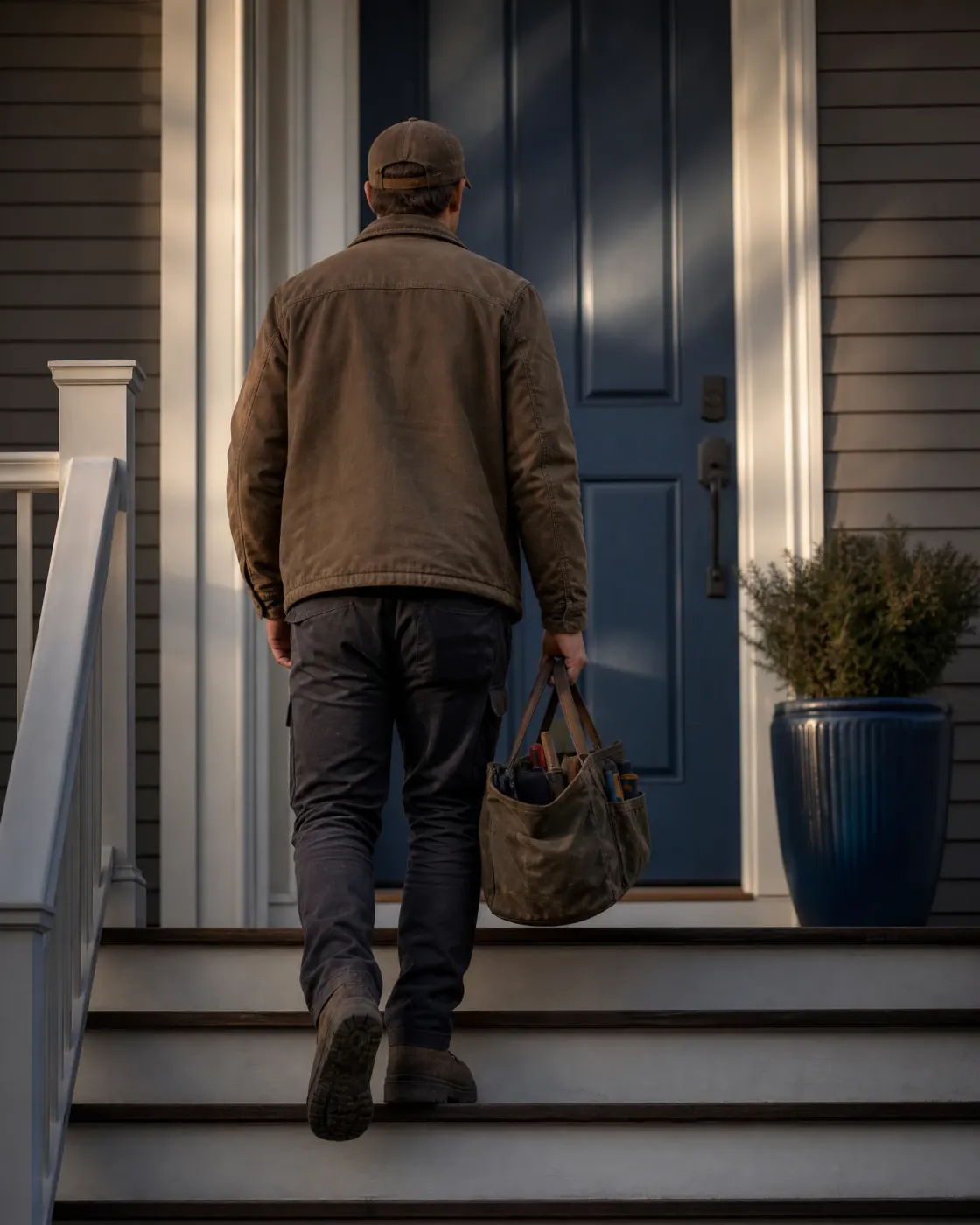
A man in a cap and brown jacket, seen from behind, climbs porch steps toward a blue front door while carrying a canvas tool bag, with a potted shrub in a blue planter beside him.
A gray high-efficiency gas furnace installed in an unfinished basement, surrounded by gas lines, a condensate drain, and sheet-metal ductwork.

Problems don't start the night they show up

A furnace doesn't fail the day it's neglected. It fails months later, when a part that's been wearing down finally gives out. A cracked heat exchanger starts as a hairline you can't see. A flame sensor stops reading clean before it stops reading at all, and the furnace shuts itself off more and more often before it quits for good. A blower motor bearing dries out slowly, squealing a while before it seizes. None of this shows up on the day it starts. It shows up weeks or months down the line, usually on a night you needed the heat to just come on. A yearly check catches these while they're still small, before they turn into a furnace that won't light or a shutdown in the middle of the night.

What gets checked that the filter doesn't cover

Changing the filter is the one thing most homeowners already do, and it's not where the real problems hide. A tech pulls the burner assembly and looks at the flame itself, whether it's burning even and blue or licking up ragged and yellow. They check the flame sensor for the coating that builds up on it over time, test the gas pressure against what the furnace was built to run at, and check the heat exchanger for cracks that don't show up unless someone's looking for them. None of that is visible from the thermostat on the wall.

Why it has to happen before the furnace is running hard

A furnace with a dirty flame sensor or a cracked exchanger can still start up fine on a mild afternoon. The strain shows up once it's cycling on and off for hours on a cold night, which is exactly when a marginal part gives out. Checking it beforehand means the tech finds the problem while the furnace is idle and easy to work on, not after it's already quit with the house cold.

A quick visit usually means someone swaps the filter, glances at the thermostat, and calls it done. A thorough one means the panels come off. The burner gets pulled and looked at while it's running, not just at rest. The flame sensor gets cleaned or tested, not assumed clean because it worked last year. Gas pressure gets checked with a meter, not guessed by eye. The heat exchanger gets inspected with a light and a mirror, because a crack in it won't announce itself any other way. If the tech is in and out in a few minutes without opening the cabinet, that's the short version, and it's the version that misses the part that's about to fail.

A proper tune-up runs through the same checklist every time, whether the furnace acted up last year or not. The filter gets changed. The blower wheel gets looked at for dust buildup, since a caked wheel moves less air and makes the whole system work harder to push heat through the ducts. The igniter gets checked for the hairline cracks that come with age, because a cracked igniter still glows but won't hold up to another season of cycling on and off. Electrical connections get tightened, since a loose wire at the blower motor or the control board causes intermittent faults that look like something else entirely. The condensate drain gets checked too, if the furnace has one, because a clogged drain backs up and trips a safety switch that shuts the whole unit down. Every part gets tested while the furnace is running, not just eyeballed while it sits off.