




White stucco Spanish Colonial Revival houses with illuminated windows sit among trees on a hillside at dusk, beneath a deep blue twilight sky.

Furnace Repair in Anaheim, CA

Tell us about the job

Takes about a minute. No obligation.

RepairFurnace or heatingOrange County, CA
Step 1 of 2

What ZIP code is the job in?

Furnaces in Anaheim sit unused most of the year, then get asked to run every day once December hits. November is a good time to get yours looked at, before that happens. A weak igniter or a cracked heat exchanger often holds up fine while the furnace is off, then fails in the first cold week when it finally has to work. If something was already marginal, this is when it shows up. Four months of real use, December through March, is enough to turn a small problem into a no-heat call. Catching it before the season starts beats catching it during a cold snap.

4 months
December through March, your furnace is on duty
47°F
the average winter night it heats against
67%
of homes here heat with gas, so most furnaces here burn gas
2 winter storms
in ten years, the nights a failure hurts most
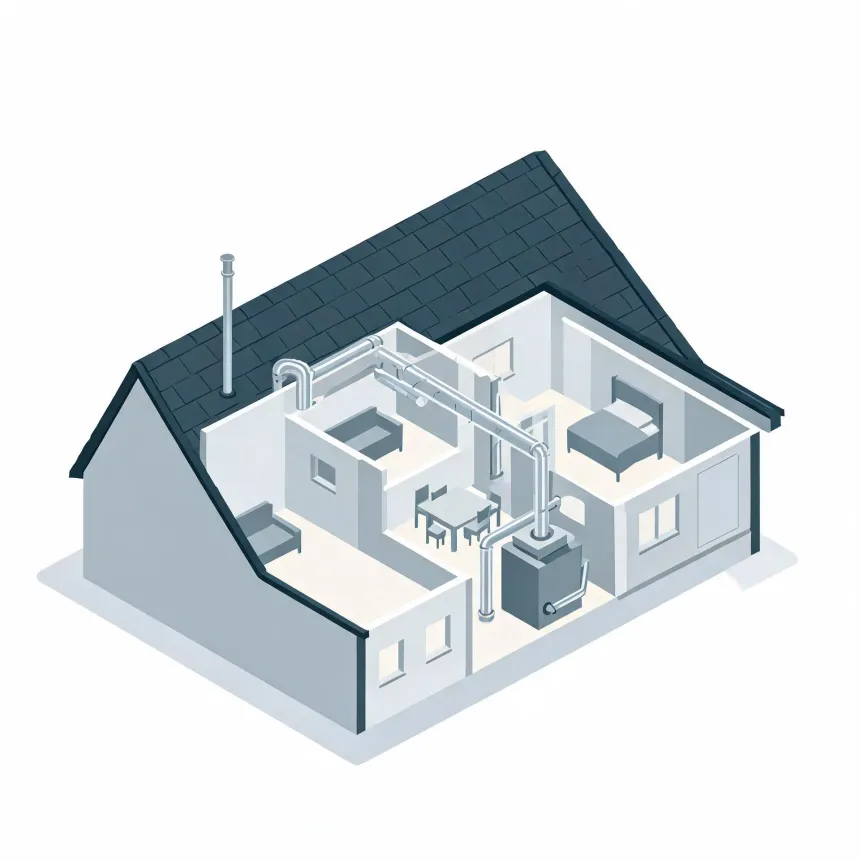
Isometric cutaway illustration of a single-story house with a dark shingled roof, showing interior rooms with furniture and a ducted furnace unit connected to metal ductwork and a roof flue.
Your furnace works hardest from December through March.

NOAA nClimDiv, 1991–2020 normals

Anaheim furnaces only run about four months a year, December through March.

A furnace idle most of the year usually has less wrong with it than the symptoms suggest.

An old house doesn't mean an old problem

Half the homes here were built by 1977
Heat runs December through March
Winter nights average 47°F

Orange County has had its share of weather, 138 damaging wind events and a handful of hail and storm events, but none of that points at your furnace. A furnace fails from age, dust, a dirty flame sensor, a thermostat wire gone loose, the same reasons it would fail anywhere. Power does go out here sometimes, and a furnace needs power to run even if it burns gas, so a short outage can look like a furnace problem when it isn't one. If the power's on and the thermostat's calling for heat and nothing happens, the cause is in the furnace itself, not the county it sits in.

Light use, worth repairing

Four months of real work a year is not much strain. That usually means a repair gets to the real cause instead of chasing a machine worn out from overuse. Worth calling in now.

Find a contractor
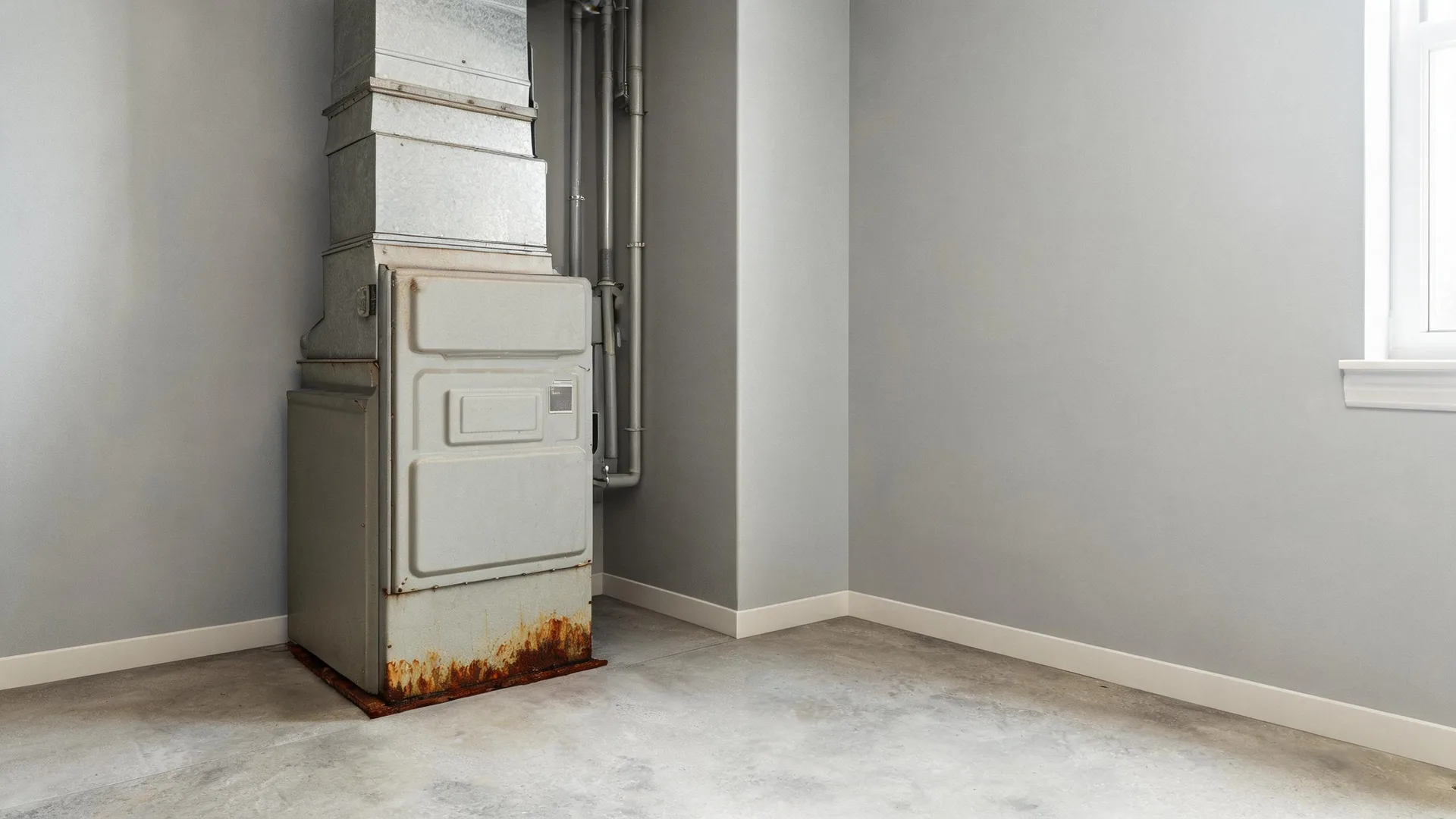
A gas furnace with attached ductwork, gas piping, and condensate lines installed in a concrete-block basement.

What actually wears out

A furnace fails for one of a few reasons, and most of them are mechanical wear, not bad luck. An igniter weakens with age and eventually stops glowing hot enough to light the burners. A flame sensor collects a thin coat of oxidation over time and stops reading the flame, so the furnace shuts itself off as a safety measure. A thermostat wire works loose from vibration or a loose terminal and the furnace never gets the call for heat at all. A blower motor bearing wears down after years of spinning and starts to grind or seize. A cracked heat exchanger is the one that matters most, since it can run for a long time before the crack is bad enough to cause a shutdown or a safety issue. None of these come from the furnace sitting idle. They come from ordinary parts reaching the end of what they can do, and they tend to show up the first time the furnace is asked to run hard.

Short cycling wears parts faster than running clean

A furnace that lights, shuts off, and tries again a few minutes later is putting more strain on the igniter and the control board than one that runs straight through a full cycle. Each start is its own jolt. A furnace stuck doing that over and over is loading up on wear fast, and it's loading up on the same parts that were already weak to begin with.

A cracked heat exchanger gets worse under heat, not under rest

Heat exchangers crack from the metal expanding and contracting as it heats up and cools down. Every cycle flexes the crack a bit further. Letting the furnace keep running on one that's already cracked doesn't give it a break, it just adds more flexing to metal that's already failing, and a crack like that only moves in one direction.

An unfinished basement featuring exposed ceiling joists, a metal HVAC unit with round ductwork, a hanging light bulb, and scattered boxes and debris along the left wall.

A new furnace would cut about $30 a year off heating for a typical Orange County home.

  • A new high-efficiency furnace$150 a year
  • An older furnace$180 a year

Estimates for a typical Orange County home, compared with an older unit built to the previous federal minimum, from EIA household energy data, California fuel prices and NOAA climate normals. Your home will differ.

Repair makes sense when one part has failed and the heat exchanger is sound.

Replacement makes sense when the heat exchanger is cracked or the furnace keeps needing parts.

Find out what's actually wrong before deciding if it's worth fixing. A dirty flame sensor or a loose thermostat wire costs little to clear up, and clearing it up tells you nothing bad about the rest of the furnace. A cracked heat exchanger is a different animal. That part isn't meant to be replaced on its own, so finding one changes the conversation. Age matters less than people think. A furnace serviced every year and used lightly can outlast one that's been ignored, even if the ignored one is younger. The honest answer comes from what the tech finds inside the cabinet, not from a guess made standing at the thermostat.