




An unfinished concrete basement containing a gas furnace with sheet-metal ductwork, utility shelving, and exposed overhead joists.

Furnace Repair in Bakersfield, CA

Tell us about the job

Takes about a minute. No obligation.

RepairFurnace or heatingKern County, CA
Step 1 of 2

What ZIP code is the job in?

Kern County saw 711 damaging wind events between 2015 and 2024, along with 8 hail events and 3 tornadoes. Wind-driven debris and hail reach the parts of a furnace system sitting outside or near the roofline, and a hit does not always show up as a problem right away. Winter storms came through 53 times in that same stretch, which is worth knowing since a furnace already struggling tends to fail on the night it has the most work to do. Power matters too. Statewide, 17% of households went at least a day without power in 2024, and a furnace with electronic ignition will not run without it. None of this means your furnace took damage. It means a system that looked fine last week is worth a second look if the weather's been rough.

6 months
November through April, your furnace is on duty
37°F
the average winter night it heats against
59%
of homes here heat with gas, so most furnaces here burn gas
53 winter storms
in ten years, the nights a failure hurts most
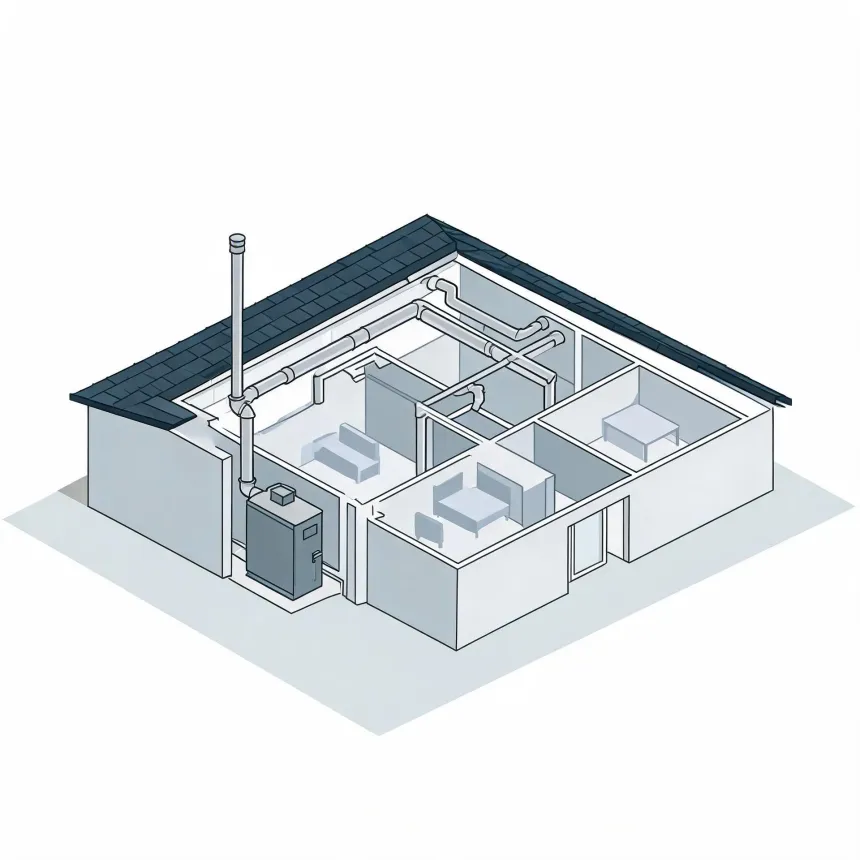
Isometric line illustration of a cutaway single-story house showing interior rooms with furniture, ceiling ductwork, and an exterior furnace unit with a tall flue pipe.
Your furnace works hardest from November through March.

NOAA nClimDiv, 1991–2020 normals

A cracked heat exchanger gets worse every hour the burners keep firing on it.

Shutting a furnace off the moment something seems wrong is what keeps a small repair from turning into a full replacement.

Half the homes here were built in 1984 or later, and a furnace that young is usually worth fixing

Half the homes here were built by 1984
Heat runs November through April
Winter nights average 37°F
Built for six months of work, starting hard in NovemberFurnaces here run November through April, and trouble usually shows up fast once that load hits

If your furnace started acting up, get it looked at before you think about replacing it. A furnace that came with a house built in 1984 or later has usually got plenty of working life left, and most problems on a unit that age trace back to one worn part rather than the whole system failing. A technician can check what's actually wrong and tell you whether it's a repair. Mobile homes are worth mentioning separately. They make up a real share of the homes here, and their furnaces are built and vented differently, so say so when you call.

After rough weather, get it checked before it fails on you

If your furnace has been through a storm, don't wait for it to act up before someone looks at it. A hit from wind-driven debris or hail doesn't always show right away, and a furnace running on a damaged part is one you want caught early.

Find a contractor
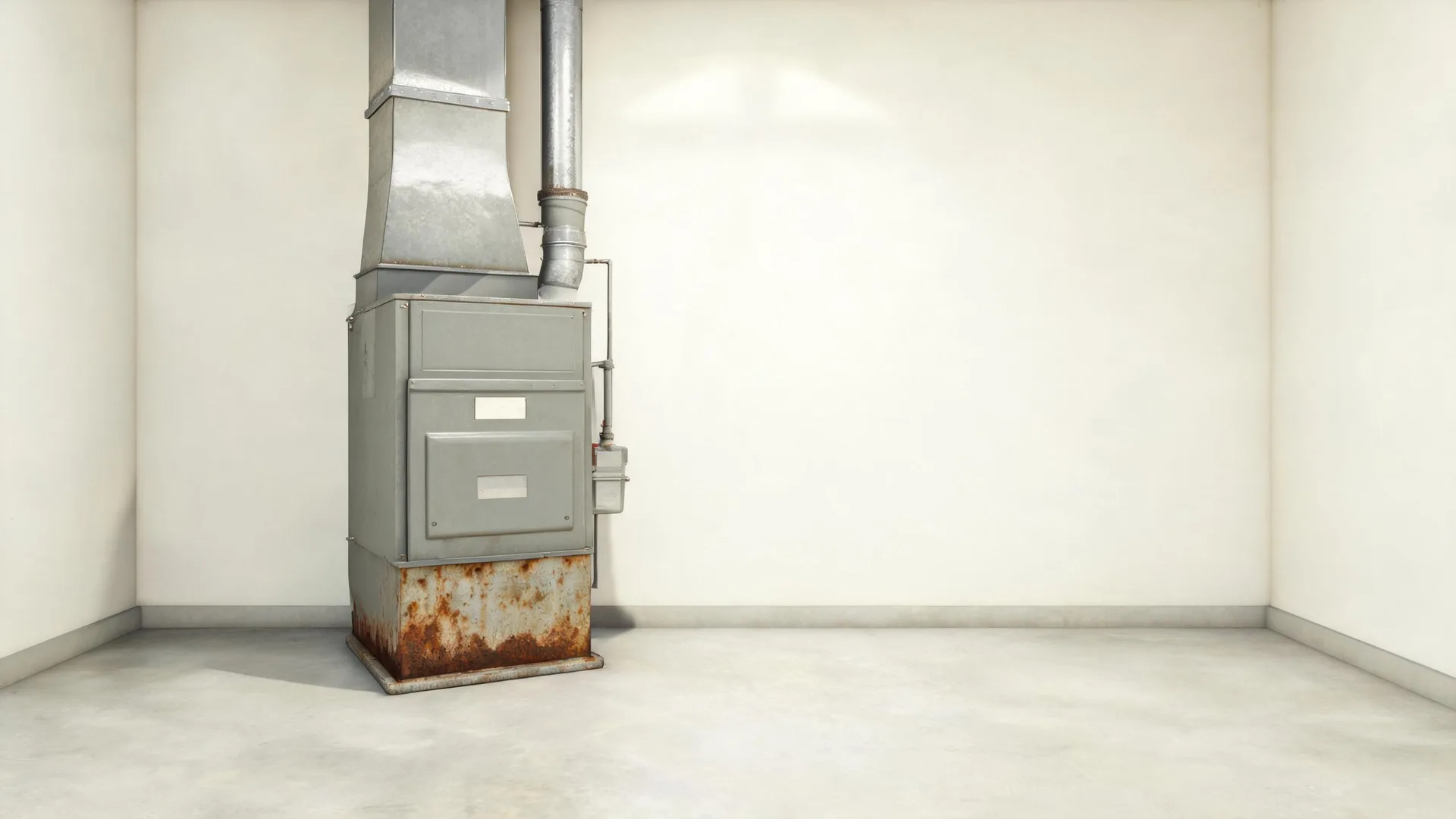
A gray gas furnace with attached ductwork and piping installed in an unfinished concrete basement.

What to check before you call anyone

Before anyone comes out, there are a few things worth checking yourself. Start at the thermostat. Make sure it's set to heat, not just on, and that the set temperature is actually above room temperature. Dead batteries in the thermostat will leave the display dark or frozen, and that alone can stop a furnace cold. Next, check the breaker. A furnace that won't start at all is sometimes just a tripped breaker, and it's worth resetting once before assuming the worst. Look at the filter too. A filter packed with dust chokes airflow, and some furnaces will shut themselves down rather than run with the air handler blocked. If you can see the pilot light or ignition window, a glance tells you whether there's a flame at all. Last, check any switch on the furnace itself or near the attic or closet door. Many have a flat toggle switch that looks like a light switch, and it's easy to bump off by accident. None of this fixes a cracked heat exchanger or a failed control board, but it rules out the simple stuff before anyone charges a service call.

Most failures start with the igniter or flame sensor

A hot surface igniter wears out from being heated and cooled every cycle, and eventually it cracks and stops glowing. The flame sensor sits right in the burner flame and slowly coats with residue until it can no longer tell the control board a flame is lit. Both are small parts, both get replaced on their own, and neither means anything else is wrong with the furnace.

The blower motor and the control board take the rest

A blower motor runs for hours every day during the coldest months, and the bearings inside it wear down like any motor that runs that hard. A control board fails less often, but when it does, the furnace can refuse to start at all or cycle in ways that don't make sense. Either one is a straightforward swap once a technician confirms which part is actually bad.

An unfinished basement containing a gray HVAC furnace with ductwork, exposed wooden joists, a concrete floor, and miscellaneous clutter in one corner.

A new furnace would cut about $70 a year off heating for a typical Kern County home.

  • A new high-efficiency furnace$290 a year
  • An older furnace$360 a year

Estimates for a typical Kern County home, compared with an older unit built to the previous federal minimum, from EIA household energy data, California fuel prices and NOAA climate normals. Your home will differ.

Repair makes sense when one part has failed and the heat exchanger is sound.

Replacement makes sense when the heat exchanger is cracked or the furnace keeps needing parts.

A repair makes sense when the failure is a single part doing what that part eventually does. An igniter cracks after enough heating and cooling cycles. A flame sensor coats with residue until it stops reading a flame. A blower motor's bearings wear down after years of running. None of those point to the furnace itself being worn out, and replacing the one part is usually all that's needed. What changes the picture is a cracked heat exchanger, because that's the one failure that puts the whole unit in question rather than a part of it. A technician can tell you which kind of failure this is before anything gets replaced. That's the real question to ask, more than how the repair compares to the cost of a new furnace.