



A row of beige stucco houses with red clay tile roofs behind a long stucco wall, framed by large leafy trees and shrubs along a paved street.

Furnace Repair in Concord, CA

Tell us about the job

Takes about a minute. No obligation.

RepairFurnace or heatingContra Costa County, CA
Step 1 of 2

What ZIP code is the job in?

Furnaces in Concord get six months of work a year, November through April. Overnight lows across the county average 41 degrees in the coldest months, which is cold enough to run the heat but nowhere near what furnaces in colder states deal with all winter. A furnace here isn't working as hard as the same unit would somewhere with a real winter. That matters when something breaks. Most of the time the problem is a part that failed or wore out, not a system that's been run into the ground. That's worth knowing before you decide whether repair makes sense.

6 months
November through April, your furnace is on duty
41°F
the average winter night it heats against
66%
of homes here heat with gas, so most furnaces here burn gas
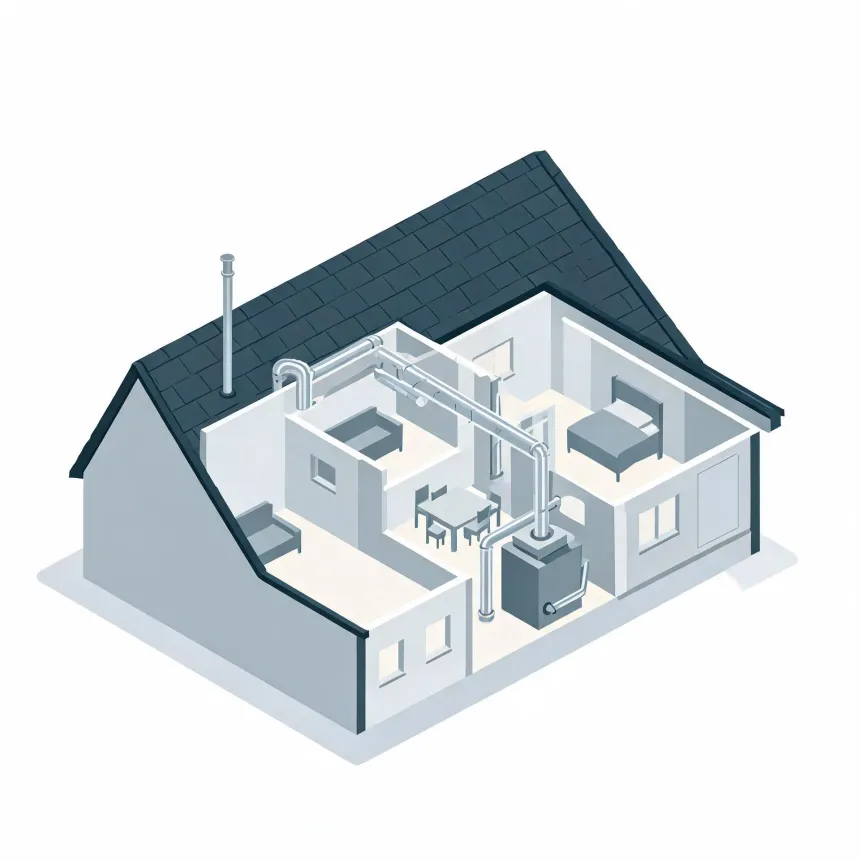
Isometric cutaway illustration of a single-story house with a dark shingled roof, showing interior rooms with furniture and a ducted furnace unit connected to metal ductwork and a roof flue.
Your furnace works hardest from November through March.

NOAA nClimDiv, 1991–2020 normals

Furnaces here start up again in November.

October is the month to get a weak part found before the first cold week finds it for you.

A furnace in Concord breaks down the same way furnaces do everywhere

Half the homes here were built by 1978
Heat runs November through April
Winter nights average 41°F

It's usually worth repairing

It has an easier job here than in most places, so your furnace is often in decent shape. Repair is usually worth it.

Find a contractor
A man in a cap, dark jacket and tan work pants climbs porch steps toward a blue front door, carrying a canvas tool bag in his right hand, with a potted shrub beside the entry.
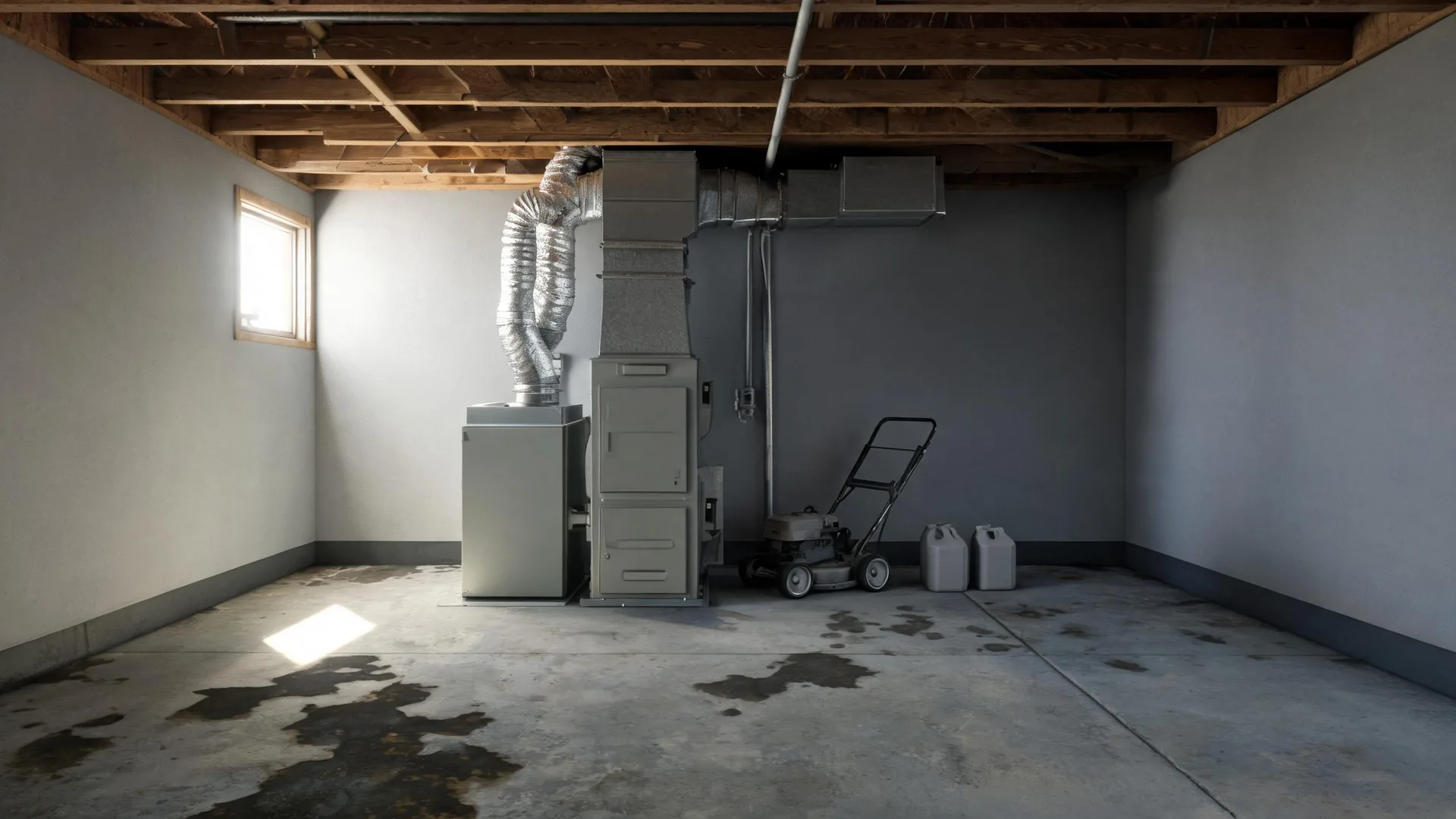
A gray gas furnace with attached ductwork and piping installed in an unfinished concrete basement.

What to check before you call anyone

Before anyone comes out, check the thermostat batteries and make sure it's set to heat, not just on. Check the breaker and any switch that looks like a light switch near the furnace itself, that's the power shutoff and it gets bumped more than people think. Open the filter and hold it up to a light. If you can't see light through it, that's likely your problem or close to it. A clogged filter starves the furnace of air and it can shut itself down to protect the heat exchanger. Check that the vent hood outside hasn't been blocked by anything, leaves, a nest, a fallen branch. If you smell gas, don't check anything yourself, leave the house and call the gas company from outside. If the furnace runs but the air feels cool, that's a different problem than a furnace that won't start at all, and worth mentioning when you call.

What a failing furnace sounds like

A furnace about to need a repair usually tells you before it quits outright. A burner that used to light with one soft thump starts clicking several times first. A blower that used to spin up quiet starts rattling or squealing when it kicks on. Short cycling, where the furnace fires up, runs a couple minutes, and shuts off before the house warms, usually means a flame sensor that's coated and no longer reading the flame, or a limit switch tripping because airflow is restricted somewhere.

What's worth watching for between calls

Air coming out lukewarm instead of hot can mean a dirty flame sensor, which is a quick fix, or a cracked heat exchanger, which is not. A pilot or igniter that won't hold, where the furnace tries to light and drops out, usually means a weak igniter or a failing gas valve. A furnace limping along on a bad part tends to put extra strain on the blower motor from restarting itself over and over.

A bare concrete basement containing a gray gas furnace with metal ductwork and a vertical flue pipe, lit by a single hanging bulb.

A new furnace would cut about $60 a year off heating for a typical Contra Costa County home.

  • A new high-efficiency furnace$270 a year
  • An older furnace$330 a year

Estimates for a typical Contra Costa County home, compared with an older unit built to the previous federal minimum, from EIA household energy data, California fuel prices and NOAA climate normals. Your home will differ.

Repair makes sense when one part has failed and the heat exchanger is sound.

Replacement makes sense when the heat exchanger is cracked or the furnace keeps needing parts.

A repair decision usually comes down to what actually failed. An igniter, a flame sensor, a blower motor, a gas valve. These fail on their own schedule, and replacing one doesn't put the rest of the furnace on notice. The heat exchanger is the one part that changes the math. It's not something that gets replaced on its own, since the cost of swapping it approaches the cost of a new furnace, so a cracked exchanger is usually where a tech starts talking about replacement instead of repair. Everything else, a tech can show you the failed part, explain what it does, and let you decide from there. If a furnace has needed a few different repairs in a few different years, that's not the same as one part failing once. It's worth asking whether what's failing now is related to what failed before, or just unrelated wear catching up at the same time.