




White stucco buildings with terracotta roofs glow with warm lighting on a tree-covered hillside at dusk.

Furnace Repair in Davis, CA

Tell us about the job

Takes about a minute. No obligation.

RepairFurnace or heatingYolo County, CA
Step 1 of 2

What ZIP code is the job in?

Your furnace only has to work about six months a year here, November through April. The rest of the year it sits idle. Even in the dead of winter, the overnight low in Yolo County averages 39 degrees, which is mild compared to what furnaces deal with in most of the country. That's a light workload over the life of the machine. When one acts up here, it's rarely because the furnace has been pushed hard. More often it's age catching up, or a part that's been neglected. Either way, that usually means a repair is worth doing rather than a sign the whole system is worn out.

6 months
November through April, your furnace is on duty
39°F
the average winter night it heats against
60%
of homes here heat with gas, so most furnaces here burn gas
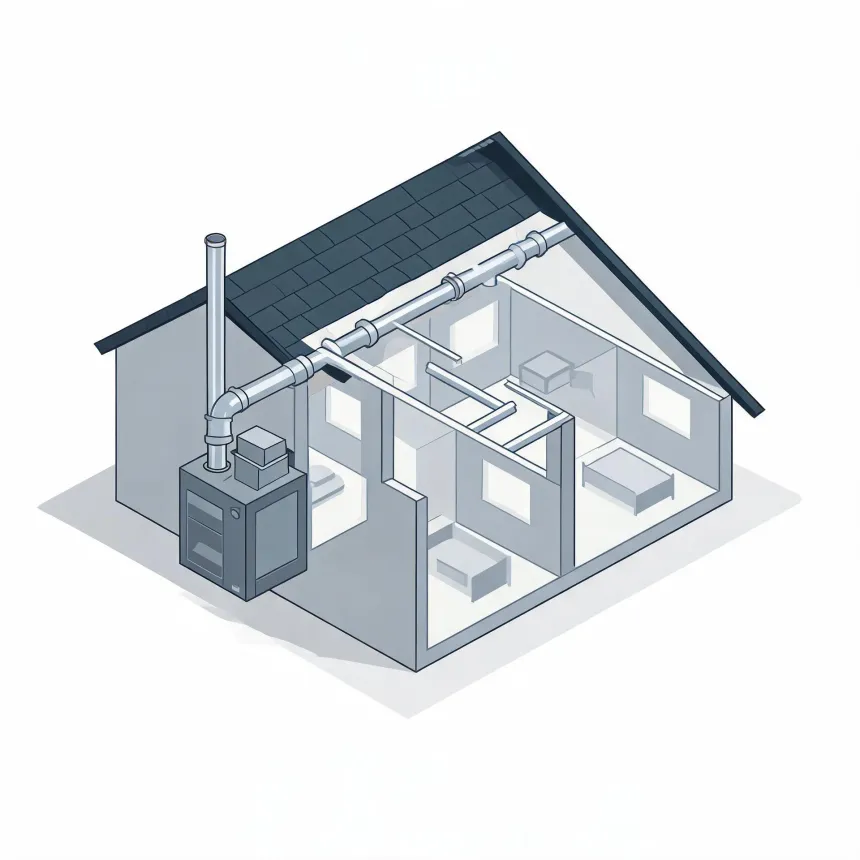
Isometric cutaway illustration of a small house showing interior rooms, ductwork running through the attic, and a furnace unit with a vertical flue pipe on the exterior wall.
Your furnace works hardest from November through March.

NOAA nClimDiv, 1991–2020 normals

Half the homes in Yolo County were built in 1983 or later.

A furnace that came with a newer house still has years in it, so a repair call makes more sense than a replacement quote.

October is when a weak furnace shows itself

Heat runs November through April
Winter nights average 39°F
Climate zone 3B

If your house went up in 1983 or later, get the furnace looked at before you think about replacing it. A newer house doesn't guarantee a newer furnace, but it does mean the system has had an easier run with fewer years on it. Ask the tech what they actually found. A cracked heat exchanger or a blower motor that's seized up is a real reason to talk replacement. A bad igniter, a dirty flame sensor, or a failed capacitor is not. Those are parts, not verdicts on the whole system.

Get the furnace diagnosed, not written off

A furnace that's had an easy run is usually worth fixing rather than replacing. Get a tech out to find the actual part behind the problem before you spend money on something new.

Find a contractor
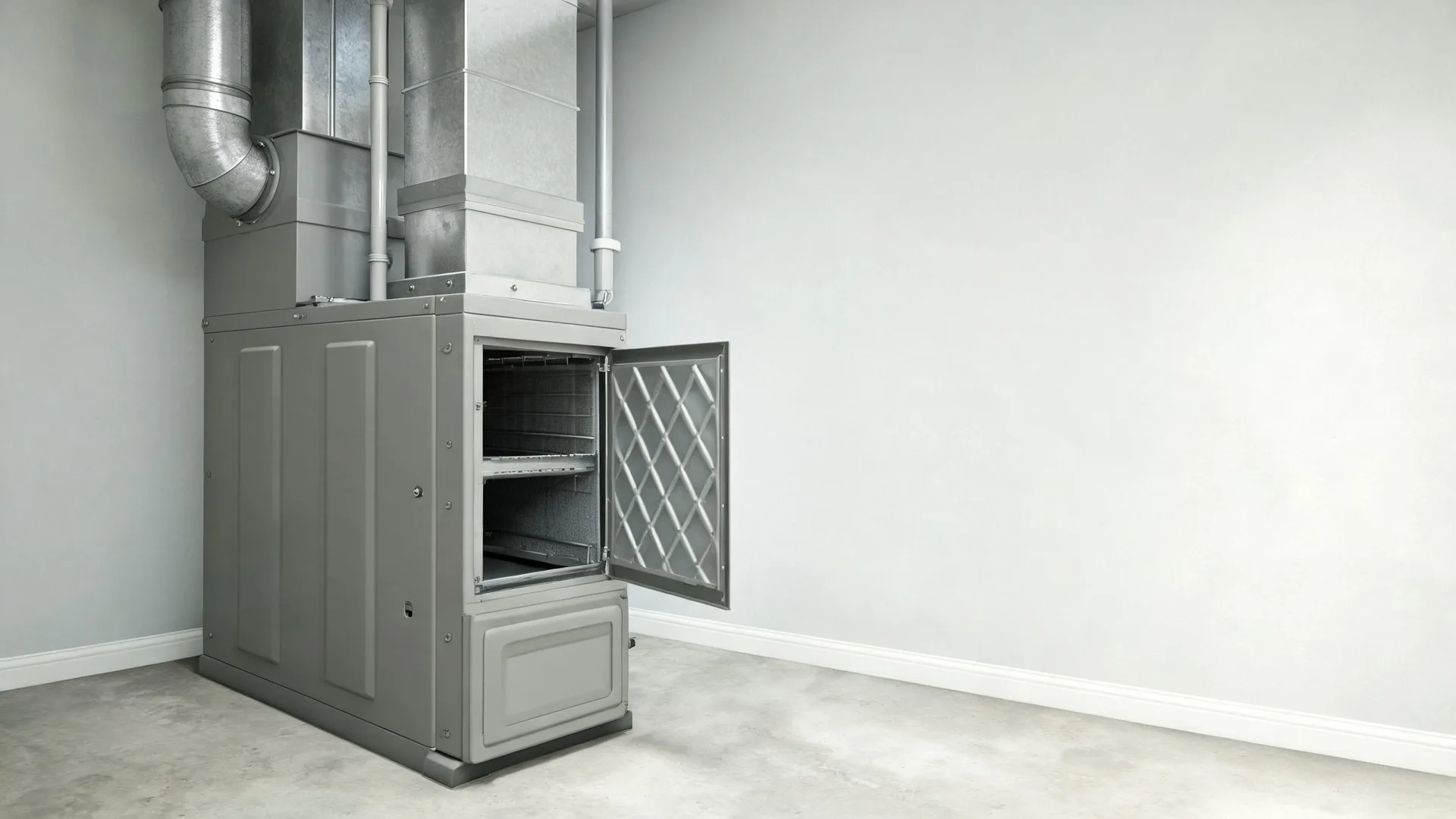
A gray residential gas furnace installed in an unfinished basement, connected to sheet-metal ductwork and PVC pipes.

Running it longer doesn't buy you time

A furnace that's struggling doesn't fix itself by staying on. A cracked heat exchanger gets worse every cycle, since the metal keeps flexing as it heats and cools. A dirty flame sensor will eventually stop sensing the flame at all, and the furnace will shut itself down instead of running unsafe. A failing igniter either cracks outright or just gets weaker each time it fires. Even something as simple as a clogged filter forces the blower to work against more resistance, and that heat has nowhere to go but back into the furnace itself. None of these get better with more runtime. The part either keeps wearing until it fails on its own, or it takes something else down with it.

What you'll notice first

The furnace runs longer to reach the same temperature, or it cycles on and off more than it used to. The air coming out feels cooler than it should. Sometimes there's a burning smell for the first few minutes after it kicks on, or a knocking sound as the ducts heat up. A furnace that used to run quietly and now rattles, hums, or clicks before it fires is telling you a part is wearing out.

What that means for the call

Tell the tech exactly what you noticed and when. Does it happen every cycle or only sometimes. Does it happen at startup, mid-cycle, or when it shuts off. A sound at ignition points to a different part than a sound while it's running. The more specific you can be about what you heard, smelled, or felt, the faster the tech can narrow down what's actually failing.

An unfinished basement interior showing a gray furnace unit beneath a bare incandescent bulb, surrounded by exposed joists, concrete walls, cardboard boxes, and utility pipes.

A new furnace would cut about $60 a year off heating for a typical Yolo County home.

  • A new high-efficiency furnace$260 a year
  • An older furnace$320 a year

Estimates for a typical Yolo County home, compared with an older unit built to the previous federal minimum, from EIA household energy data, California fuel prices and NOAA climate normals. Your home will differ.

Repair makes sense when one part has failed and the heat exchanger is sound.

Replacement makes sense when the heat exchanger is cracked or the furnace keeps needing parts.

A diagnostic visit starts with questions, not tools. The tech wants to know what you noticed, when it started, and whether it happens every cycle or just sometimes. Then they'll open the furnace up enough to watch it run. That means checking the flame through an ignition cycle, reading the signal off the flame sensor, testing the capacitor under load. Some of this is a multimeter on the wires. Some of it is just watching the flame itself, since a steady blue flame means clean combustion and a yellow or flickering one means the gas mixture or airflow is off. The heat exchanger gets checked too, because a crack there is a safety problem, not just a performance one. By the end, you should hear which part is failing, why, and what happens if it gets left alone.