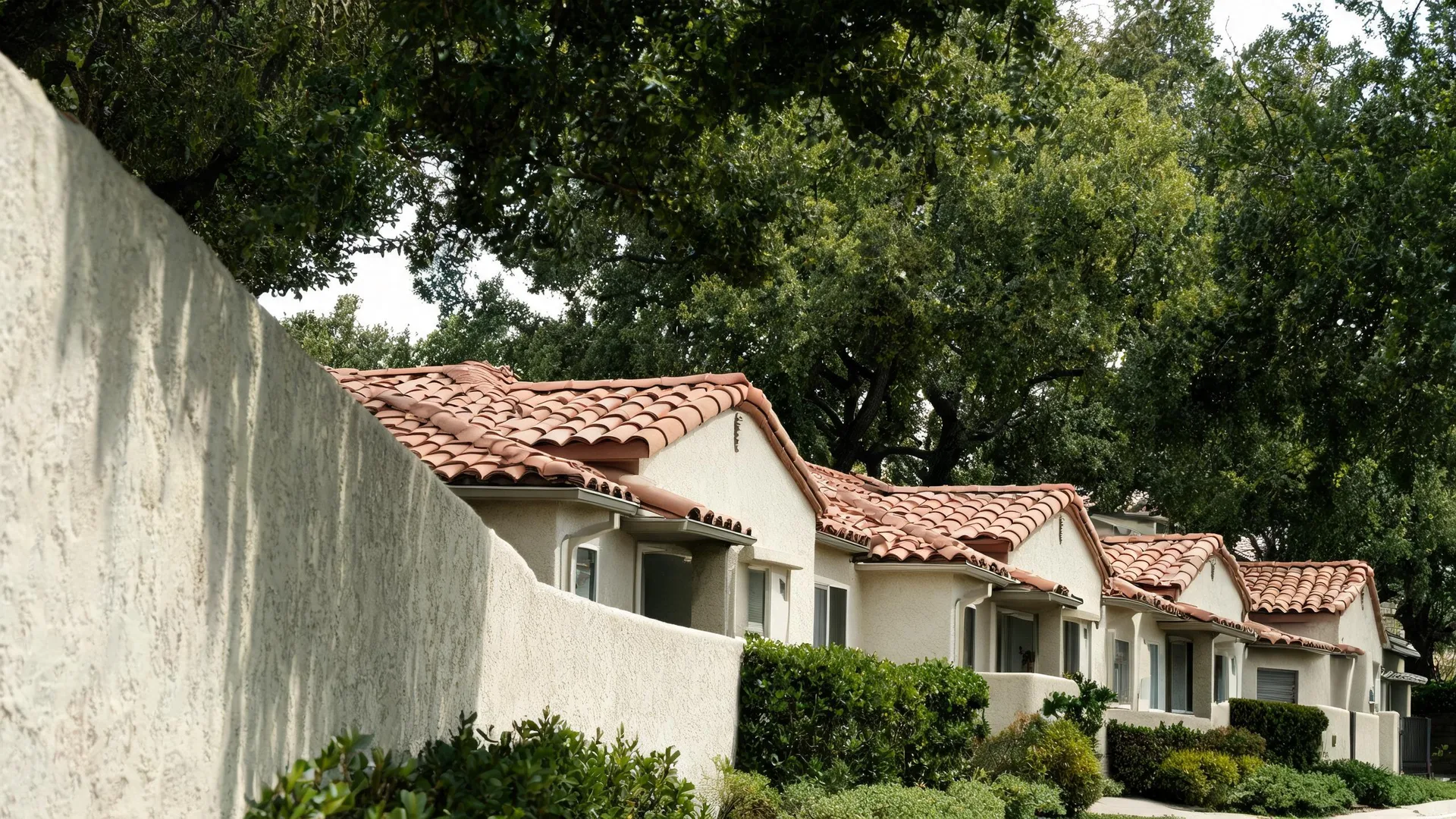



A row of single-story stucco houses with red clay tile roofs behind a tall white plaster wall and trimmed hedges, shaded by large leafy trees.

Furnace Repair in Fresno, CA

Tell us about the job

Takes about a minute. No obligation.

RepairFurnace or heatingFresno County, CA
Step 1 of 2

What ZIP code is the job in?

Fresno County saw 378 severe weather events between 2015 and 2024, and winter storms made up 189 of them. Damaging wind hit the county 179 times in that same stretch. A furnace itself sits inside the house, away from hail and flying debris, but the power behind it is a different story. Wind and winter storms knock lines down, and when that happens a gas furnace with an electronic igniter or blower won't run until power is back. If your furnace has been cutting out during rough weather, that's worth a look even if it starts working again on its own.

8 months
October through May, your furnace is on duty
32°F
the average winter night it heats against
54%
of homes here heat with gas, so most furnaces here burn gas
189 winter storms
in ten years, the nights a failure hurts most
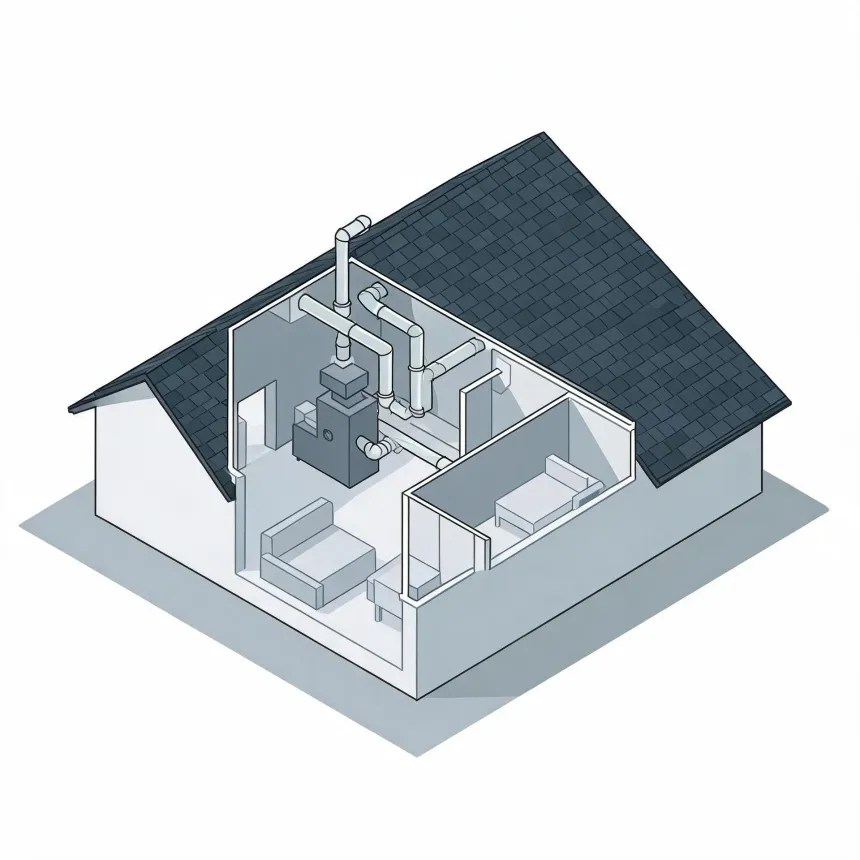
Isometric cutaway illustration of a single-story house with a dark shingled roof, showing interior rooms with furniture and a furnace connected to ductwork.
Your furnace works hardest from November through April.

NOAA nClimDiv, 1991–2020 normals

Half the homes in Fresno County were built in 1982 or later.

A furnace that came with a newer house usually hasn't hit the end of its working life, so a repair call is the one to make first.

Eight months of heat a year wears a furnace down faster

Heat runs October through May
Winter nights average 32°F
189 winter storms from 2015 to 2024

Heat in Fresno County comes on in October. September is worth a look first. A furnace that sat idle since spring can have a weak part that never showed itself in warm weather, and the first cold snap is what finds it. That's also when a repair call is hardest to get fast, because everyone else's furnace is being asked to work for the first time in months too. Overnight lows average 32°F across December, January and February, so a furnace that struggles in October isn't going to get easier to live with as the season goes on.

A furnace that cut out once during a storm is worth checking before the next one

If your furnace cut out during a windstorm or winter storm and came back on its own, that's not nothing. A power blip can leave an igniter or control board in a bad state even after the lights come back on. Worth having someone check it before the next storm takes it out for good.

Find a contractor
A man in a cap and brown jacket, seen from behind, climbs porch steps toward a blue front door while carrying a canvas tool bag, with a potted shrub in a blue planter beside him.
A gas furnace with attached ductwork, gas piping, and condensate lines installed in a concrete-block basement.

Eight months a year, year after year

October through May, about eight months, is a long stretch for a furnace to be asked to run. That's most of the year spent cycling on and off, and every cycle puts a small load on the igniter and the blower motor. A furnace built for this doesn't fail just from the hours on it, but parts do wear at the rate they're used, and eight months a year is more use than a furnace gets in most of the country. If something's acting up now, a technician can tell you whether it's ordinary wear for a furnace that's logged this many winters, or something else entirely. Either way, the diagnosis is what tells you which one you're dealing with.

A small problem now beats a breakdown later

A cracked heat exchanger, a failing limit switch, a flame sensor coated in residue: none of these get better because the furnace keeps running. Heat stresses the metal and the electronics a little more each cycle, and a part that's cracked or worn keeps cracking and wearing. What starts as short cycling or a delayed start can end with the furnace shutting itself down for good, usually on the coldest night it's asked to work hardest.

Some shutdowns are the furnace protecting itself

A furnace that trips out on a limit switch or a flame sensor isn't broken in that moment, it's stopping itself before a bad part causes real damage. Forcing it to keep running past that, or resetting it over and over, pushes heat or strain onto a part that already can't handle it. Getting the actual cause looked at is what stops a safety shutdown from turning into a cracked heat exchanger or a burned-out control board.

An unfinished basement featuring exposed ceiling joists, a metal HVAC unit with round ductwork, a hanging light bulb, and scattered boxes and debris along the left wall.

A new furnace would cut about $100 a year off heating for a typical Fresno County home.

  • A new high-efficiency furnace$430 a year
  • An older furnace$530 a year

Estimates for a typical Fresno County home, compared with an older unit built to the previous federal minimum, from EIA household energy data, California fuel prices and NOAA climate normals. Your home will differ.

Repair makes sense when one part has failed and the heat exchanger is sound.

Replacement makes sense when the heat exchanger is cracked or the furnace keeps needing parts.

Not every furnace problem means a new furnace. A igniter, a flame sensor, a blower motor, a control board: these fail on their own, on furnaces that are otherwise sound, and swapping one out is a normal repair. What changes the math is the heat exchanger. That's the part that can't be replaced on its own without the cost rivaling a new unit, so a crack there is usually where repair stops making sense. Age matters less than how the furnace has been running. One that's been short cycling or tripping its limit switch for a while has likely put more strain on its parts than one that's run clean for the same number of years. A technician who's actually inside the furnace, looking at the heat exchanger and the wear on the parts around it, can tell you which situation you're in. That answer matters more than a guess based on how old the unit is.