





White stucco Spanish Colonial Revival buildings with terracotta roofs glow at dusk on a hillside dotted with oak trees.

Furnace Repair in Hanford, CA

Tell us about the job

Takes about a minute. No obligation.

RepairFurnace or heatingKings County, CA
Step 1 of 2

What ZIP code is the job in?

Your furnace only has to work November through April here, about six months out of the year. Overnight lows in December and January average 39°F, which is mild next to what furnaces deal with elsewhere. A furnace that isn't fighting hard winters year after year tends to hold up better. So if yours is acting up, the cause is more likely age or a worn part than a machine that's been run into the ground. That usually makes it worth repairing rather than replacing.

6 months
November through April, your furnace is on duty
39°F
the average winter night it heats against
65%
of homes here heat with gas, so most furnaces here burn gas
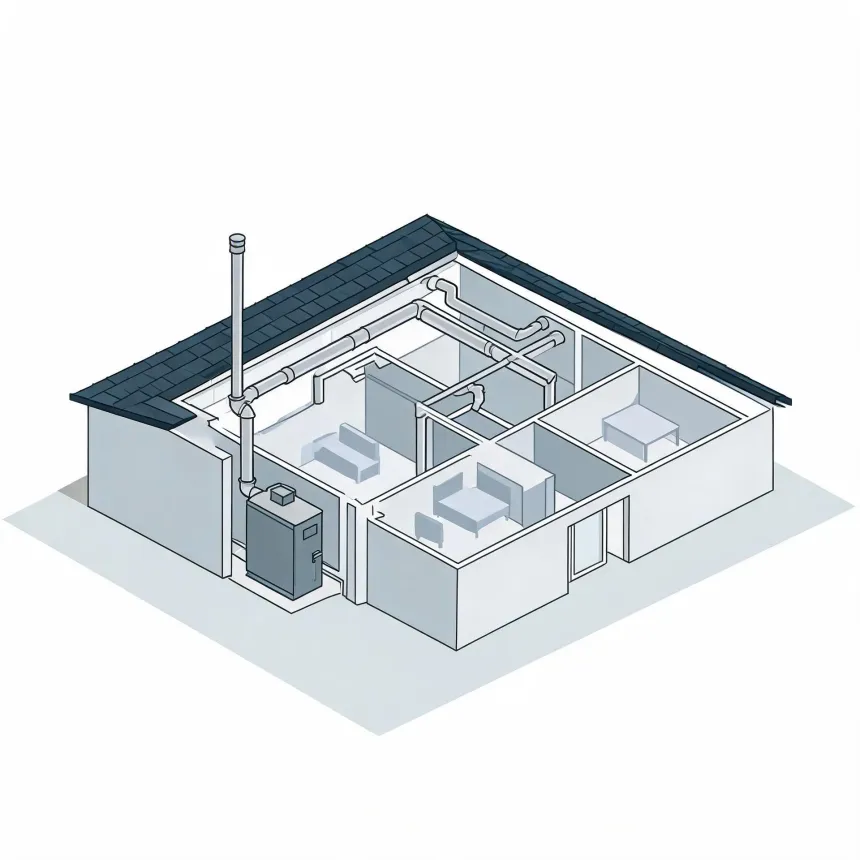
Isometric line illustration of a cutaway single-story house showing interior rooms with furniture, ceiling ductwork, and an exterior furnace unit with a tall flue pipe.
Your furnace works hardest from November through February.

NOAA nClimDiv, 1991–2020 normals

Half the homes in Kings County were built in 1986 or later.

A furnace that came with a newer house usually hasn't earned a replacement yet.

Furnace trouble in November is usually a part that was already weak

Heat runs November through April
Winter nights average 39°F
Climate zone 3B
Still worth fixingIf the furnace came with the house, it's probably from 1986 or later.

If your furnace is making noise or short cycling, get it looked at rather than planning around a new one. A furnace that only runs November through April has fewer hours on it than its age on paper suggests. Worn igniters, failing flame sensors and weak capacitors show up in machines that are otherwise sound. A tech can tell you in one visit whether it's a part swap or something bigger.

It's usually worth repairing

It has an easier job here than in most places, so your furnace is often in decent shape. Repair is usually worth it.

Find a contractor
A man in a cap, dark long-sleeved shirt and brown work pants, seen from behind, carries a worn leather tool bag up porch steps toward a blue front door beside a blue planter with a shrub.
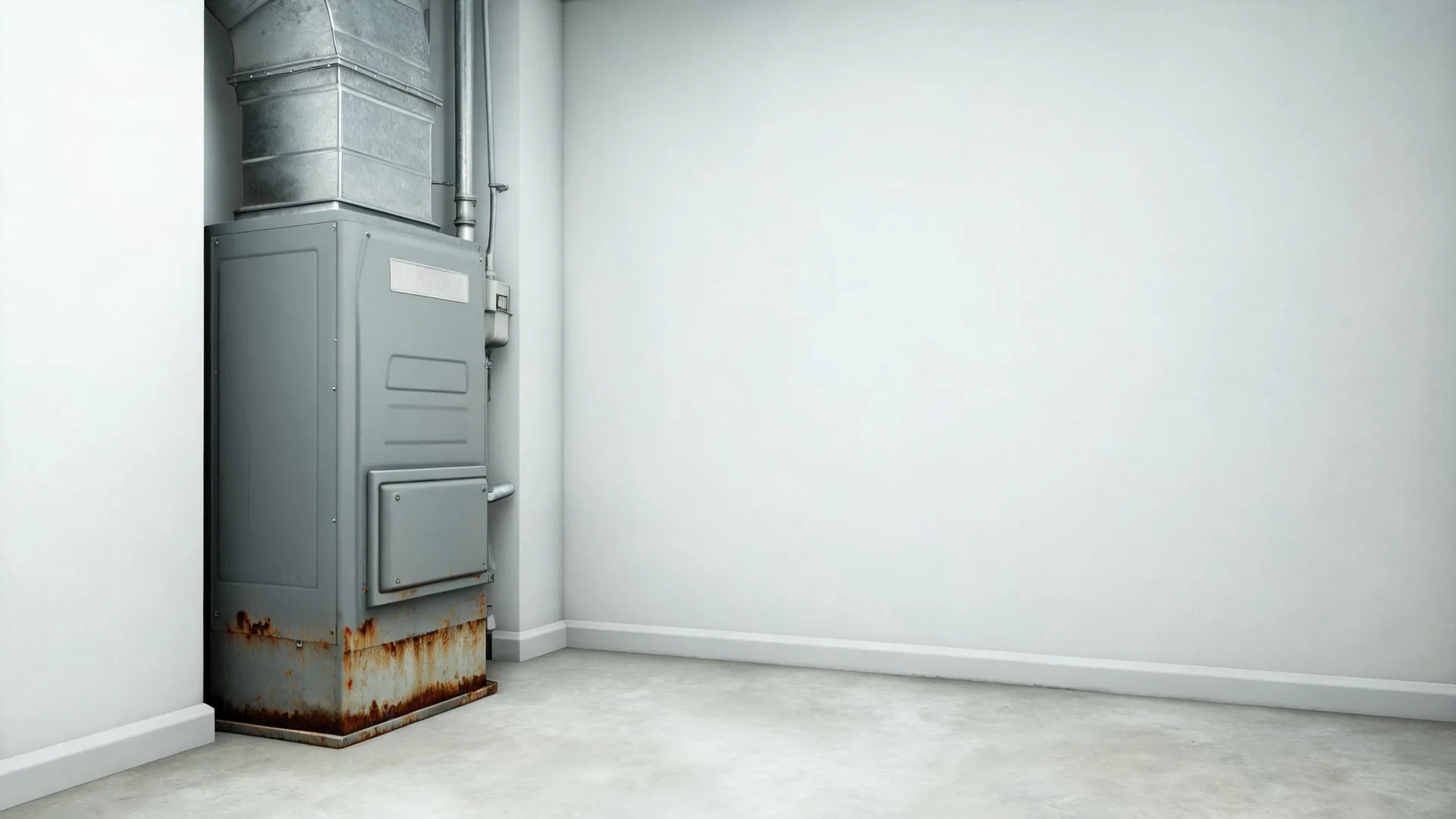
A gray residential gas furnace installed in an unfinished basement, surrounded by ductwork, a metal flue pipe, and a gas supply line.

Keep running it through the warning and the next part pays for it

A furnace that's struggling doesn't fail quietly. It keeps trying, and every attempt puts load on whatever is already weak. A flame sensor coated enough to misread the burner causes a shutdown, so the furnace relights, and that's another cycle on an igniter that may already be cracked. A blower motor that's starting hard pulls harder on the capacitor feeding it, so a weak capacitor degrades faster the more times it has to push a motor that's already struggling to turn. Heat works the same way from the other side. A cracked heat exchanger flexes with every cycle of heating and cooling, and the crack doesn't stay the same size. Running the furnace through that cycle again doesn't let anything rest. It just asks the same weak part to do the same hard thing one more time, and asks whatever's next to it to help carry the strain.

What you'll actually notice first

Furnace short cycling, meaning it fires up and shuts off again before the house warms, is one of the clearest signs something's wrong. So is a burner that won't light on the first try, or one that lights and then the whole unit shuts down a few seconds later. Banging or screeching when it starts is worth paying attention to as well. None of these mean the furnace is done. They mean a specific part is failing and the furnace is telling you which one.

Why waiting makes it worse

A furnace that's struggling to light or shutting itself off is usually doing that on purpose, as a safety check, not because it's broken beyond use. But running it in that state puts strain on whatever part is already weak, and can affect parts around it too. A tech can usually isolate the failing part in one visit if it's caught early. Wait too long and a small part problem can take out something bigger alongside it.

An unfinished basement featuring concrete block walls, exposed floor joists, and a metal forced-air furnace with ductwork near a central pillar.

A new furnace would cut about $50 a year off heating for a typical Kings County home.

  • A new high-efficiency furnace$250 a year
  • An older furnace$300 a year

Estimates for a typical Kings County home, compared with an older unit built to the previous federal minimum, from EIA household energy data, California fuel prices and NOAA climate normals. Your home will differ.

Repair makes sense when one part has failed and the heat exchanger is sound.

Replacement makes sense when the heat exchanger is cracked or the furnace keeps needing parts.

The question to ask isn't how old the furnace is. It's whether the problem is isolated to one part. A tech checks this by watching the furnace through a full cycle. Does it light clean, does the flame stay steady, does the blower run the way it should. If everything else is working and only one part is failing, replacing that part brings the furnace back to normal. There's no reason to replace a cabinet, a heat exchanger and a blower motor because an igniter cracked. Replacement starts to make sense when the heat exchanger itself is cracked or corroded. That part isn't swapped on its own, and it affects whether the furnace is safe to run at all. Short of that, a furnace with one bad part is a furnace worth fixing.