




White Mediterranean-style houses with lit windows photographed at dusk beneath golden hills.

Furnace Repair in Modesto, CA

Tell us about the job

Takes about a minute. No obligation.

RepairFurnace or heatingStanislaus County, CA
Step 1 of 2

What ZIP code is the job in?

A furnace in Modesto only has to work about six months a year, November through April. The rest of the year it sits idle. Overnight lows in the winter average 39 degrees, which is cold enough to need heat but nowhere near what furnaces in colder states are built to handle. That's a light workload for the equipment. A furnace that gets this kind of break each year usually isn't broken down from wear. More often something specific has failed, like an igniter or a flame sensor, and the rest of the unit is fine. That's worth knowing before you decide whether repair makes sense.

6 months
November through April, your furnace is on duty
39°F
the average winter night it heats against
66%
of homes here heat with gas, so most furnaces here burn gas
Isometric cutaway illustration of a single-story house with a dark shingled roof, showing interior rooms with furniture, ductwork, a flue pipe, and a furnace unit.
Your furnace works hardest from November through March.

NOAA nClimDiv, 1991–2020 normals

Half the houses in Stanislaus County were built in 1981 or later.

A furnace that came with a newer house still has years in it, and that's worth knowing before you replace instead of repair it.

November is when a weak furnace gets found out

Heat runs November through April
Winter nights average 39°F
Climate zone 3B

If your furnace came with a house built in 1981 or later, don't let one failed part talk you into a new system. Ask the technician what actually failed, the igniter, the flame sensor, whatever it turns out to be, and whether the rest of the unit checked out fine. If it did, that's a repair, not a reason to replace. A furnace that age still has years in it.

Get it looked at before you write it off

Get the failed part diagnosed before you decide anything else. A furnace that only runs six months a year, with a light load even then, usually has one thing wrong with it rather than a system that's worn out.

Find a contractor
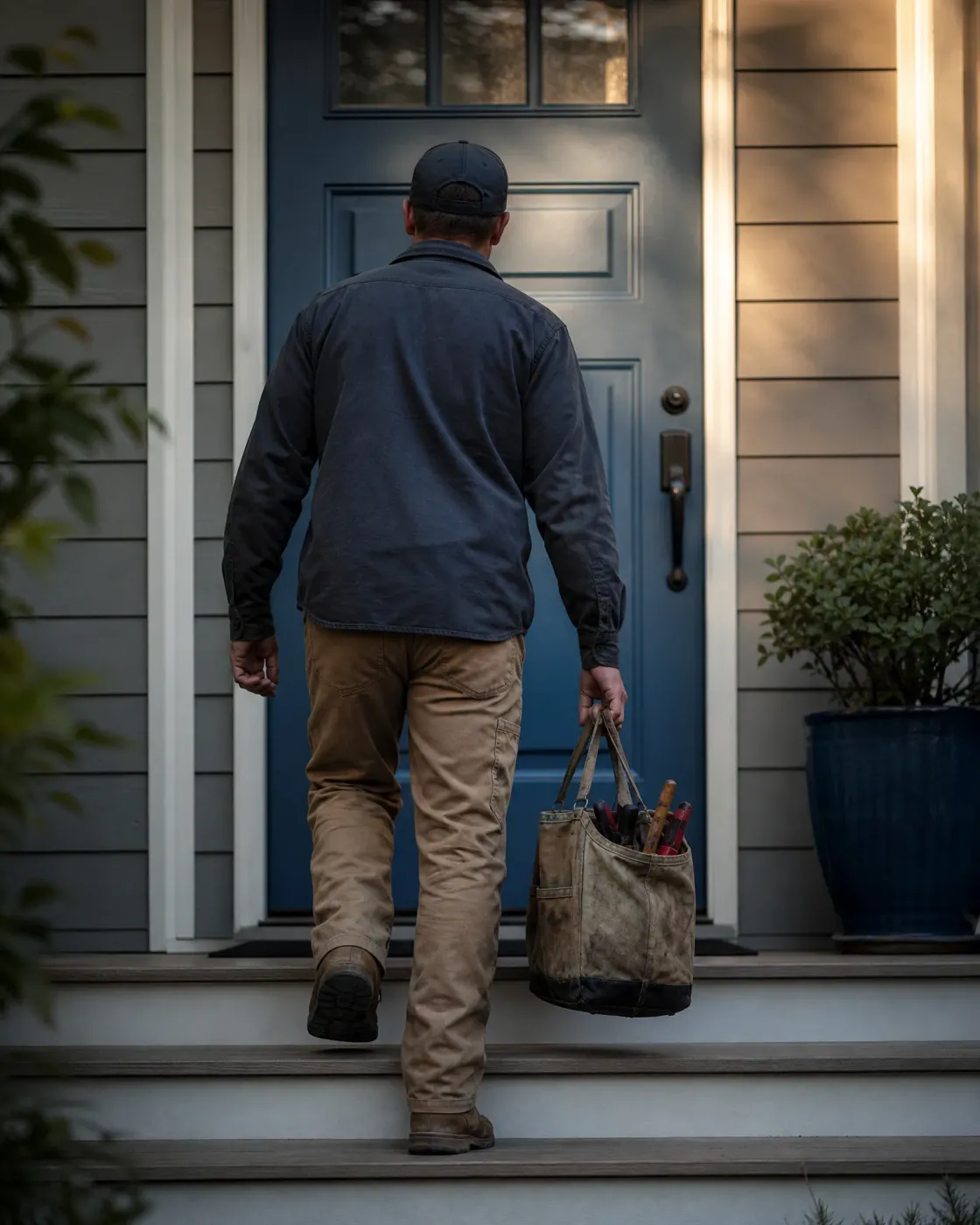
A man in a dark cap, dark shirt and tan work pants walks up wooden steps toward a blue front door, carrying a worn canvas tool bag in his right hand, with a potted shrub beside the entry.
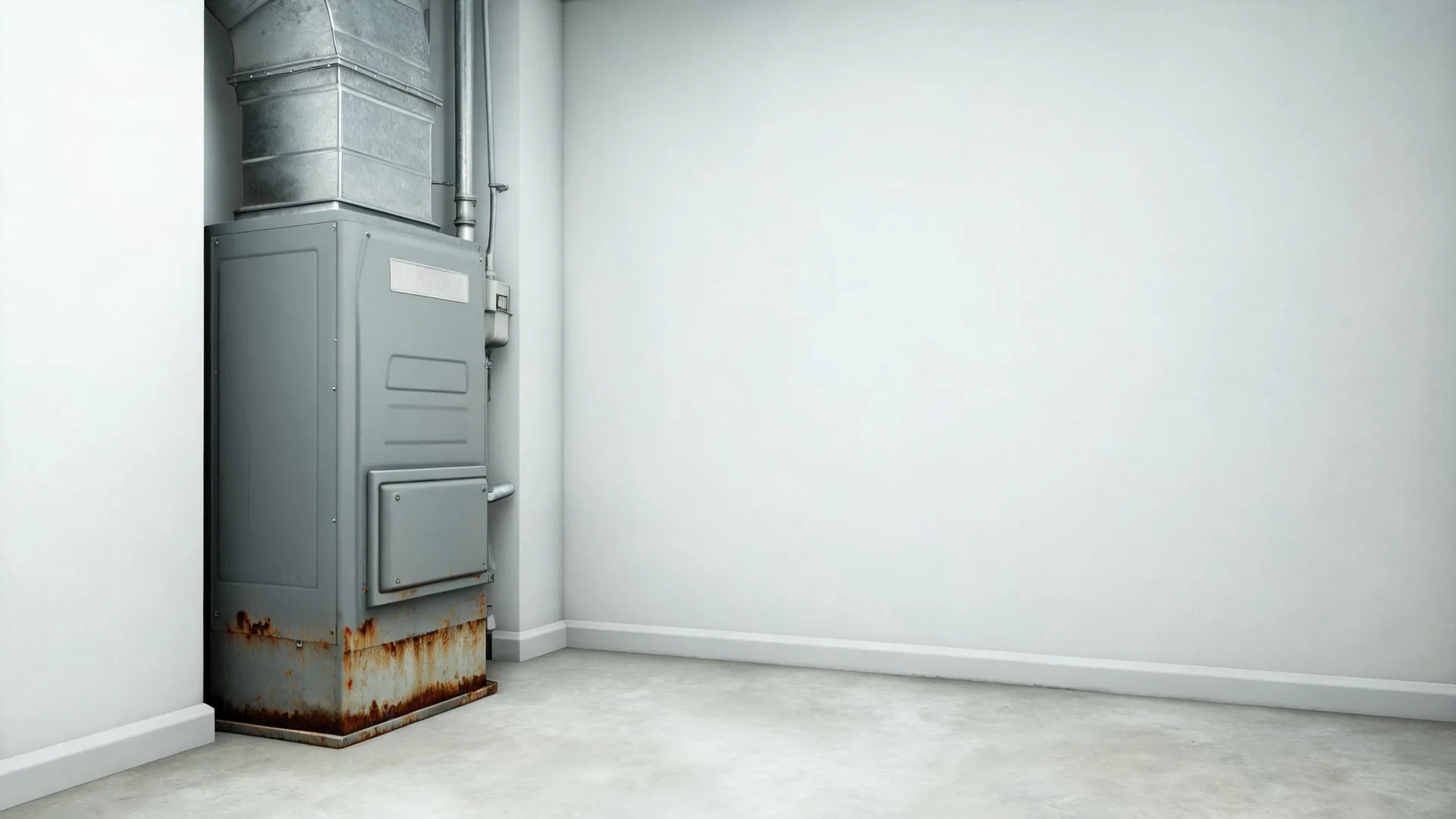
A gray gas furnace with attached ductwork and piping installed in an unfinished concrete basement.

The part that failed won't stay the only one for long

A failed part doesn't always stay contained. Keep running a furnace with a cracked heat exchanger and the crack spreads with every cycle of heating and cooling. A flame sensor coated in a little oxidation might still light the burner most tries, then fewer, then none, and each failed attempt is wear on the igniter too. A clogged filter forces the blower motor to strain against airflow it wasn't built to push against, which shortens its life as well. None of this means the whole unit is going bad. It means the one part that failed is worth finding and fixing before it takes a second part down with it.

What a bad furnace sounds like

A furnace about to need a repair usually says so before it quits outright. A burner that used to light with one soft thump now clicks several times first. A blower that ran quiet starts to rattle, squeal, or bang on startup. Short cycling, where the furnace fires up, runs a couple minutes, then shuts off before the house warms, usually points to a flame sensor or a limit switch cutting things off early. Any of these is worth a call before the part finishes failing.

What to check before anyone comes out

Some signs point to something other than a broken furnace. Weak airflow from the vents is often a clogged filter, not a dying blower motor. Rooms that heat unevenly can mean closed or blocked vents rather than a furnace problem at all. A yellow or flickering burner flame, though, is not something to wait on. That means incomplete combustion, and it needs a technician looking at it regardless of anything else.

An unfinished basement interior showing a gray furnace unit beneath a bare incandescent bulb, surrounded by exposed joists, concrete walls, cardboard boxes, and utility pipes.

A new furnace would cut about $60 a year off heating for a typical Stanislaus County home.

  • A new high-efficiency furnace$270 a year
  • An older furnace$330 a year

Estimates for a typical Stanislaus County home, compared with an older unit built to the previous federal minimum, from EIA household energy data, California fuel prices and NOAA climate normals. Your home will differ.

Repair makes sense when one part has failed and the heat exchanger is sound.

Replacement makes sense when the heat exchanger is cracked or the furnace keeps needing parts.

A diagnostic visit starts with questions. What you've noticed, when it happens, what the furnace sounds or smells like when it acts up. That history narrows things down before any panel comes off. The technician checks the obvious first, the filter, the thermostat settings, whether the furnace is getting power and gas. Then comes a look at the igniter or pilot, the flame sensor, and the burners, watching how the flame lights and whether it holds steady. The blower gets checked for airflow and noise. The inducer motor gets watched to see if it's clearing exhaust the way it should. A combustion analyzer or a close look at the heat exchanger tells the technician whether the furnace is burning gas cleanly or something's cracked and leaking exhaust where it shouldn't. By the end you should know exactly what failed and why, not just that something did.