




An unfinished basement containing a gray HVAC furnace with ductwork, exposed wooden joists, a concrete floor, and miscellaneous clutter in one corner.

Furnace Repair in Oxnard, CA

Tell us about the job

Takes about a minute. No obligation.

RepairFurnace or heatingVentura County, CA
Step 1 of 2

What ZIP code is the job in?

Your furnace in Oxnard isn't working as hard as furnaces in most other places. Heat only needs to run from November through May here, and overnight lows average 38°F even in the coldest months of December, January and February. That's a mild load compared to what furnaces deal with elsewhere. So when a furnace here breaks down, it's rarely because the system got run into the ground. More often it's age catching up, a part wearing out on its own schedule, or something that got missed at the last service. That's good news if yours is acting up, because it usually means a repair will actually solve the problem rather than just buy time.

7 months
November through May, your furnace is on duty
38°F
the average winter night it heats against
73%
of homes here heat with gas, so most furnaces here burn gas
4 winter storms
in ten years, the nights a failure hurts most
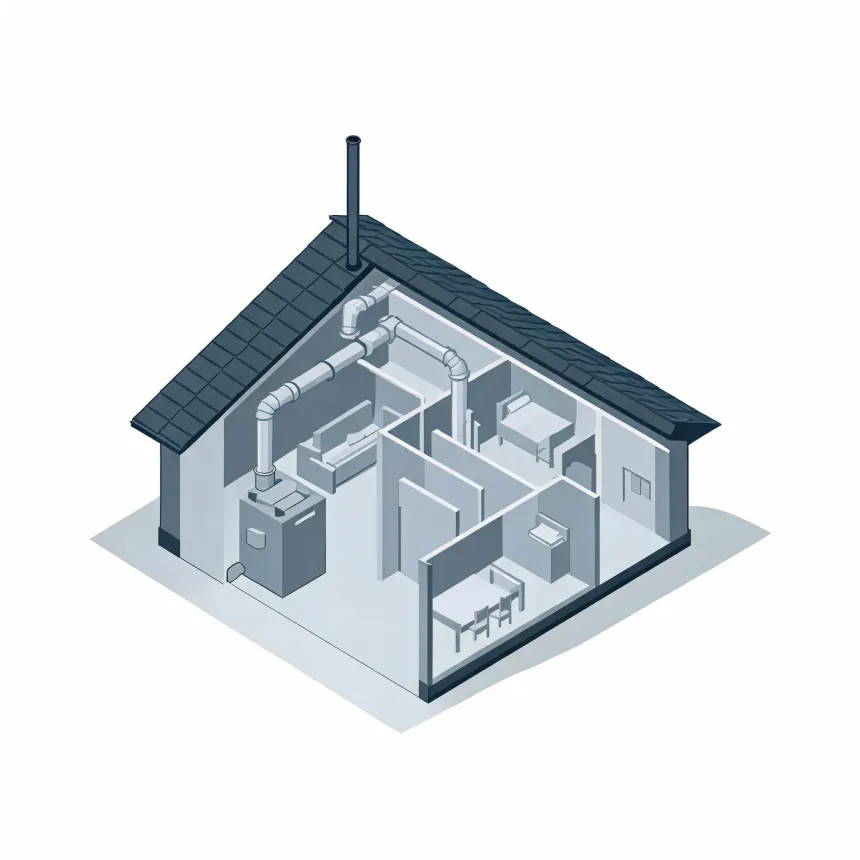
Isometric cutaway illustration of a small single-story house showing interior rooms with furniture, a furnace unit with attached ductwork running to a roof flue, and a dark shingled roof.
Your furnace works hardest from November through April.

NOAA nClimDiv, 1991–2020 normals

Check the thermostat is set to heat and the batteries aren't dead before you check anything else.

A furnace that won't start is sometimes a thermostat problem, not a furnace problem.

November is when a weak furnace shows itself

Heat runs November through May
Winter nights average 38°F
Climate zone 3C

It's usually worth repairing

It has an easier job here than in most places, so your furnace is often in decent shape. Repair is usually worth it.

Find a contractor
A man in a beanie, dark jacket and tan work pants climbs porch steps toward a blue front door, carrying a canvas tool bag, with a potted shrub in a blue planter beside him.
A gray residential gas furnace installed in an unfinished basement, surrounded by ductwork, a metal flue pipe, and a gas supply line.

Small problems don't stay small

A furnace that's struggling doesn't fail cleanly. It fails a little more each time it runs. A cracked heat exchanger gets wider with every heat cycle, as the metal expands hot and contracts cold. A failing igniter that glows dim instead of bright is putting itself through more strain each time it tries to light. A flame sensor coated in residue reads a weaker signal every run, until the furnace shuts itself off mid-cycle instead of just hesitating at startup. Even a clogged filter restricting airflow makes the heat exchanger run hotter than it should, which shortens its life a little more with every hour the blower runs. None of this means shut the furnace off and wait. It means a problem that would have been a simple fix early on can turn into a bigger one later, not because the furnace was overworked, but because small faults compound the longer they're allowed to run.

Most failures start small and stay hidden

An igniter weakens gradually over hundreds of cycles before it finally won't glow hot enough to light the gas. A flame sensor builds up a film from normal combustion until it can't detect the flame anymore. A blower motor bearing wears slowly until it seizes. None of these announce themselves early. They show up as a furnace that's slower to start, or one that starts and then shuts off, or one that just stops.

Airflow problems cause more damage than they get credit for

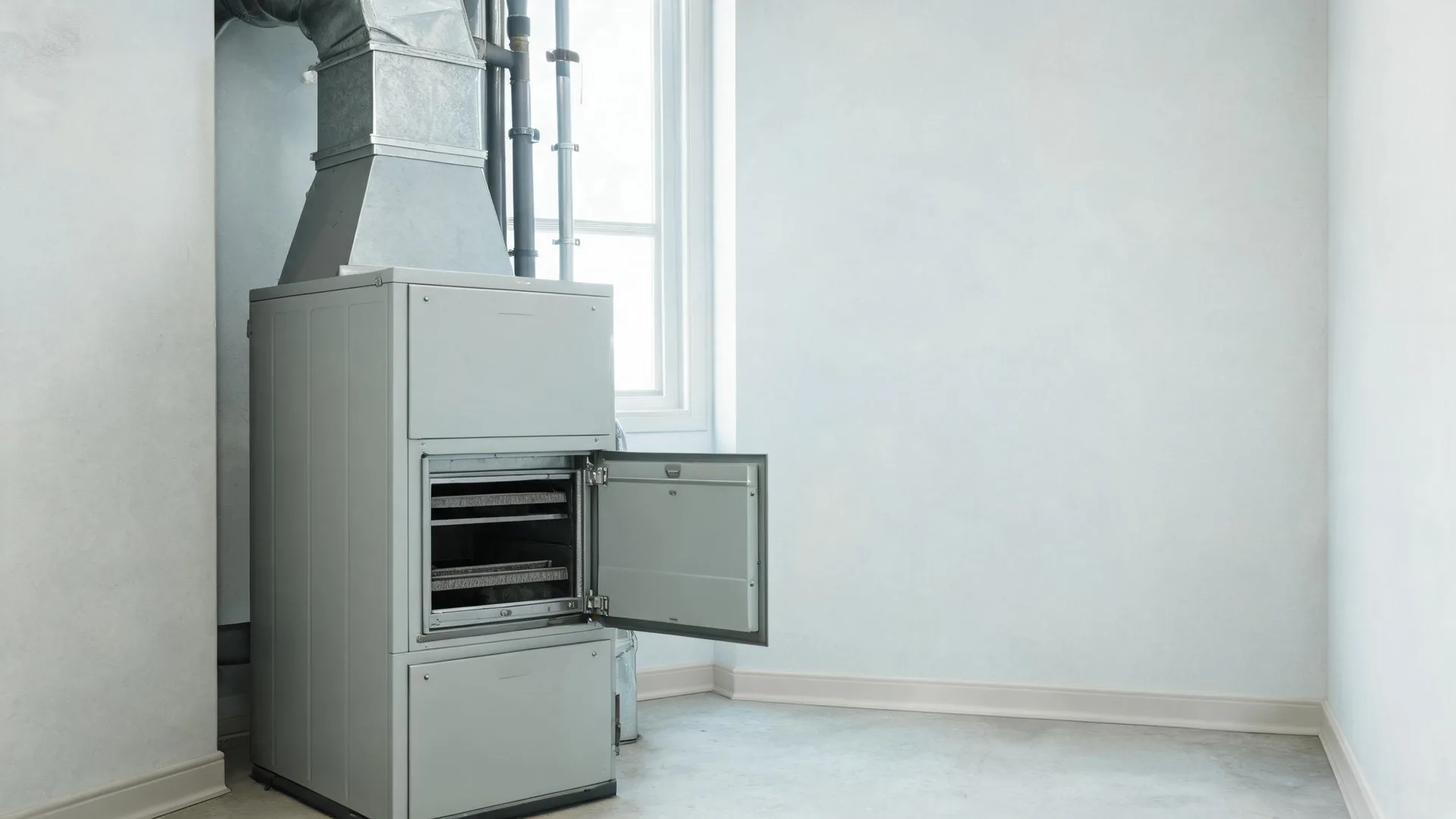
A dirty filter, a blocked return, or a duct that's closed off somewhere makes the blower work against resistance it wasn't built for. That strain shows up elsewhere first, usually as a furnace that overheats and trips its limit switch, or a heat exchanger that cracks sooner than it should have. The filter is the one part of this whole system an owner can check without a tool.

An unfinished basement interior showing a gray furnace unit beneath a bare incandescent bulb, surrounded by exposed joists, concrete walls, cardboard boxes, and utility pipes.

A new furnace would cut about $70 a year off heating for a typical Ventura County home.

  • A new high-efficiency furnace$320 a year
  • An older furnace$390 a year

Estimates for a typical Ventura County home, compared with an older unit built to the previous federal minimum, from EIA household energy data, California fuel prices and NOAA climate normals. Your home will differ.

Repair makes sense when one part has failed and the heat exchanger is sound.

Replacement makes sense when the heat exchanger is cracked or the furnace keeps needing parts.

Repair and replacement usually comes down to what broke, not how old the furnace looks. A control board, a blower motor, an inducer motor, these are parts a tech can replace on their own, and doing so brings the whole furnace back with it. A heat exchanger is different. It's the one part that isn't really a repair, since a crack there means combustion gases can get into the air the blower pushes through the house, and no tech is going to patch that and call it safe. So the real question isn't the furnace's age, it's which part failed. Ask what broke before you ask what it costs to fix, because that answer tells you whether you're looking at a repair or a replacement before money even comes into it.