



Low-angle view along a stucco house wall with pink bougainvillea, a gravel yard in the foreground, and a large tree beside a tile-roofed building under an overcast sky.

Furnace Repair in Riverside, CA

Tell us about the job

Takes about a minute. No obligation.

RepairFurnace or heatingRiverside County, CA
Step 1 of 2

What ZIP code is the job in?

A furnace that's struggling usually has a reason, and running it anyway makes that reason worse. A cracked heat exchanger gets more dangerous the longer hot gas keeps flowing through it. A clogged burner that's starving for gas can scorch the heat exchanger it's supposed to warm evenly. A failing igniter that's lighting late or weak forces the system to try again and again, and each failed attempt stresses the parts around it. Even something as simple as a dirty flame sensor can make the furnace shut off and restart over and over, and that short-cycling wears out the parts meant for steady, occasional use. The safer move when something sounds or smells off is to shut it down and get it looked at, not to see if it keeps working.

5 months
November through March, your furnace is on duty
42°F
the average winter night it heats against
70%
of homes here heat with gas, so most furnaces here burn gas
34 winter storms
in ten years, the nights a failure hurts most
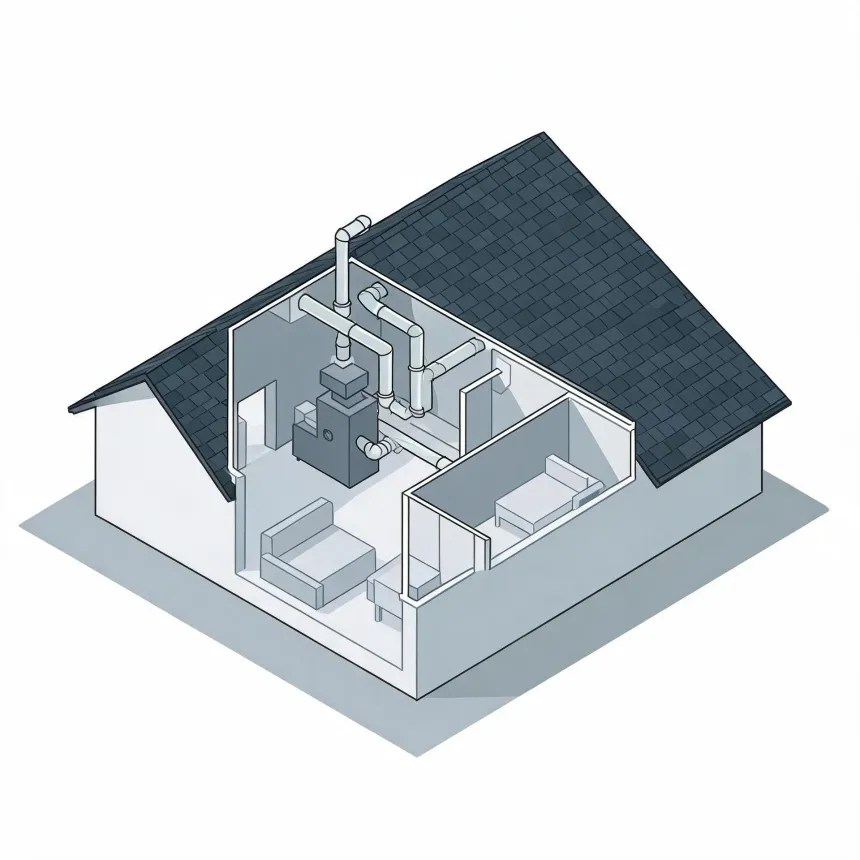
Isometric cutaway illustration of a single-story house with a dark shingled roof, showing interior rooms with furniture and a furnace connected to ductwork.
Your furnace works hardest from December through March.

NOAA nClimDiv, 1991–2020 normals

Half the homes in Riverside County were built in 1990 or later.

A furnace that came with a house that age usually still has years left in it, which is a reason to fix it, not replace it.

Five months of light duty a year, mild nights. This furnace isn't working hard.

Heat runs November through March
Winter nights average 42°F
34 winter storms from 2015 to 2024

October is worth paying attention to here. Heat doesn't start running until November, so the furnace has sat idle since spring, and it gets switched on cold, often on the first chilly night without much warning. A part that's been quietly wearing down, a flame sensor coated in dust, an igniter that's slower to light than it used to be, tends to show itself right then, in those first weeks of real use. That's not a sign the furnace is old or on its way out. It's just when a small problem finally gets asked to perform, and fails. Having it looked at in October, before it's running every night, catches that while it's still a simple fix.

Repair it

If your system came with a newer house, it likely has plenty of life left. Repair is usually the right call.

Find a contractor
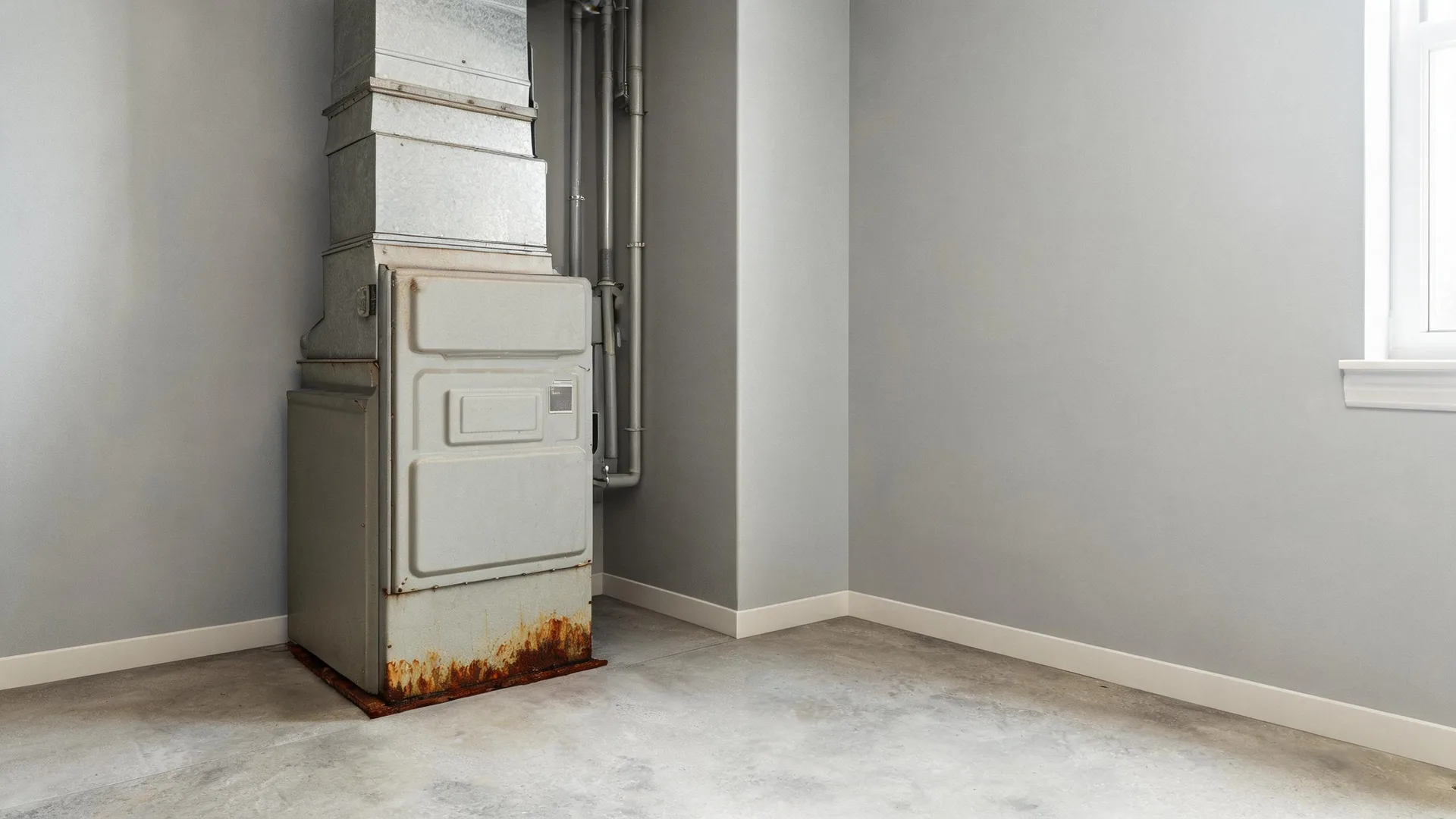
A gray residential gas furnace installed in an unfinished basement, surrounded by ductwork, a metal flue pipe, and a gas supply line.

What a furnace sounds like before it fails

A furnace that needs attention usually tells you before it quits outright. It takes longer to catch, or it tries again before the burners light. The air coming out feels cooler than it used to, or it comes in weak, like the blower is pushing against something. You hear a bang at startup instead of a steady whoosh, which usually means gas is building up before it catches instead of lighting right away. A rattle that wasn't there before, a burning smell the first time it kicks on, a cycle that shuts off minutes after starting and won't hold. None of these mean the same thing, but all of them mean the furnace is working around a problem instead of running clean. Catching it at the first odd noise or short cycle is what keeps a small fix from turning into a replaced heat exchanger or a cracked blower housing.

Ignition parts wear out from cycling, not hours

The igniter is a thin strip that glows hot enough to light the gas, and every cycle heats it up and lets it cool back down. That repeated swing is what cracks it, not how long it runs. A flame sensor fails a different way. It just has to detect the flame, and a coat of dust or carbon is enough to make the furnace think no flame is there and shut itself off.

A clogged filter strains the blower

The blower has to push air through the filter every time it runs. A filter clogged with dust makes it work harder to move the same air, and that extra strain is what wears down bearings meant for a lighter load. A motor working past its filter usually hums or strains before it quits.

A gray forced-air furnace with sheet-metal ductwork stands in an unfinished basement with exposed wooden joists, concrete walls, and a hanging incandescent bulb.

A new furnace would cut about $40 a year off heating for a typical Riverside County home.

  • A new high-efficiency furnace$170 a year
  • An older furnace$210 a year

Estimates for a typical Riverside County home, compared with an older unit built to the previous federal minimum, from EIA household energy data, California fuel prices and NOAA climate normals. Your home will differ.

Repair makes sense when one part has failed and the heat exchanger is sound.

Replacement makes sense when the heat exchanger is cracked or the furnace keeps needing parts.

A repair is worth doing when the rest of the furnace is sound and the failure is a single part doing its job badly. An igniter, a flame sensor, a pressure switch. Swap the part and the furnace runs the way it was built to. Replacement starts to make more sense once the heat exchanger is cracked. That part isn't sold on its own, and it isn't worth forcing into an old cabinet. It also makes sense when the same system keeps coming back for different reasons each time, one winter the igniter, the next the blower motor. That pattern usually means the parts around the one just fixed are wearing out too. A tech who's been inside the cabinet can tell you which kind of problem this is faster than any symptom can from the outside.