


An unfinished basement featuring a forced-air furnace, exposed wooden ceiling joists, bare concrete walls, and miscellaneous items including cardboard boxes and coiled cables on the floor.

Furnace Repair in Truckee, CA

Tell us about the job

Takes about a minute. No obligation.

RepairFurnace or heatingNevada County, CA
Step 1 of 2

What ZIP code is the job in?

Nevada County saw 449 winter storms between 2015 and 2024, counting heavy snow, ice and blizzards. Add in 190 damaging wind events and a handful of hail, and that outdoor equipment takes a beating most years. A furnace that still fires up fine can be hiding a dented cabinet or a vent blocked by debris from the last blow-through. Power is part of this too. Statewide, 17% of households went at least a day without power in 2024, and a furnace with a gas burner still needs electricity to run its blower and control board. None of that means something is wrong at your house right now. It means a furnace here earns a look after a bad storm, not just when it starts acting up.

8 months
October through May, your furnace is on duty
30°F
the average winter night it heats against
449 winter storms
in ten years, the nights a failure hurts most
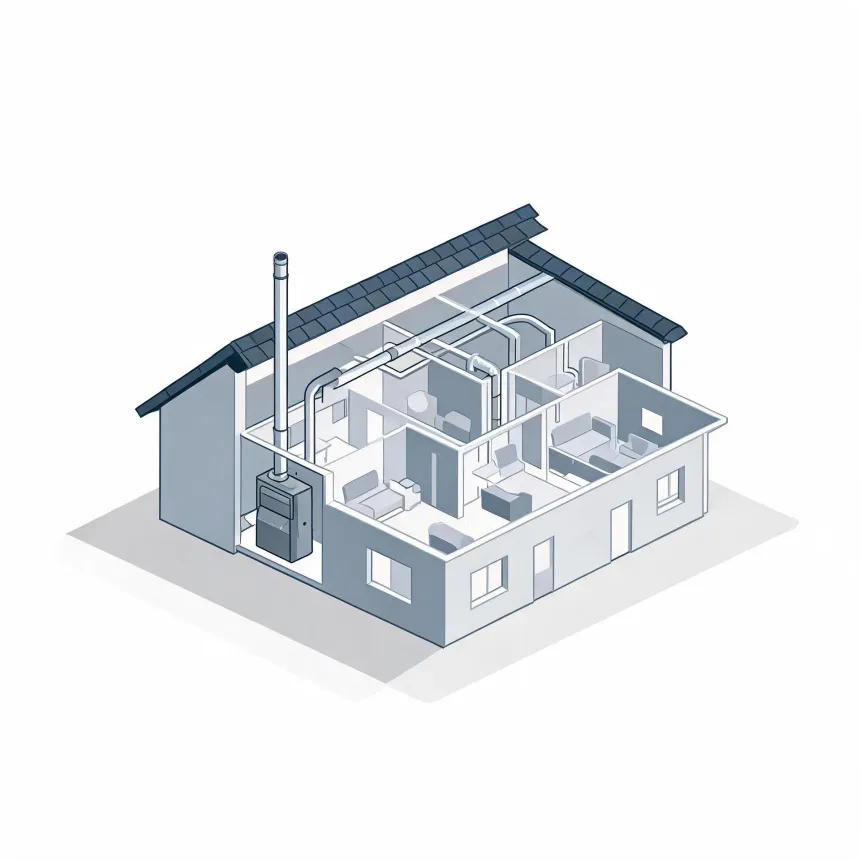
Isometric cutaway illustration of a single-story house in gray tones, showing interior rooms with furniture, ceiling ductwork, and an exterior furnace unit with a tall flue pipe.
Your furnace works hardest from November through April.

NOAA nClimDiv, 1991–2020 normals

Half the homes in Nevada County were built in 1983 or later.

A furnace that age usually isn't worn out, just storm-stressed, and that's a repair.

October asks the most of a furnace that's sat quiet since spring

Heat runs October through May
Winter nights average 30°F
449 winter storms from 2015 to 2024

Heat runs here from October through May. That's eight months out of twelve, longer than almost anywhere else people keep a furnace on a thermostat schedule. A machine built to run that long needs every part doing its job, because there's no long stretch of summer to let it sit idle and recover. The igniter, the blower motor, the control board, all of them are cycling on and off for most of the year, not just a few cold weeks. When something's off, that long runtime is usually why. A furnace acting up here isn't failing out of nowhere. It's showing wear that eight months of work puts on a machine.

After a bad storm, get the furnace checked before it acts up

If the last storm brought down branches or hail near the outdoor unit, get it looked at even if the furnace still runs fine. A dented cabinet or a blocked vent won't always show up as a problem right away. Worth having someone confirm it's clear before the next cold stretch asks more of it.

Find a contractor
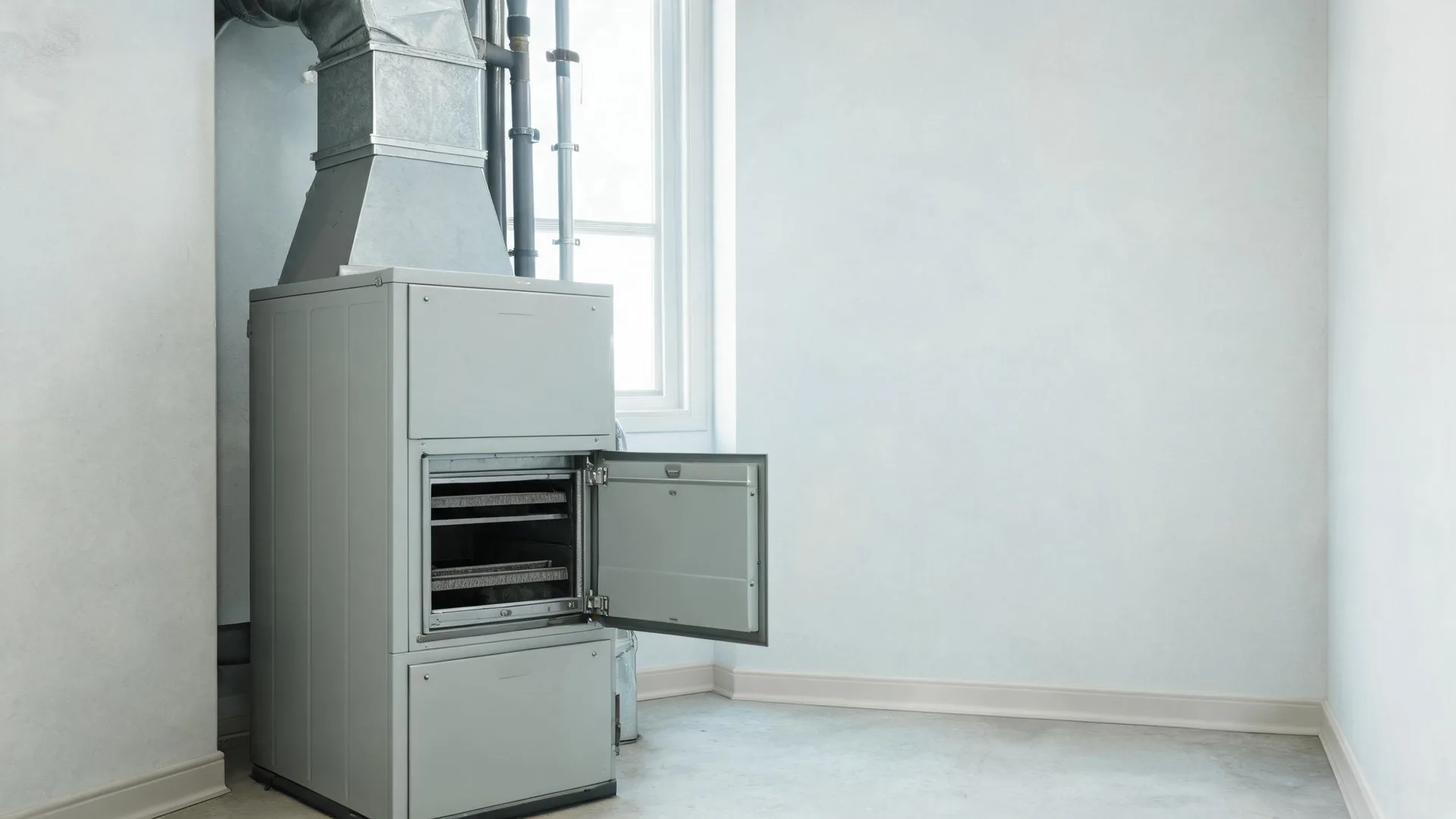
A gray residential gas furnace installed in an unfinished basement, connected to sheet-metal ductwork and PVC pipes.

Eight months of runtime is a lot to put on one furnace

Eight months of runtime a year adds up, even for a furnace that isn't old. If yours is short cycling, blowing cold air, or tripping its limit switch, that's worth having looked at properly rather than guessed at. The symptom alone doesn't say whether it's wear from a long runtime or something a storm knocked loose. A technician checking it can tell the difference, and that's what decides whether the fix is a part worn out from use or a vent that needs clearing. Either way, the furnace running this long with this many storms behind it is reason enough to have it checked rather than waited on.

A furnace rarely fails without warning first

Short cycling, a burner that won't stay lit, a blower that runs but pushes cool air, a limit switch that keeps tripping. Each one points at something specific. An igniter that's cracked won't glow enough to light the gas. A flame sensor coated with residue tells the control board no flame is there even when one's burning, so the board shuts the gas back off. These aren't random glitches. They're a part telling you what it needs.

The sign tells a tech where to look first

A furnace that cycles on and off fast often has a dirty flame sensor or a clogged filter choking airflow. One that runs constantly without reaching temperature points at a cracked heat exchanger or a thermostat out of calibration. Rattling or banging on startup usually means a cracked heat exchanger or a loose panel, not a part that needs replacing on the spot. Naming the sign correctly is most of the diagnosis before a panel ever comes off.

An unfinished basement containing a gray HVAC furnace with ductwork, exposed wooden joists, a concrete floor, and miscellaneous clutter in one corner.

A new furnace would cut about $120 a year off heating for a typical Nevada County home.

  • A new high-efficiency furnace$530 a year
  • An older furnace$650 a year

Estimates for a typical Nevada County home, compared with an older unit built to the previous federal minimum, from EIA household energy data, California fuel prices and NOAA climate normals. Your home will differ.

Repair makes sense when one part has failed and the heat exchanger is sound.

Replacement makes sense when the heat exchanger is cracked or the furnace keeps needing parts.

A diagnostic visit starts with the thermostat, not the furnace. A tech checks the call for heat is actually reaching the control board before opening anything up. From there it's the sequence of operation, watched step by step: does the inducer motor start, does the igniter glow or spark, does the gas valve open, does the flame sensor pick up a flame and let it stay lit. Wherever that sequence stalls is where the problem lives. A tech will also pull the filter and look at the flame through the viewport, since both can mimic a bad part when the part itself is fine. Only after watching it run does anything get tested with a meter or taken apart. That order matters, because swapping a part before watching the cycle just means guessing with extra steps.