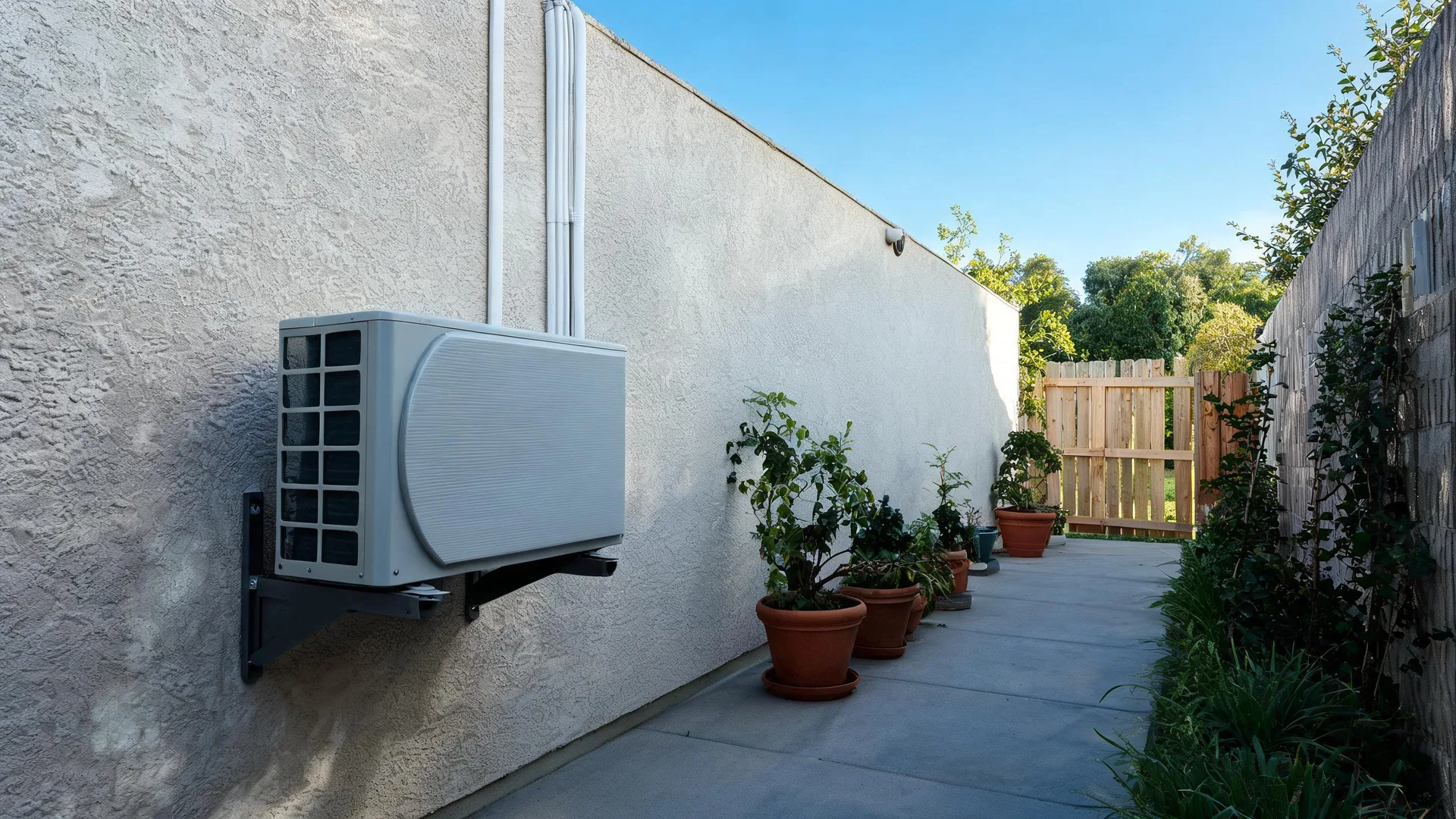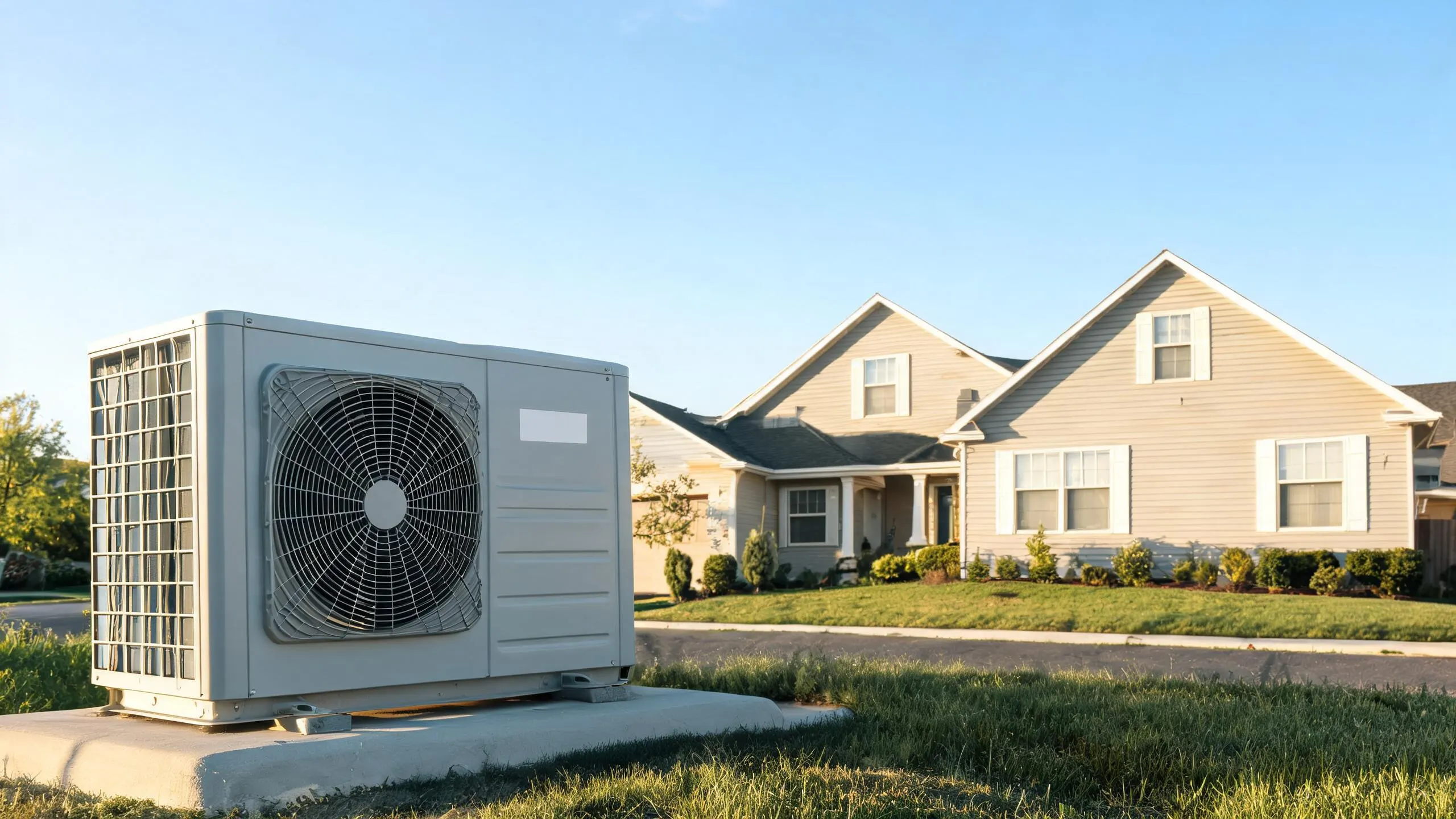
An outdoor heat pump unit mounted on a concrete pad in front of a two-story suburban house.

Heat Pump Installation in San Jose, CA

Tell us about the job

Takes about a minute. No obligation.

New system or replacementHeat PumpSanta Clara County, CA
Step 1 of 2

What ZIP code is the job in?

Storms hit this county often

Santa Clara County recorded 298 severe weather events between 2015 and 2024, with damaging wind alone hitting 257 times. Hail showed up 33 times in that span. Statewide, 17% of households went at least a day without power in 2024.


The outdoor unit sits exposed

A heat pump's outdoor unit takes whatever wind and hail come through, and it needs power to run. When the power goes out, it stops heating and it stops making hot water until the power comes back on. Where the installer places it and how it's protected are decisions worth getting right the first time.

7 months
November through May, your system heats
3 months
July through September, it cools
39°F
the average winter night it heats against
82°F
the average summer afternoon it cools against
Isometric cutaway illustration of a house showing attic ductwork, an indoor air handler, furnished rooms, and an outdoor condenser unit connected by lines along the exterior wall.
Your system heats November through May and cools July through September.

NOAA nClimDiv, 1991–2020 normals

Electricity in Santa Clara County runs 36.42 cents per kilowatt-hour, higher than most of the country.

A heat pump that's sized and installed right earns back that cost every time it cycles on.

Most homes here already run on gas, so matching that setup keeps the install simple

58.5% of homes heat with gas
257 damaging wind events from 2015 to 2024
33 hail events from 2015 to 2024

A heat pump here doesn't work as hard as it would somewhere with real snow. Winter storms hit Santa Clara County 3 times between 2015 and 2024. Summers stay comfortable too. The dew point averages 50°F across June, July and August, lower than most of the country, so the air doesn't sit heavy and the system isn't fighting it all season. Less strain on the unit means a repair is usually worth making rather than replacing. When something does go wrong here, age or a skipped service visit is the more likely reason, not the machine being run into the ground. That's worth knowing when you're picking a system. You don't need the highest efficiency model on the lot to get a long life out of it here.

Plan the install around where the power and the weather can't reach it

Get the outdoor unit placed somewhere it won't take a direct hit, and ask what happens to your heat and hot water if the power drops. Those are install-day decisions, easier to get right before the system goes in than after.

Find a contractor
A gray outdoor HVAC unit mounted on a concrete pad beside a house with gray lap siding and a stone foundation.

Get it in before October, while you can still choose

Heat runs here from November through May, about seven months of the year. That's the long stretch this system has to cover, even if the nights themselves are mild by most standards. Get it installed before October and it's already tested and running when that stretch starts. Wait for the first cold week and you're picking from whatever unit and whatever install slot are still open.

The size has to match the house

A heat pump that's too big short cycles, kicking on and off before it ever settles into a steady run. One that's too small runs constantly and still can't keep up on the coldest nights. Getting the size right means a contractor has to work out how much heat the place actually loses through its walls, windows and roof, not just match whatever was there before. That calculation, done properly, shapes most of what the job costs.

The ductwork decides how much else has to change

A heat pump moves a different volume of air than a gas furnace, and older ductwork built around a furnace doesn't always move enough of it. Some runs are too narrow, some have leaks at the joints, and some were never sealed well to begin with. An installer has to open things up and look before anyone can say whether the ducts just need sealing or need replacing outright. That inspection is where a quote can change once the work actually starts.

When you're comparing systems, ask what happens to heating and hot water the moment power drops, and whether that's true for every model on your list. Ask about the backup heat strip and how it's controlled, since that piece decides whether the house stays warm during a cold snap or a brief outage. Ask for the manufacturer's low-temperature performance data, not just the efficiency rating, because two systems with the same rating can behave very differently once it's cold outside. Ask how the outdoor unit mounts and what it would take to protect it from a falling branch or wind-blown debris. Ask who services the brand locally and whether parts are easy to get, because a system that can't be fixed quickly isn't much good to you on the coldest night of the year.

Santa Clara County falls under zone 3C, the marine side of the warm-climate band in the state's energy code. Any heat pump installed here has to meet the federal minimums that came in on January 1, 2023: at least 14.3 Btu of heat moved per watt-hour of electricity over the summer, and at least 7.5 over the winter. If it's a straight air conditioner instead, the bar is 14.3 SEER2 and a separate EER2 test, either 11.7 or 9.8 depending on where the unit falls against that 15.2 SEER2 line. That EER2 number matters here specifically, since it measures performance at a single high outdoor temperature rather than averaged over a season, closer to what the unit faces on an actual hot afternoon. These are floors, not a recommendation. They narrow the field before you ever start comparing brands, and a federal tax credit is available on top of whatever you choose, as long as it clears these marks.