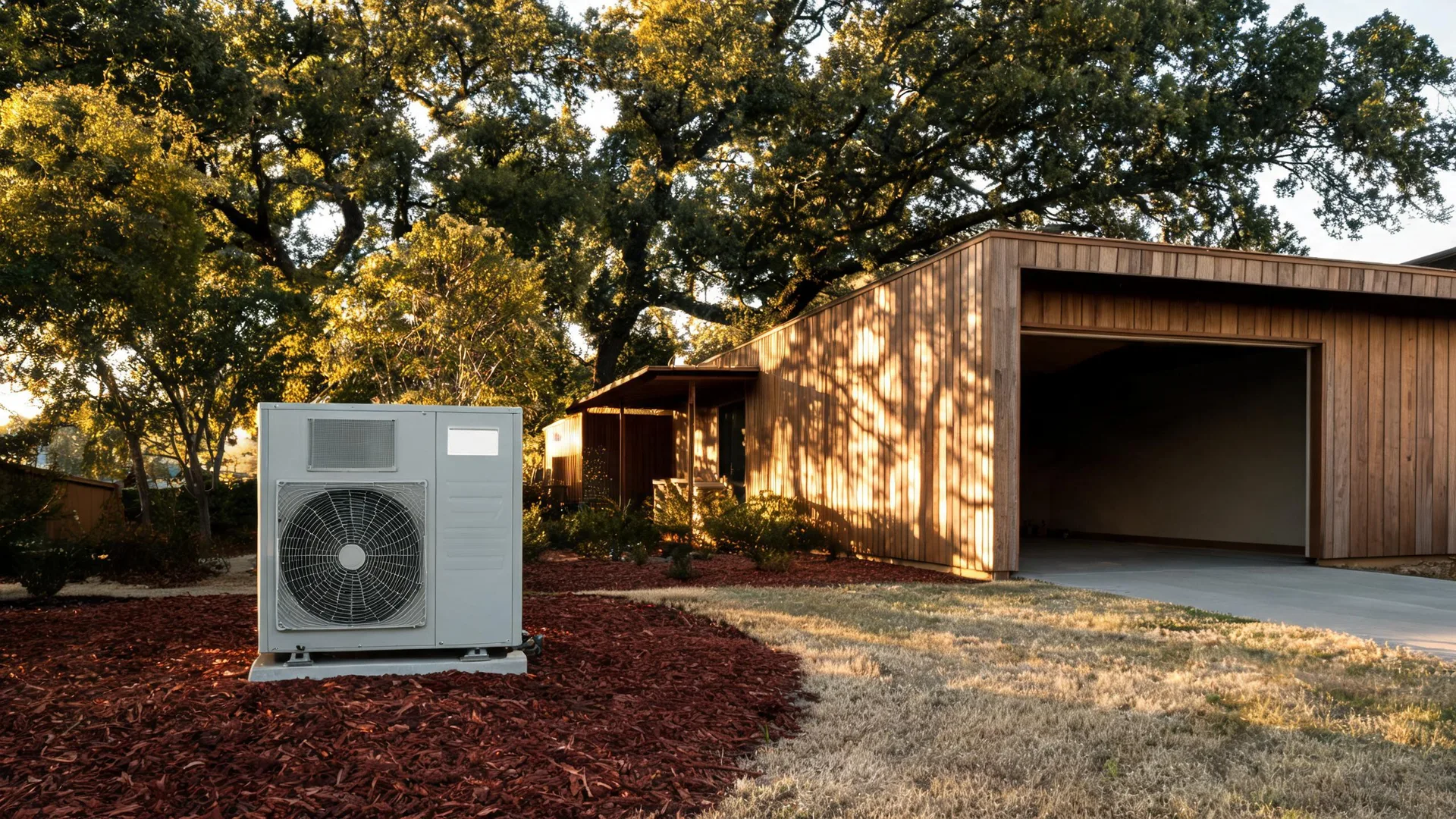
Winters here don't ask much of it
Concord nights average 41°F in December and January. A heat pump built to pull heat out of freezing air isn't working hard against that.
Takes about a minute. No obligation.
Concord nights average 41°F in December and January. A heat pump built to pull heat out of freezing air isn't working hard against that.
When the strain on a system has been mild, a breakdown is more likely one bad part than a unit worn out from years of fighting the weather. That's a case for fixing it, not replacing it.

NOAA nClimDiv, 1991–2020 normals
Heat season in Concord starts in November, with October the month before it.
A heat pump with a weak part usually gets found out in the first cold weeks of November, not in October when it barely has to work.




Electricity in California ran 31.97 cents a kilowatt-hour in 2024, well above what most of the country pays. That makes it worth paying attention to a heat pump that's running but not working right, not just one that's quit outright. A low charge or a failing part can make the system run longer to hit the same temperature, and at that rate the extra cost shows up fast. Getting the actual fault found and fixed matters more here than in a place where power is cheap.
A heat pump that's spent its winters working this lightly doesn't wear out on its own. One bad part can take it down and leave the rest fine. Worth having someone find the actual fault before anyone talks about a new unit.
Find a contractor
A heat pump that's struggling gives you warning before it quits. It runs longer than it used to, or it runs close to nonstop without quite reaching the temperature on the thermostat. Outside, the coil may ice over when it shouldn't, or the outdoor fan may labor or make a grinding noise. Inside, the air coming out might feel cooler than it should for a system that's supposedly heating. Some units start cycling on and off in short bursts instead of holding a steady run, which puts more wear on the parts that start and stop the compressor. None of these mean the whole system is done. They mean something specific inside it, a contactor, a capacitor, a sensor, has failed or is failing, and the rest of the unit is still waiting on it.
A compressor that keeps trying to start on a weak capacitor draws more current than it should every time it tries. That heat builds up in the windings. What would have been a capacitor swap turns into a compressor replacement, and the compressor is most of what makes the unit run at all.
A heat pump defrosts by reversing its cycle for a few minutes on a schedule. If the real problem is a low charge or a failing sensor, that defrost cycle stops doing its job and ice keeps building. A coil packed in ice can't pull heat from the air, so the unit runs longer for less heat and the ice just keeps winning.
Before anyone comes out, there are a few things worth checking yourself. Look at the thermostat first. Make sure it's set to heat, not cooling or fan only, and that the set temperature is actually above room temperature. Check the breaker for both the indoor air handler and the outdoor unit, since a tripped breaker on either side will stop the system cold. Look at the air filter. A filter packed with dust chokes airflow across the indoor coil, and that alone can make a heat pump run long and still feel weak. Walk outside and look at the unit itself. If the coil is caked in ice or the cabinet is buried in leaves or snow, that's worth knowing before the call, not something to chip off yourself. None of this fixes a bad capacitor or a low charge, but it rules out the simple stuff first.
Repair versus replacement comes down to one question. Is the problem the compressor, or is it something that protects the compressor. A capacitor, a contactor, a defrost sensor, a fan motor, these fail on their own, and taking one out doesn't mean the rest of the unit is going with it. Swap the failed part and a heat pump with a good compressor runs like it did on day one. The compressor is the exception. It's the most expensive part in the system and the hardest to justify replacing on its own, since putting a new compressor on an old unit still leaves every other aging part in place. So the real question a tech is answering isn't how old the unit is. It's whether the compressor itself is damaged, or whether something cheaper just failed and took the system down with it.