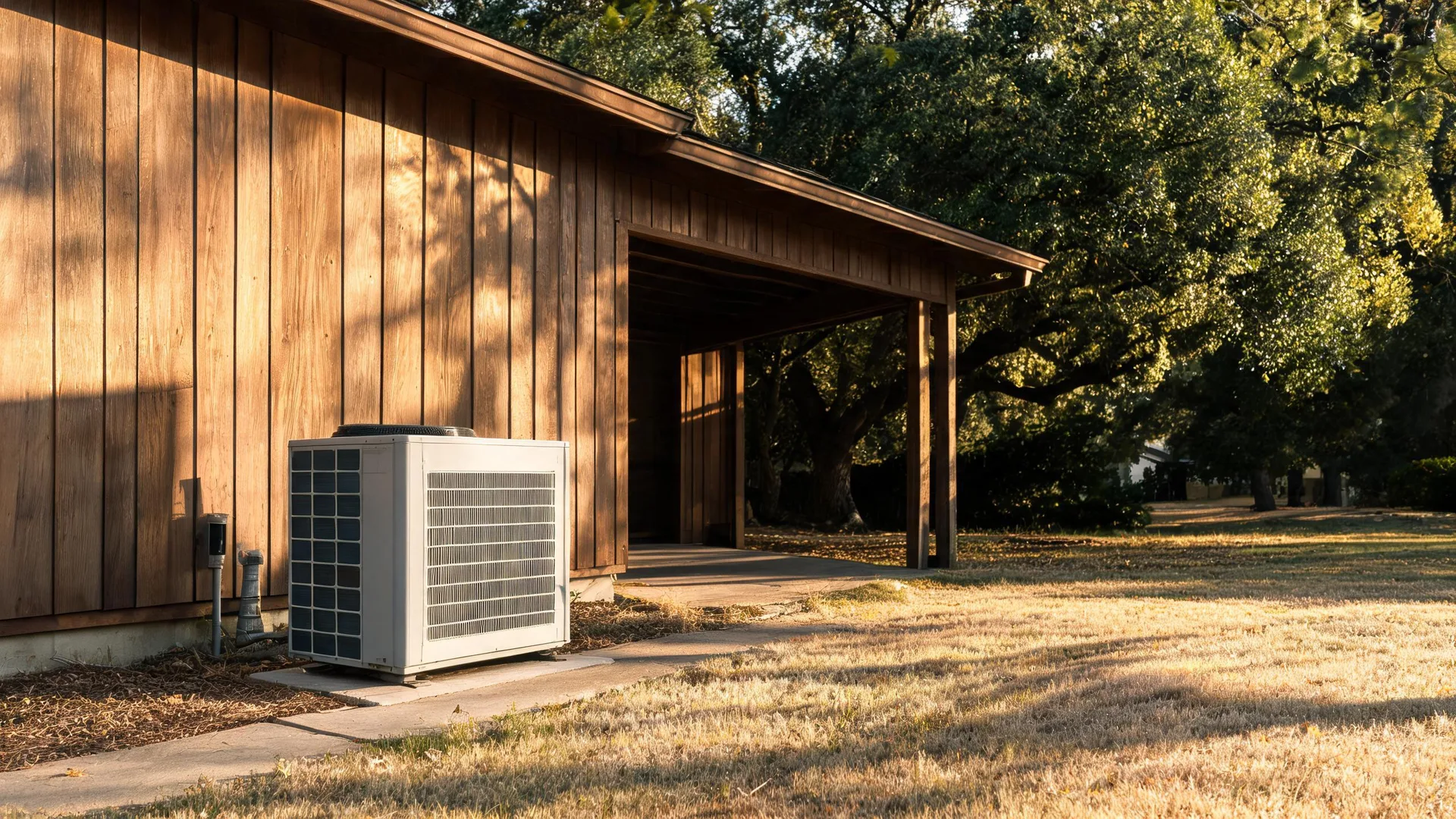
A gray outdoor HVAC condenser unit mounted on a concrete pad in the front yard of a two-story suburban house.

Heat Pump Repair in Los Angeles, CA

Tell us about the job

Takes about a minute. No obligation.

RepairHeat PumpLos Angeles County, CA
Step 1 of 2

What ZIP code is the job in?

October is when heat pumps show problems

Heat here runs November through April, and October is when homeowners first switch over after months of running only the cooling side. A weak capacitor or a failing contactor that sat fine all summer will often fail the first time the system has to work for heat.

Get it looked at before the cold settles in

A heat pump that struggles in October usually has the same problem once it has to run every day. Having it checked as soon as it acts up means it gets fixed before the months you actually need it most.

6 months
November through April, your system heats
4 months
June through September, it cools
41°F
the average winter night it heats against
87°F
the average summer afternoon it cools against
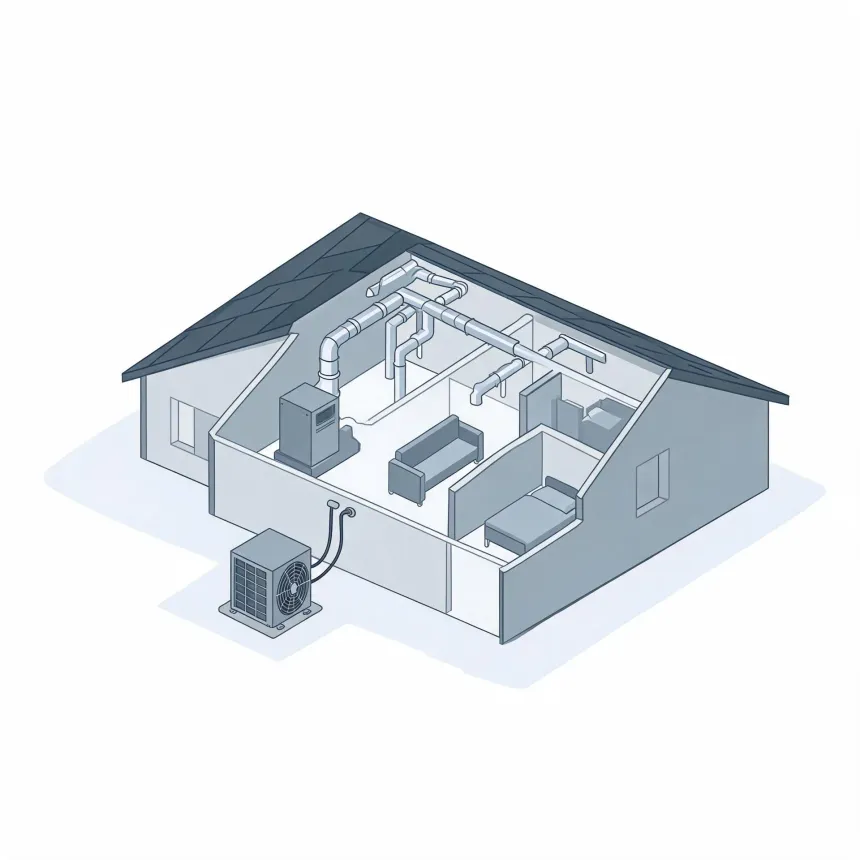
Isometric cutaway illustration of a single-story house showing interior rooms with furniture, an attic duct network connected to a furnace or air handler, and an outdoor condenser unit linked by lines outside the wall.
Your system heats November through April and cools June through September.

NOAA nClimDiv, 1991–2020 normals

Winters here stay mild, with overnight lows averaging 41°F in December and January.

A heat pump that isn't fighting hard freezes year after year is usually still a good candidate for repair instead of replacement.

Los Angeles isn't hard on a heat pump

Power costs 31.97 cents a kWh statewide
112 damaging wind events from 2015 to 2024
9 hail events from 2015 to 2024
Los Angeles isn't hard on a heat pump112 damaging wind events between 2015 and 2024, and almost none of them hail or snow

Half the homes in Los Angeles County were built in 1965 or earlier. If your house is one of them and the heat pump is original to it, you're not dealing with a young system. Heat pumps don't last as long as the house around them, so a unit that old is closer to the end than the start. That doesn't mean replace it. It means the repair decision is worth a real look, not just a quick fix and hope. Ask the contractor straight out how much life is likely left in it before you spend money on the broken part.

Find out what's actually wrong before you decide what to do

Get the actual problem diagnosed before deciding anything else. A heat pump that hasn't spent years fighting hard freezes has had an easier run than most, so whatever's wrong now is more likely a worn part than a system in real decline.

Find a contractor
A man in a cap, gray T-shirt and tan work pants climbs porch steps toward a blue front door, carrying a canvas tool bag filled with tools, beside a blue planter with a shrub.
A gray heat pump condenser unit mounted on a concrete pad against the gray lap-siding exterior wall of a house.

Ask how much life is left before you pay for the part

Ask before the repair starts, not after. A straight answer about what's left in the unit tells you whether to fix what's broken or put that money toward something new.

It's blowing air that isn't warm

A heat pump in heating mode should feel warm at the vent, not room temperature or cool. Air that feels barely warm often means the reversing valve isn't fully switching over, or the refrigerant charge is low. Air with no warmth at all can mean the compressor isn't running.

It's icing up and not clearing itself

Some frost on the outdoor unit during a heating cycle is normal, and the system should melt it off on its own every so often. A unit that stays coated in ice, or builds up a thick layer, usually has a stuck defrost control or a fan that isn't moving enough air across the coil. Left alone, that ice blocks airflow the unit needs to work at all.

A heat pump that's struggling doesn't just work harder, it starts to damage itself. Ice left to build on the outdoor coil blocks the airflow the unit needs, so it runs longer to do less and the compressor takes the strain. A refrigerant leak that seems minor now doesn't stay minor, since a compressor starved of refrigerant can seize completely. Even a dirty filter forces the system to pull harder through parts that were never built to work against that resistance. None of this fixes itself by running longer. It just moves the failure from a part that's simple to replace to one that isn't.

A contractor starts outside at the condenser and inside at the air handler. A heat pump problem usually shows itself in both places. Refrigerant pressure gets checked first. Low charge explains weak heat, poor defrost and ice all at the same time. The reversing valve gets tested next. It's the one part that fails in a way unique to heat pumps and leaves the system stuck cooling when it should be heating. The contactor and capacitor get tested under load, not just looked at. A capacitor can read fine sitting still and still fail the moment the compressor tries to start. Airflow gets checked too. A dirty filter or a blocked coil can look exactly like a refrigerant problem and send someone chasing the wrong fix. The point of the visit is to find which of these it actually is before anything gets replaced.