




Illuminated white stucco houses with red-tile roofs nestled against a dry hillside under a deep blue twilight sky.

Heat Pump Repair in Modesto, CA

Tell us about the job

Takes about a minute. No obligation.

RepairHeat PumpStanislaus County, CA
Step 1 of 2

What ZIP code is the job in?

A heat pump works harder when the air is heavy, and the air here is not. Summer dew points in Stanislaus County average 45°F across June, July and August, lower than most of the country sees. Your outdoor unit isn't fighting humidity to pull moisture out of the air along with heat, so the coil and compressor see less strain than the same machine would in a sticky climate. Wind is the other thing that beats up outdoor equipment over the years, and damaging wind has hit this county 18 times between 2015 and 2024, which isn't nothing but isn't constant either. Put together, a heat pump here tends to hold up well mechanically. When one starts acting up, age or a specific worn part is usually the reason, not years of hard use catching up with it.

6 months
November through April, your system heats
5 months
May through September, it cools
39°F
the average winter night it heats against
91°F
the average summer afternoon it cools against
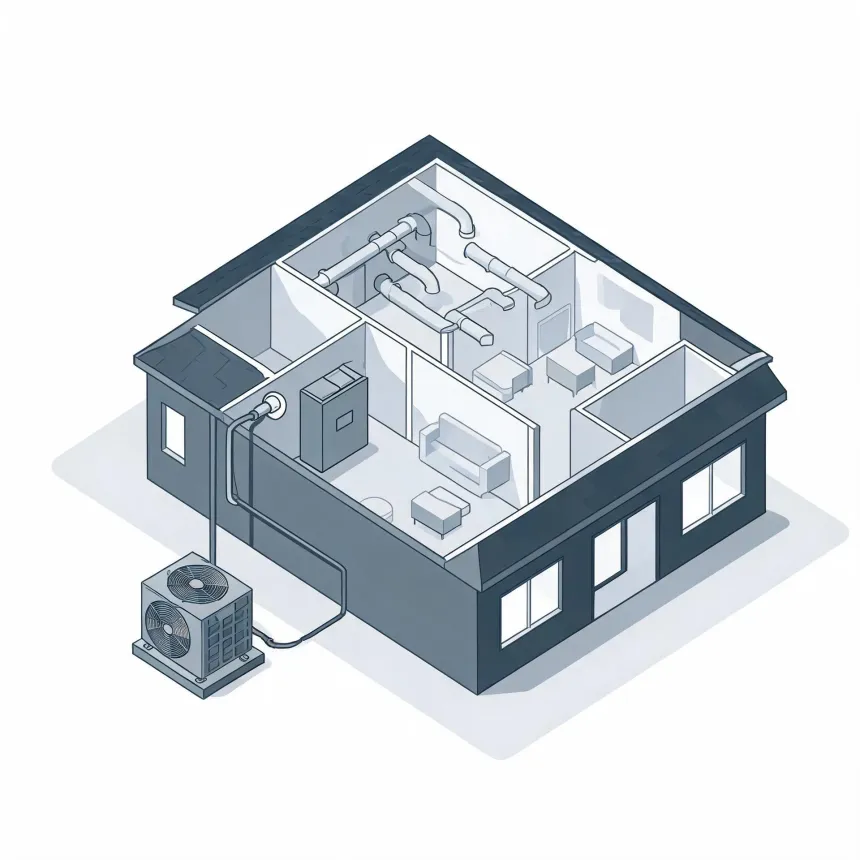
Isometric line illustration of a cutaway single-story house showing interior rooms, ceiling ductwork and an indoor air handler, connected by a line to an outdoor condenser unit on a pad beside the building.
Your system heats November through April and cools May through September.

NOAA nClimDiv, 1991–2020 normals

Half the homes in Stanislaus County were built in 1981 or later.

A heat pump that came with a newer house still has years left to give, and that's usually worth paying a repair bill for.

A heat pump running badly here still runs up your bill fast

Power here costs 24.06 cents per kilowatt-hour
18 damaging wind events from 2015 to 2024
Winter nights average 39°F

April is worth paying attention to. Your heat pump has been sitting idle since fall, and the first real hot stretch in May is when a weak capacitor or a low charge finally gives out, right when you need the thing most. Same story in October, before heat kicks in for November. The system switches over to keep the house warm, and whatever was marginal in the summer run shows itself the first cold night. Overnight lows average 39°F through December and January, not brutal, but enough to expose a unit that's already struggling. If something feels off at the start of a season, that's the time to get it looked at, not after a few weeks of ignoring it.

A repair here is usually worth it

Since the unit isn't worn down by years of heavy use, a repair usually gets you a system that's good for years more, not a short reprieve before the next breakdown. That's worth knowing before you decide whether to fix it or replace it.

Find a contractor
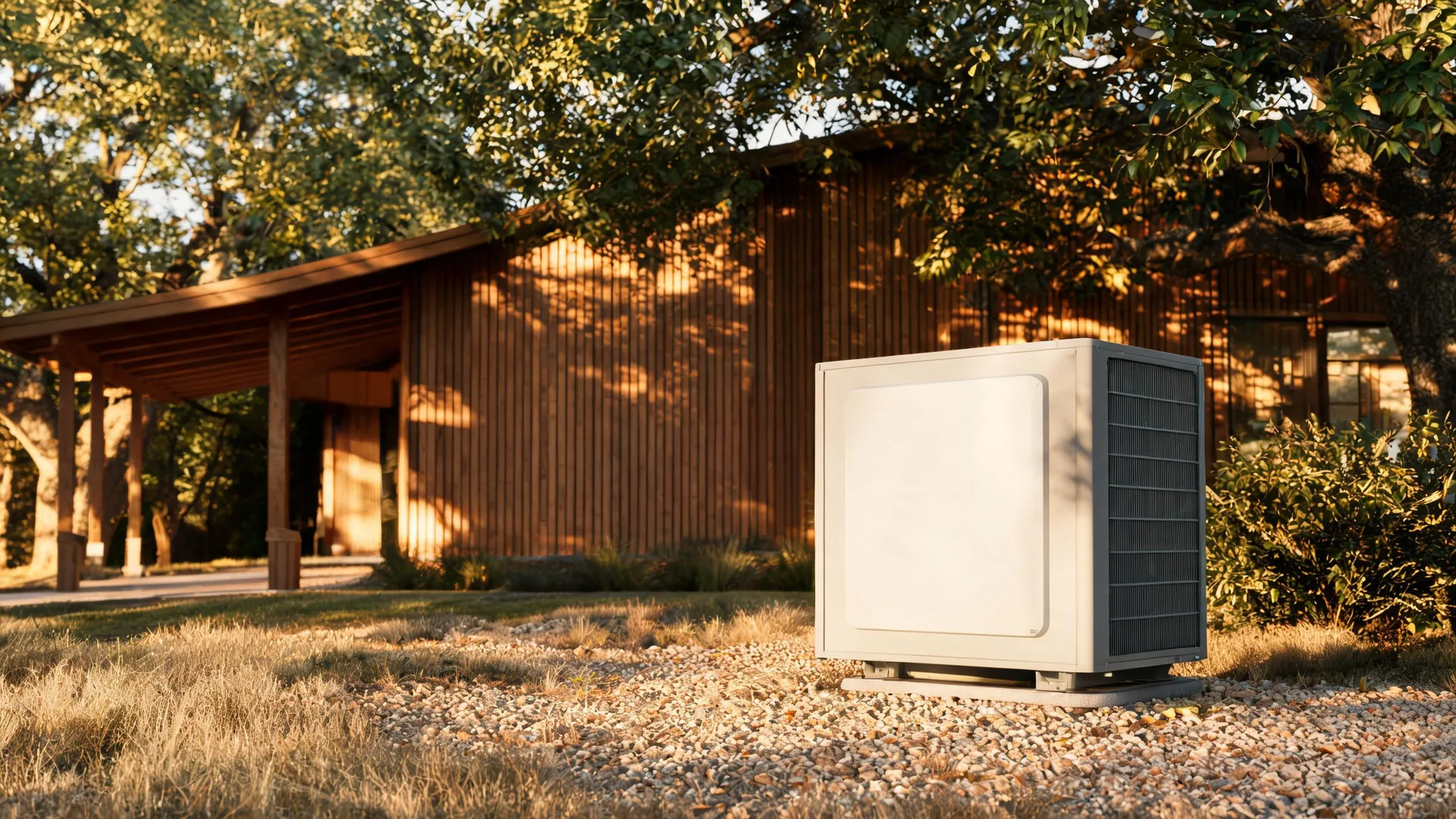
A gray heat pump outdoor unit mounted on a concrete pad next to a residential house with lap siding and stone accents.

Know the age before you decide

If your heat pump came with the house, check when that was. A system installed when the house was built, in 1981 or later, still has working years ahead of it even after this repair. That's the case for about half the houses in this county. A technician can tell you the age of the unit itself if you don't know it, and that number should drive the decision, not a guess based on how the system sounds right now.

What you can check yourself

Look at the outdoor unit first. If leaves or a cover are pressed against the coil, clear them so air can move through it. Check that nothing is stacked against the indoor vents inside the house. Pull the filter and hold it up to a light. If you can't see light through it, swap it or wash it if it's the reusable kind. A clogged filter is one of the few things that makes a heat pump run weak or run constantly, and it's the one thing you can fix without a tool.
What to leave alone

Don't open the outdoor cabinet or touch the refrigerant lines. A heat pump runs on a sealed charge, and if it's low, that means a leak somewhere in the line, not something you can top off yourself. If the outdoor unit is iced over, turn it off and let it thaw rather than chipping at it. Ice on the coil usually means airflow is blocked or the charge is off, and either one needs a technician to find the actual cause.

A heat pump in good shape runs quietly and keeps a steady temperature. When something's wearing out, you'll usually notice the house first, not the unit. Rooms that used to feel even start running a few degrees off, or the system runs long stretches without shutting off. Short cycling, where it kicks on and off every few minutes, points to a different problem, often electrical or a sensor reading wrong. Listen for a change too. A new rattle, a hum that wasn't there before, or a click repeating when it tries to start are all worth paying attention to. If the outdoor fan isn't turning while the indoor blower runs, or you smell something burnt near the indoor unit, that's not a wait-and-see situation.

A heat pump that's running weak doesn't just make the house less comfortable, it runs longer to make up for it, and every extra hour costs more here than almost anywhere else. Power in this state is among the most expensive in the country, so a unit limping along on a bad capacitor or a low charge is quietly adding to your bill every day it keeps running that way. This isn't a problem that gets cheaper by waiting. Get it looked at now, while the fix is still small.