






A gray horizontal-tank air compressor sits on a gravel driveway beside a textured white stucco wall with pink bougainvillea and ivy, with a large tree and a tile-roofed house in the background.

Heat Pump Repair in San Francisco, CA

Tell us about the job

Takes about a minute. No obligation.

RepairHeat PumpSan Francisco County, CA
Step 1 of 2

What ZIP code is the job in?

Before you call anyone, check the simple things first. Look at the thermostat and make sure it's set to heat and the temperature is actually set above room temperature, not just sitting there. Go outside and look at the outdoor unit. If leaves, a cover, or anything else is blocking airflow around it, clear that away. Check your breaker panel for a tripped breaker on the heat pump circuit. Pull the air filter and hold it up to a light. If you can't see light through it, that's your problem, or at least part of it. If the outdoor unit is caked in ice and it isn't actively running a defrost cycle, that's worth noting when you call, since it points to a specific kind of problem rather than a random one.

7 months
November through May, your system heats
45°F
the average winter night it heats against
70°F
the average summer afternoon it cools against
Isometric cutaway illustration of a gray house showing interior rooms, a central air handler with ducts in the attic, and refrigerant lines running to an outdoor condenser unit beside the building.

San Francisco winters sit mild, overnight lows averaging 45°F through December, January and February.

A heat pump here isn't fighting hard freezes, so a unit acting up is more likely a straightforward fix than a sign it's worn out.

Half the homes here were built by 1946. No heat pump is that old.

Half the homes here were built by 1946
50 damaging wind events from 2015 to 2024
10 hail events from 2015 to 2024
Heat pump repair in San FranciscoMild winters here mean a struggling heat pump is usually a fixable problem, not a worn-out system.

That's worth knowing when you're deciding whether to get it looked at. A heat pump that's been running against 45°F nights instead of hard freezes has had an easier few years than most, so if it's acting up now, age by itself probably isn't the reason. Worth asking the contractor what they find before you assume the worst. Wind is the bigger factor here, not cold. San Francisco has had damaging wind 50 times in the last ten years, and that's the kind of thing that knocks a panel loose or rattles a connection without you ever seeing it happen. Hail barely figures, ten events in that same stretch. If the unit's been through a storm recently, mention that too.

It's usually worth repairing

It has an easier job here than in most places, so your heat pump is often in decent shape. Repair is usually worth it.

Find a contractor
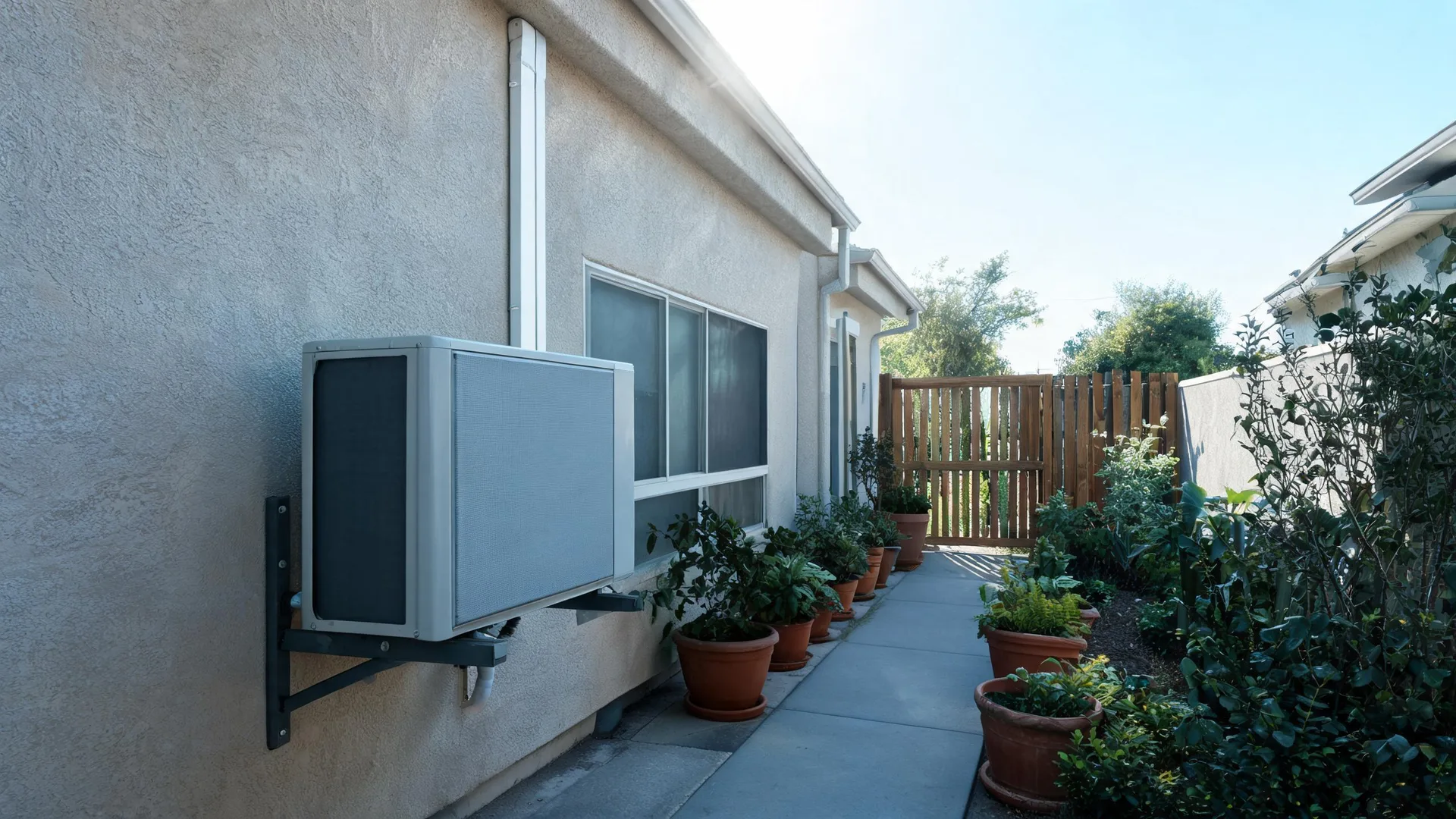
A gray heat pump condenser unit mounted on a concrete pad against the gray lap-siding exterior wall of a house.

What a heat pump tells you before it quits

A heat pump runs backward and forward depending on the season, so it earns its keep year round. Short cycling is usually the first thing an owner notices. The unit kicks on, runs a few minutes, shuts off, then starts again before the house has actually changed temperature. That points to a thermostat sensor, a clogged filter, or a refrigerant charge that's off. Warm air blowing in heat mode, or air that never quite feels cold in summer, often means the reversing valve isn't fully switching over. Ice building up on the outdoor coil during a normal run, not during a defrost cycle, means the system isn't shedding heat the way it should. Listen for it too. A hum with no fan movement points to a failed capacitor. Clicking that repeats without the unit starting points to a relay or a control board. None of these mean the whole system is done. Most of them are a single part failing inside a machine that otherwise still has work left in it.

Outdoor coil wear happens before indoor problems show up

The outdoor coil sits exposed to weather all year, and that's where corrosion usually starts first. A pinhole leak in the coil lets refrigerant out slowly, so the system keeps running but loses capacity bit by bit. By the time it's noticeably weak, the coil has usually been leaking for a while.
The reversing valve only exists in a heat pump

A furnace or straight air conditioner doesn't have one. It's the part that switches the system between heating and cooling, and it has to move every time that switch happens. A stuck reversing valve can leave warm air coming out when you want cold, or the system stuck in one mode no matter what the thermostat asks for. That's a valve problem, not a sign the compressor is wearing out.

A heat pump that's struggling still moves some heat, so it's tempting to let it ride. That's usually the wrong call. A low refrigerant charge, for instance, makes the compressor work harder to get the same result, and a compressor that runs hot for weeks on end wears out faster than one that gets fixed early. A failing capacitor can let a motor pull more current than it should, and that heat has to go somewhere. Ice on the outdoor coil blocks airflow, so the system runs longer to do less, which stresses the same parts further. None of this happens fast. It's the difference between replacing a capacitor now and replacing a compressor later, and the machine can't tell you which week that turn happens.

A repair decision really comes down to what part failed and what else is still working. A capacitor, a relay, a control board, a reversing valve, these get replaced on their own all the time, and the rest of the system keeps going like nothing happened. A compressor is different. It's the most expensive part in the unit, and when it's the one failing, a contractor will usually walk you through what replacing it costs against putting that money into a new system instead. The coil matters too. A small leak can be patched, but a coil that's corroded in more than one spot tends to leak again somewhere else soon after. Ask what exactly failed before you ask what it costs to fix. That answer tells you whether you're looking at a repair that ends the problem or one that buys a little time before the next part goes.