




A row of stucco houses with red clay tile roofs seen behind hedges and overhanging tree branches, with a tall stucco wall in the left foreground.

Heat Pump Repair in Santa Maria, CA

Tell us about the job

Takes about a minute. No obligation.

RepairHeat PumpSanta Barbara County, CA
Step 1 of 2

What ZIP code is the job in?

A tech who comes out for a heat pump that's acting up starts by asking what it's doing. Blowing cold air in heat mode, running nonstop, tripping a breaker, making noise it didn't used to make. That answer points to where they look first. They'll check the thermostat settings and the air filter before anything else, because a dirty filter can mimic bigger problems that have nothing to do with the filter itself. From there it's gauges on the refrigerant lines, a look at the outdoor coil and fan, and a check of the reversing valve, since that's the part that lets a heat pump switch between heating and cooling and it's a common point of failure. They'll test the capacitor and contactor too, since a weak capacitor can make a fan run slow or not start at all. By the end they can usually tell you what's wrong, what it takes to fix it, and whether it makes sense to repair it or think about replacing the unit.

7 months
November through May, your system heats
3 months
July through September, it cools
40°F
the average winter night it heats against
81°F
the average summer afternoon it cools against
Isometric grey-toned illustration of a cutaway house showing interior rooms, ceiling ductwork and an air handler, connected by lines to an outdoor condenser unit beside the building.
Your system heats November through May and cools July through September.

NOAA nClimDiv, 1991–2020 normals

Heat in Santa Maria runs November through May, about seven months a year.

October is when to get a heat pump looked at, before the first cold snap finds the weak part.

Nothing about Santa Maria wears out a heat pump faster. It's the usual part, worth fixing.

Power costs 31.97 cents a kWh statewide
32 damaging wind events from 2015 to 2024
3 winter storms from 2015 to 2024

Half the homes in Santa Barbara County were built in 1974 or earlier, half in 1974 or later. That split doesn't tell you much about the heat pump itself. A house from the seventies can have a unit that's five years old, and a new build can still have the system it was built with. What matters is the age of the equipment, not the house around it. If the system came with the house, the model number on the outdoor unit will tell you more than the year on the title. That's where the real repair-or-replace conversation starts.

Mild winters mean most heat pump problems here are worth fixing

Winters here are mild. The overnight low averages 40 in December, January and February, and damaging wind has hit the county only a handful of times over the past decade. A heat pump in a county like this isn't fighting much. When one acts up, the cause is usually a part that wore out or got missed, not a system that's been run hard. That's worth knowing before you decide whether to fix it.

Find a contractor
A gray heat pump outdoor unit mounted on a concrete pad next to a residential house with lap siding and stone accents.

Some failures don't stop the system. They just let it run wrong.

A heat pump that's low on refrigerant will keep running because the thermostat is still calling for heat, but the compressor is working against a charge it was never built to run on. Left alone, that compressor runs hotter than it should, and heat is what kills a compressor over time. The same goes for a failing capacitor. The fan slows down instead of stopping outright, so the system keeps limping along while the motor pulls harder than it's rated for. A reversing valve stuck halfway doesn't always shut the system down either. It can keep running while it blows the wrong temperature air, and that's the owner's cue to call, not a reason to wait and see if it sorts itself out. None of these fail the system outright at first. They just let it run in a way it isn't supposed to, and every hour it keeps running that way is an hour closer to a part that has to be replaced instead of repaired.

The signs usually show up at the vents or the breaker

Air coming out cold when the system is set to heat, a room that never quite gets warm, or short cycling where the unit starts and stops over and over are the complaints that send someone looking for a repair. A breaker that trips more than once isn't something to keep resetting. That's a motor or compressor pulling more current than the circuit is built to carry, and running it again just repeats the strain that tripped it the first time.
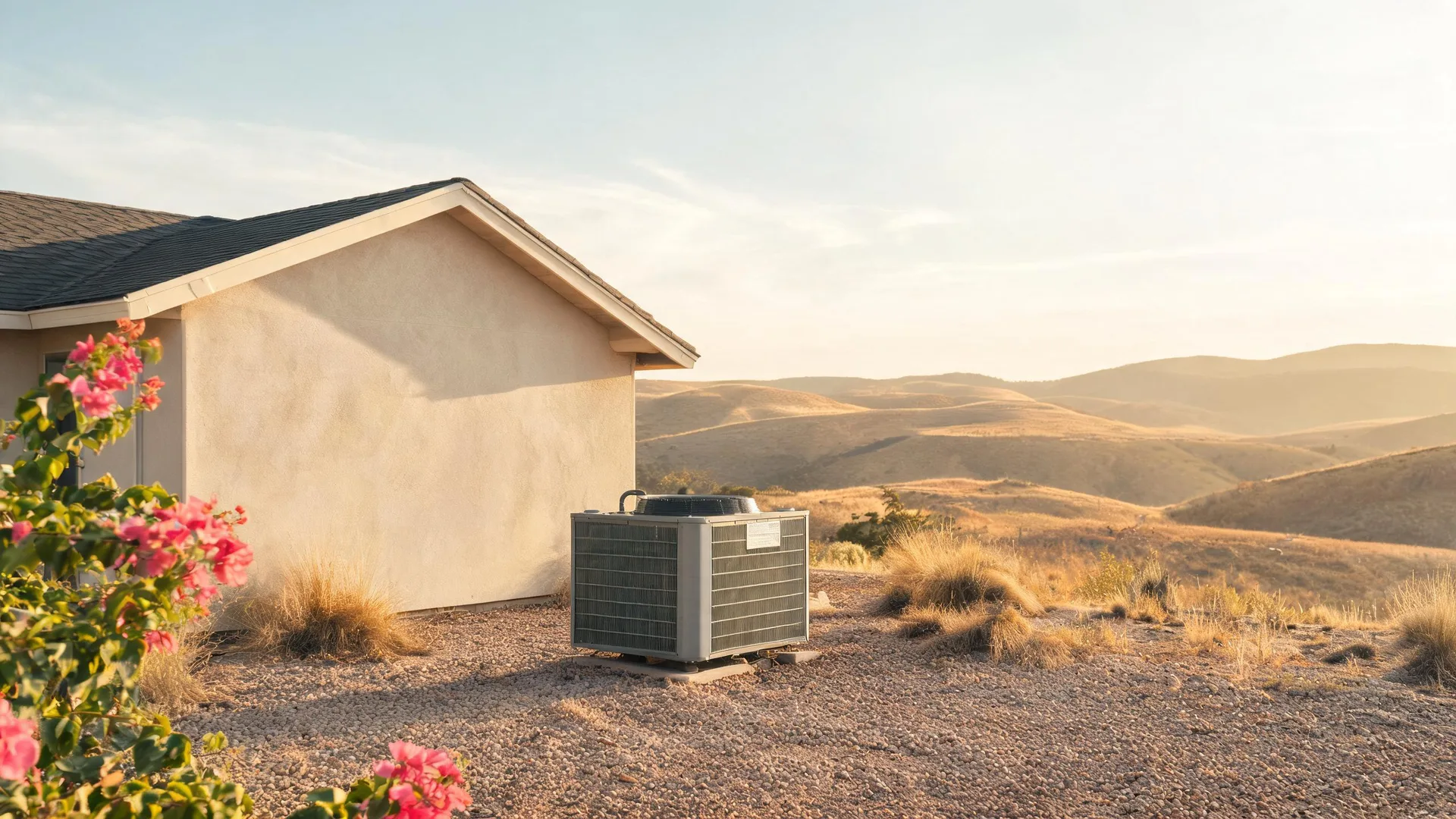
Noise is the system telling you something changed

A heat pump that ran quiet for years and suddenly clicks, buzzes, or rattles outside is worth paying attention to. A clicking relay, a buzzing contactor, or a fan motor that's lost a bearing all sound different from each other once you know what to listen for, and a tech can usually narrow it down before the panel even comes off. The point isn't to diagnose it yourself. It's to call before the noise turns into a part that won't start at all.

Before anyone comes out, a few things are worth checking. Make sure the thermostat is actually set to heat and the setpoint is above room temperature, since a setting bumped by accident looks exactly like a breakdown. Check the air filter next. A filter clogged with dust chokes airflow across the indoor coil, and that alone can make a heat pump blow weak or lukewarm air. Look at the outdoor unit too. Leaves, a fallen branch, or anything pressed against the coil blocks the airflow it needs to move heat, and clearing the space around it is easy enough to do yourself. If the system has a disconnect switch nearby, make sure it hasn't been bumped off. None of this fixes a bad capacitor or a stuck reversing valve, but it rules out the simple stuff before anyone starts pulling the panel off.

A repair makes sense when the part that failed is the only part under strain. A bad capacitor, a stuck contactor, a dirty coil, these are jobs that fix the system and leave the compressor untouched. The compressor is the part that matters most, because it costs the most and it's the hardest to replace on its own. When a tech finds the compressor itself is failing, the math changes, since a new compressor on an old system can cost close to what the whole unit is worth. Age plays into it too, but not the way people think. It's not that an old unit is doomed. It's that an old unit has had more time for small issues to stack up, so one repair now is more likely to be followed by another down the road. A tech who's honest with you will tell you which kind of repair you're looking at, a fix that stands on its own or a fix that's buying time.