White stucco buildings with terracotta roofs glow with warm lighting on a tree-covered hillside at dusk.

Heat Pump Repair in Visalia, CA

Tell us about the job

Takes about a minute. No obligation.

RepairHeat PumpTulare County, CA
Step 1 of 2

What ZIP code is the job in?

Warm air in winter mode means trouble

A heat pump in heating mode should blow air that feels warm at the vent. If it's blowing air that feels cool or barely lukewarm, the reversing valve may be stuck in the wrong position, or the system could be low on refrigerant. Either way the unit is running without actually heating the house.

Ice on the outdoor unit is a signal, not normal wear

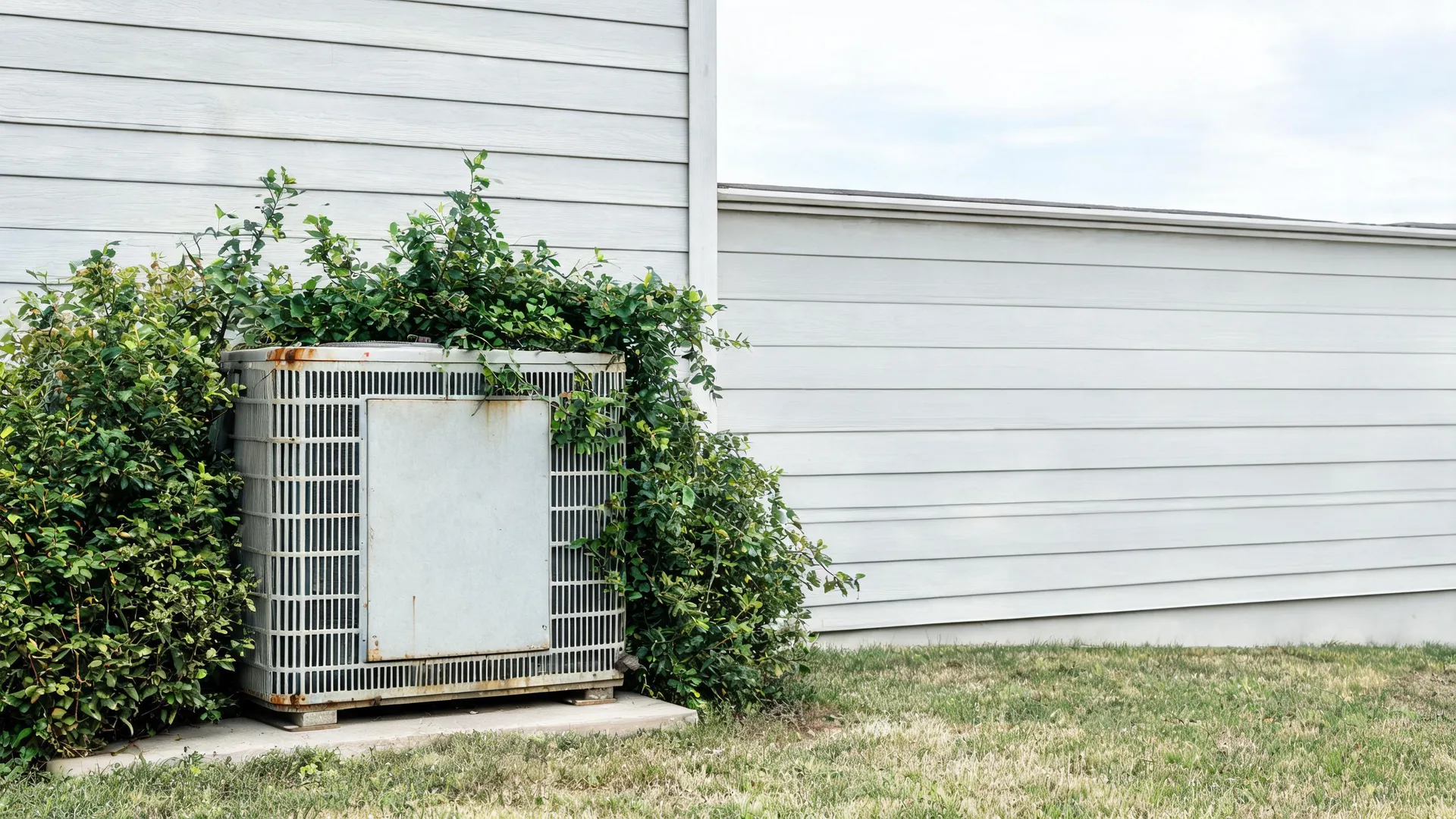
Some frost on the outdoor coil during a defrost cycle is normal. A thick layer of ice that doesn't melt off, or ice that builds up repeatedly, means the defrost board, the reversing valve, or a refrigerant leak is keeping the unit from clearing itself. Left alone, that ice blocks airflow across the coil and the compressor has to work against it.

8 months
October through May, your system heats
4 months
June through September, it cools
31°F
the average winter night it heats against
84°F
the average summer afternoon it cools against
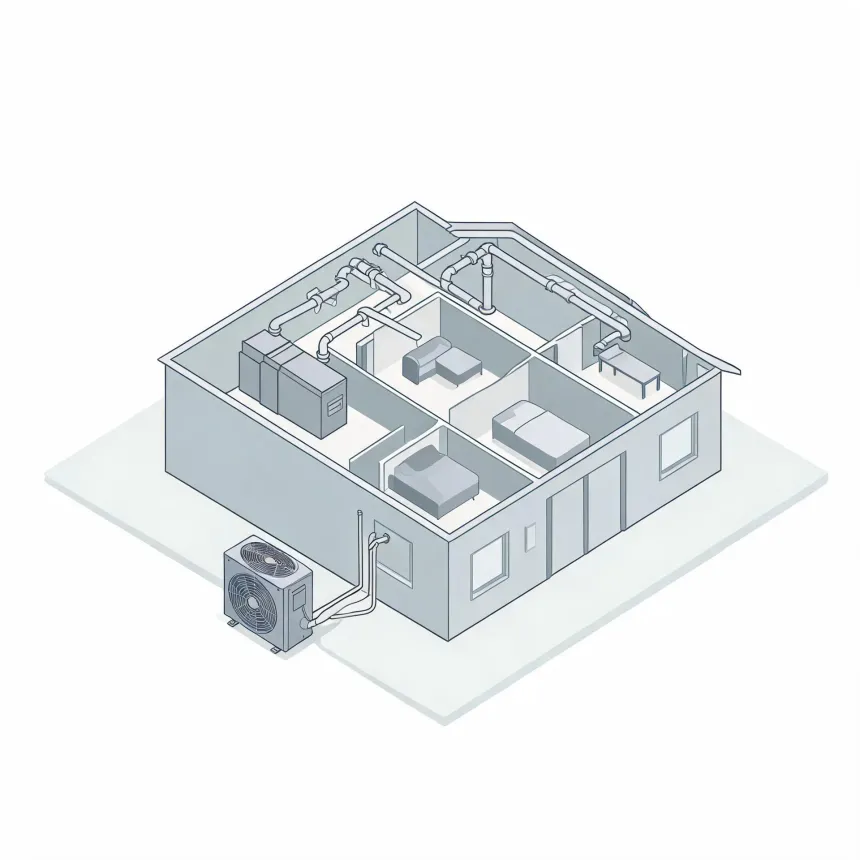
Isometric line illustration of a cutaway single-story house showing interior rooms with beds and furniture, ceiling ductwork connected to an indoor air handler, and an outdoor condenser unit linked by refrigerant lines.
Your system heats October through May and cools June through September.

NOAA nClimDiv, 1991–2020 normals

Visalia winters average 31°F overnight, nothing like the deep freeze that wears out a heat pump's compressor in colder states.

A heat pump here that's acting up has usually been worn down by age or a neglected filter, not by the climate, so fixing it is often the right call.

Storms hit this county often, and the outdoor unit sits outside for all of it

346 severe weather events from 2015 to 2024
17% of homes statewide lost power a day or more in 2024
191 damaging wind events from 2015 to 2024

Half the homes in Tulare County were built in 1983 or later, so a lot of the heat pumps in them haven't logged the years you'd worry about. If yours came with a newer house, age probably isn't what's wrong with it. That points back to a single part doing the damage, something like the capacitor, the reversing valve, or the defrost board. Worth confirming when your place was built, if you don't already know. A newer system with one bad part is a repair, not a reason to start pricing a new unit.

A heat pump that's running wrong still runs up your bill

California electricity ran 31.97 cents per kilowatthour in 2024, among the highest rates in the country. A heat pump that's low on refrigerant or stuck on the wrong cycle draws power without heating the house, and you pay for every hour it does that. Getting the problem named now stops that meter from turning against you.

Find a contractor
A man in a dark shirt, tan pants and a cap carries a canvas tool bag up wooden porch steps toward a blue front door, with a potted shrub beside the entry.
A gray heat pump outdoor unit mounted on a concrete pad next to the stone-accented exterior wall of a house.

A diagnostic visit rules things out, one at a time

A diagnostic starts outside at the unit. The tech reads pressures off the refrigerant lines and checks the reversing valve. The capacitor and contactor get tested before anything comes apart. Most heat pumps store fault codes on the control board, so that board often points to the problem before the tech opens anything up. After that it's a process of elimination. Is the thermostat calling for the right mode. Is the reversing valve answering that call. Is the refrigerant charge where it should be. Each check rules something out. Whatever doesn't check out is the part that gets replaced, not the whole system.

The capacitor wears out before you notice it

The run capacitor keeps the compressor and outdoor fan motor turning under load. It weakens slowly, so the system keeps starting fine until one day it doesn't. A compressor that hums but won't start, or an outdoor fan that's barely turning, usually points straight at a failing capacitor.

The reversing valve sticks with age

The reversing valve is what switches a heat pump between heating and cooling. The coil that moves it can burn out, or the valve body can stick from corrosion or debris, leaving the system stuck in one mode no matter what the thermostat calls for. Once it sticks, it doesn't usually free itself.

Before anyone comes out, there are a few things worth checking yourself. Look at the thermostat first. Make sure it's set to heat, not auto or cool, and that the set temperature is actually above room temperature. Check the breaker for the outdoor unit and the indoor air handler, since a tripped breaker on either side will stop the system cold. Walk outside and look at the unit itself. If the coil is caked in ice that hasn't cleared in hours, or if leaves and debris are packed against the sides, that's worth noting for the tech. Check your air filter while you're at it. A filter clogged with dust chokes airflow and can make a working system act like a broken one. None of this fixes a bad capacitor or a stuck reversing valve, but it rules out the simple stuff before anyone opens up the unit.

A heat pump that's old and failing in more than one way is usually done. One that's otherwise sound but tripped up by a single bad part is a different story. The compressor is the expensive piece, and the hardest to replace on its own, so the real question is whether the compressor itself is damaged or whether something around it just quit. A bad capacitor is a repair. A stuck reversing valve is a repair. A failed defrost board is a repair. None of those mean the compressor is bad, and the compressor is usually fine behind them. What changes the math is a compressor that's grounded out or lost its windings, or a system that's been through refrigerant leaks and repairs before and is just worn out generally. A tech who's opened the unit up can tell you which situation you're in.