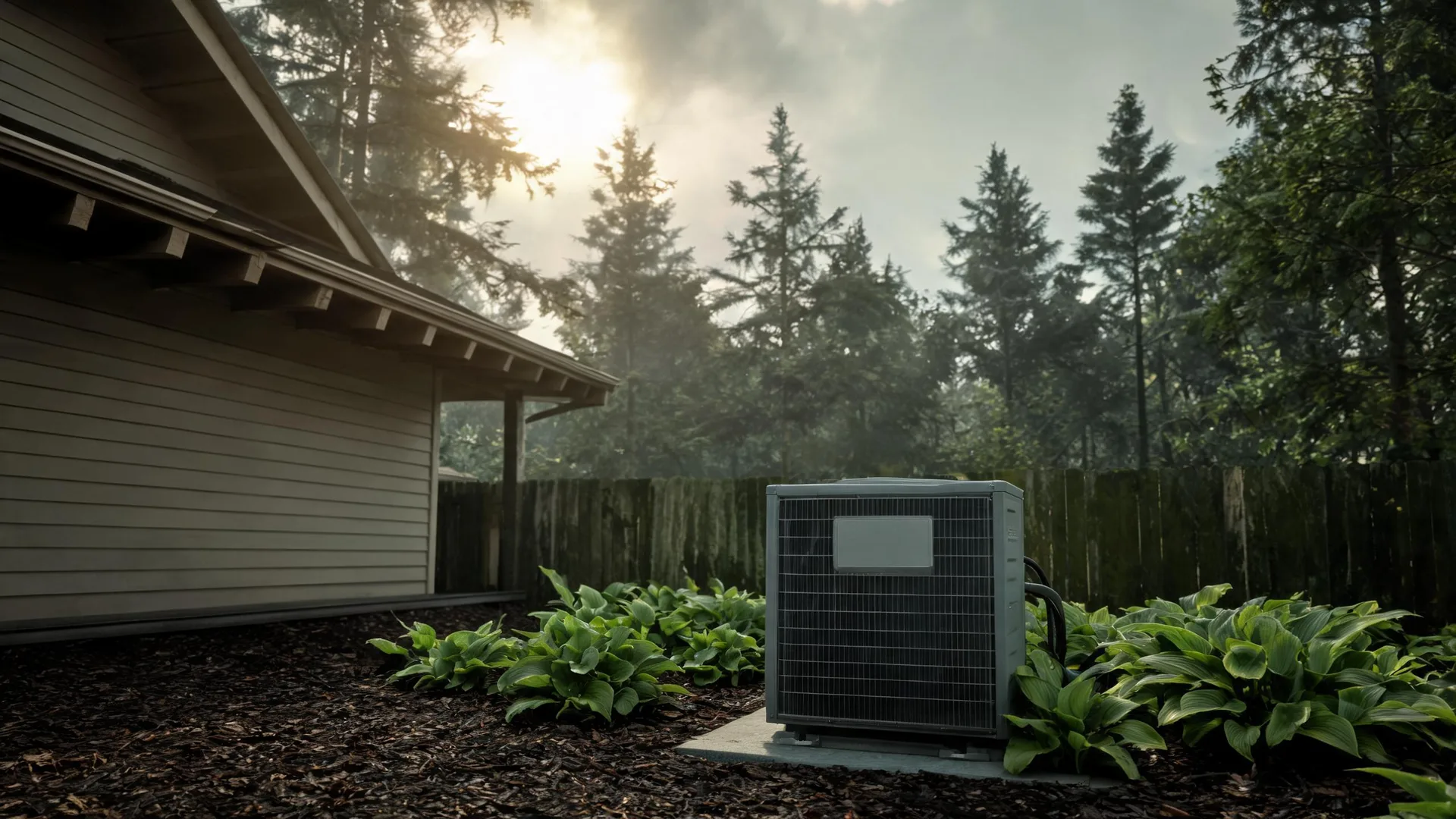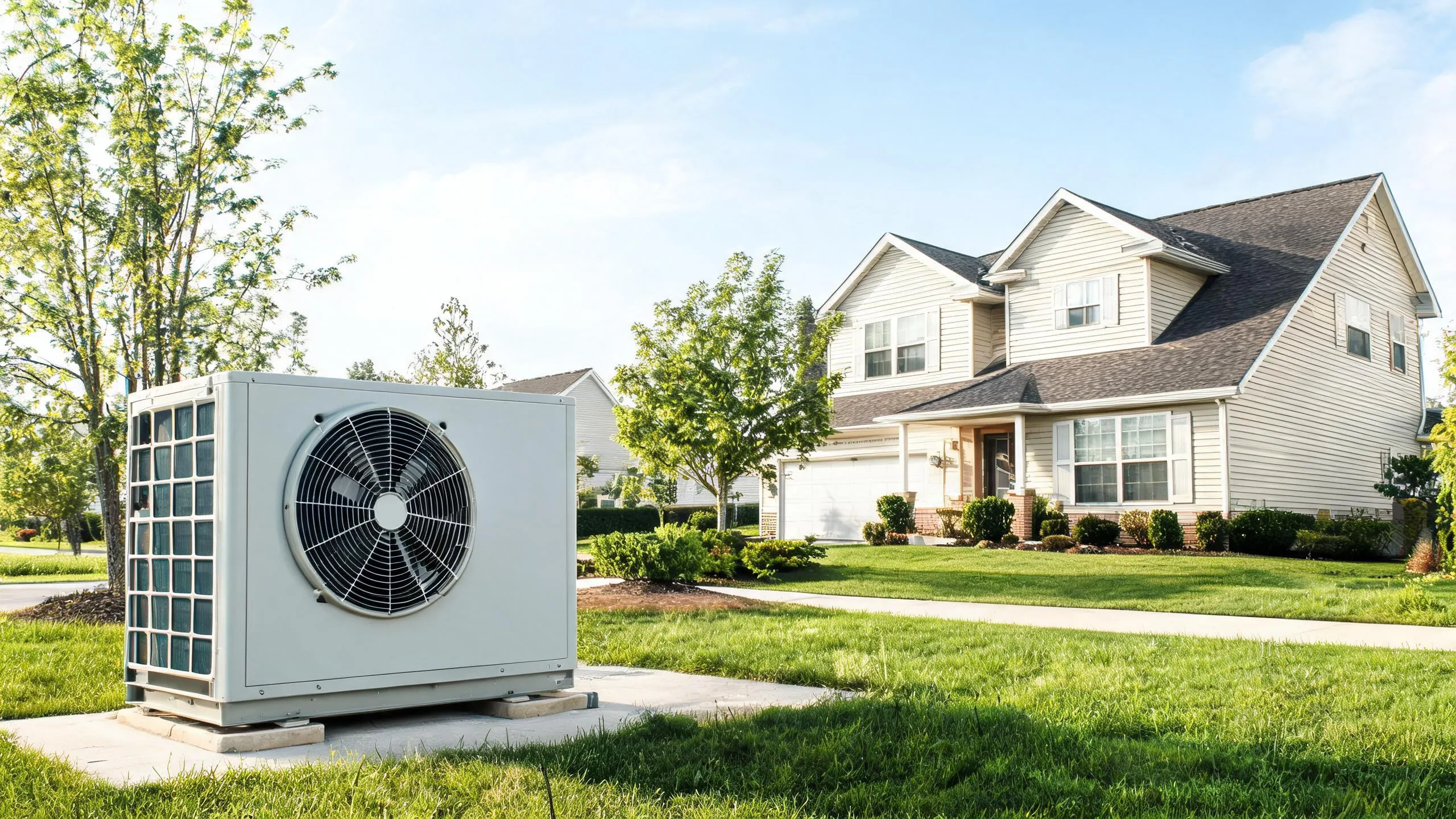
An outdoor heat pump unit mounted on a concrete pad in front of a two-story suburban house with a landscaped lawn.

Heat Pump Repair in Yuba City, CA

Tell us about the job

Takes about a minute. No obligation.

RepairHeat PumpSutter County, CA
Step 1 of 2

What ZIP code is the job in?

Dry air is easier on the system

Summer air around Yuba City runs low in moisture, with the dew point averaging 47°F through June, July and August. A heat pump's coil doesn't have to wring as much water out of the air to cool the house, which is part of what wears a coil down over the years.

Less strain means repair makes sense

A heat pump that hasn't been fighting heavy, muggy air for years usually isn't worn out underneath. When something goes wrong on a unit that's had it easy, the cause is more often a part that failed or a system that got skipped on maintenance, not a machine at the end of its life.

6 months
November through April, your system heats
5 months
May through September, it cools
40°F
the average winter night it heats against
94°F
the average summer afternoon it cools against
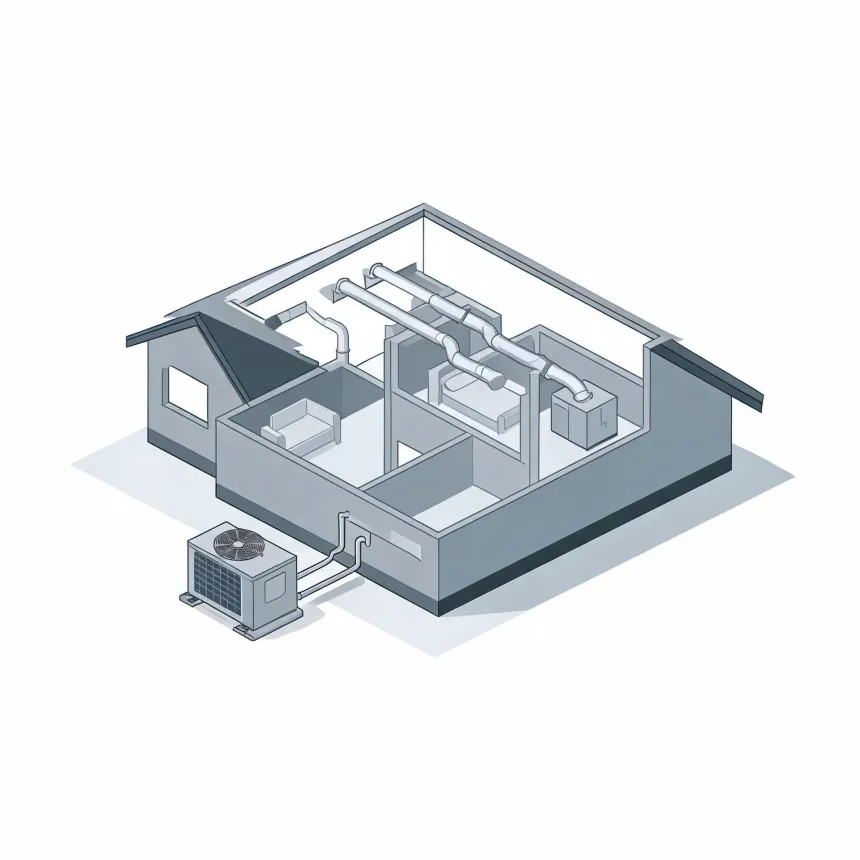
Isometric grayscale illustration of a cutaway house showing interior rooms, ceiling ductwork and an air handler, connected by lines to an outdoor condenser unit on a pad outside.
Your system heats November through April and cools May through September.

NOAA nClimDiv, 1991–2020 normals

Half the homes around Yuba City were built in 1982 or later.

A heat pump in a house that age has likely had far less work behind it, so a breakdown now is more likely one bad part than a system on its way out.

Every hour it runs badly here costs more than it would most places

Power here costs 38.27 cents per kilowatt-hour
56 damaging wind events from 2015 to 2024
Climate zone 3B
Call before the first cold snap or the first heat waveHeat runs here November through April, cooling May through September, and a weak part usually gives out right when that load hits.

A heat pump that's cycling too much, short cycling, or running the fan without cooling is burning power at some of the highest electric rates in the country, every hour it stays that way. That's not a reason to put off the call. If anything it cuts the other direction: since the unit here hasn't been run down by years of heavy, muggy air, whatever's making it run inefficiently is probably one bad part, not a system falling apart. Worth finding and fixing now rather than paying the higher bill all summer while you wait.

A newer system is worth repairing

If your heat pump came with a newer house, get the part fixed instead of pricing a replacement. A unit that age hasn't had years of hard work behind it, so one bad part is a reasonable fix, not a stopgap before the next failure.

Find a contractor
A man in a cap, long-sleeved shirt and work pants carries a canvas tool bag up porch steps toward a dark blue front door, beside a blue ceramic planter.
A residential heat pump outdoor unit mounted on a concrete pad next to a house with gray vinyl siding.

Years of running, not years of fighting the weather

Wind is the main thing this machine has had to stand up to. Sutter County saw damaging wind 56 times between 2015 and 2024, somewhere around five times a year. That's a cabinet rattled and an outdoor coil pelted with debris now and then, not a compressor run hard day after day. Between that and the dry summer air, a unit here spends most of its life just doing its job, not fighting the weather for survival. If a part has failed, it failed on its own. That's worth fixing, not replacing.

What you can check yourself

Look at the outdoor unit first. If the fan isn't spinning and you don't hear or feel anything running, check the breaker before anything else. A tripped breaker or a switch bumped off at the disconnect box next to the unit happens more than people expect. Inside, check the thermostat batteries and make sure it's set to the mode you want, not stuck between heat and cool. Pull the air filter and hold it up to a light. If you can't see through it, that's enough to choke airflow and make the system struggle no matter what else is wrong.

What to leave alone

Don't take the outdoor unit's cover off or reach into the cabinet. The coil fins bend if you breathe on them wrong, and there's a capacitor in there that holds a charge even with the power off. If the outdoor coil is caked with leaves or grass clippings, a gentle rinse with a hose from a few feet away is fine, but don't scrub it or use anything with pressure behind it. If ice has built up on the coil or the lines, don't chip at it. Switch the system off and let it melt on its own, then call. Ice usually means airflow or refrigerant trouble that a filter change won't fix.

A heat pump fails for a short list of reasons, and most of them show up in the same few places. The reversing valve is one. It's what lets the system switch between heating and cooling, and when it sticks, the unit gets stuck blowing the wrong temperature air or stops switching over at all. The capacitor is another. It gives the compressor and fan motors the jolt they need to start, and when it weakens, you'll hear the outdoor unit hum and struggle instead of kicking on clean. Refrigerant leaves the system when a line develops a leak somewhere, usually at a joint or a fitting, and once charge drops low the coil can ice over and the whole system loses its ability to move heat. Contactors wear down from the arcing that happens every time they open and close, until one day they don't make contact at all. None of these parts fail because the system is old. They fail because they're the parts doing the hardest work every time the unit cycles on.

Repair usually makes sense as long as the fix addresses what actually broke. A failed capacitor, a stuck reversing valve, a low refrigerant charge from a leaking fitting, these are single-part problems, and replacing the part brings the system back to normal. Replacement starts to make more sense when the compressor itself is failing, since that's the most expensive part in the unit and the one most likely to take the rest of the system down with it if it's run hard while damaged. Age matters less than what's actually wrong. A unit that's been maintained and has one bad component is a good candidate for repair almost regardless of how long it's been running. The questions worth asking are whether the problem is one part or several at once, and whether this is the first breakdown or the latest in a string of them.